Category: Health

  • Ekweremadu’s daughter appeals to public-spirited individuals for Kidney donation

    Ekweremadu’s daughter appeals to public-spirited individuals for Kidney donation

    Emmanuel Addeh in Abuja

    Sonia Ekweremadu, the daughter of former Deputy Senate President Ike Ekweremadu, appealed to the public yesterday to help donate a kidney to replace her damaged one.

    Sonia, whose parents were arrested in the United Kingdom while trying to find her a donor, revealed on her Instagram page that she had a rare kidney disease.

    The Nigerian lawmaker and his wife, Beatrice, are charged with conspiracy to arrange/facilitate the travel of another person for the purpose of exploitation, specifically organ harvesting.

    On June 23, Ekweremadu and Beatrice were arrested and remanded in a UK prison on suspicion of plotting to harvest the organs of one David Nwamini for use by their ailing daughter, Sonia.

    But Ekweremadu said the boy was undergoing medical investigations for a kidney donation to Sonia, his daughter, who was in need of a kidney transplant.

    The Instagram statement said, “I, Sonia Ekweremadu, hereby appeal to the general public to come to my aid and save my life.
    “I am 25 years old and a graduate of Media and Communications, University of Coventry. I dropped out of my post-graduate studies at the University of Newcastle in 2019 when I was diagnosed with a rare kidney disease, FSGS Nephrotic Syndrome.”

    The young Ekweremadu stated that her family had battled to save her life and had taken her to various hospitals, but said the illness persisted and kept degenerating.

    According to her, “I am presently in London, UK, receiving five hours of dialysis three to four times a week. This is at the expense of my family as I am not qualified for NHS due to my immigration status.

    “The last three years have been extremely challenging. The charges being faced by my parents in London presently are directly connected to my illness and have complicated matter for me and my family.
    “I do not intend to delve into details of this unfortunate development as the matter is still in court. I am, however, optimistic that the truth will prevail and it will end in praise to God.”

    Sonia appealed to anybody whom it might please to assist her willingly with a kidney donation.

    She stressed, “This appeal would have been utterly unnecessary as every member of my family is eager to donate their kidney to me, knowing that I would do the same for any of them.

    Read also: BBNaija: Organizers under attack, accused of favouritism over new twist

    “Regrettably, comprehensive medical examination showed that my case of nephrotic syndrome is a genetic illness and the doctors advised against donation from any of my family members, as it would likely reoccur.

    “In the time that my father has been incarcerated, he has been diagnosed with acute kidney damage.

    “Anybody that is moved by this appeal and wishes to donate his or her kidney to me may send an email to helpsonialive@gmail.com and include his or her name, phone number, email address and place of residence.

    “Please, note that under the laws of England and Wales, organ donation must be purely driven by compassion and, therefore, no reward is involved.”

    In addition, Sonia said she had decided to commit and dedicate the rest of her life to helping people with the challenge of kidney disease, upon her full recovery.
  • Lassa fever kills 170 Nigerians, Monkeypox 6

    Lassa fever kills 170 Nigerians, Monkeypox 6

    According to the Nigeria Centre for Disease Control (NCDC), Lassa fever has killed 170 Nigerians in 25 states since the beginning of this year.

    This was revealed in the Centre’s situation report on Friday, along with the fact that there were 909 confirmed cases out of 6,547 suspected cases recorded during the period.
    “From week 1 to week 35 of 2022, 170 deaths were reported with a case fatality rate (CFR) of 18.7%, which is lower than the CFR for the same period in 2021 (22.7%),” it said.

    “In total for 2022, 25 states have recorded at least one confirmed case across 101 local government areas.”

    According to the report, 70% of all confirmed cases were from Ondo (31%), Edo (26%), and Bauchi (13%).
    It stated the number of suspected cases had risen compared to that reported for the same period in 2021.

    The report also said that in week 35, from August 29 to September 4, the number of new confirmed cases increased from five in week 34 to 10 cases.

    “These were reported from Ondo, Edo and Nasarawa States,” the report added.

    The report noted that no new healthcare worker was affected in the reporting week 35.

    Monkeypox’s cases
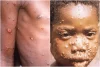
    Meanwhile, another report by the NCDC said a total of 36 new confirmed cases of monkeypox were recorded in 14 states within one week.

    The reports said 100 new suspected cases were reported in epidemiological week 34 (between August 22 and 28, 2022) out of which 36 confirmed cases were documented.

    Read also: Many killed as Nigerian troops raid ISWAP terrorists’ ‘Somalia’ hideout in Sambisa

    The 14 states that recorded the confirmed cases are Lagos (7), Abia (6), Bayelsa (5), Edo (3), Ondo (3), Delta (2), Ebonyi (2), Rivers (2), Anambra (1), Benue (1), Gombe (1), Imo (1), Katsina (1) and Oyo (1).

    The report said six associated monkeypox deaths were recorded in six states in 2022. They were Delta (1), Lagos (1), Ondo (1), Akwa Ibom (1), Kogi (1) and Taraba (1).

    It said cumulatively from January 1 to August 28, Nigeria had recorded 704 suspected cases with 277 confirmed cases (186 males, 91 females) from 30 states.

  • NCDC records yellow fever deaths in 10 states

    NCDC records yellow fever deaths in 10 states

    The Nigeria Centre for Disease Control and Prevention (NCDC) has announced 14 deaths in 10 states from suspected cases of yellow fever between January and July.
    The affected states included Abia (one), Bayelsa (one), Benue (one), Imo (one), Kaduna (one), Katsina (two), Kebbi (one), Taraba (two), Yobe (one) and Zamfara (three).

    The NCDC stated this via its official website on Sunday.

    According to the World Health Organisation (WHO), yellow fever is an acute viral haemorrhagic disease transmitted by infected mosquitoes.

    The Nigerian Public Health Institute said 1,179 suspected cases of yellow fever were reported in 416 local government areas from January 1 to July 31.

    Read Also: Enugu PDP guber candidate, Mbah names campaign Director-General

    It said one case each was confirmed in five states, namely Sokoto (Dange-Shuni LGA), Osun (Atakunmosa East LGA), Ondo (Akure South LGA), Anambra (Idemili South LGA) and Imo (Nwangele LGA).

    The NCDC stated that the male-to-female ratio for suspected cases was 1:1.7, with males 637 (54 per cent) and females 542 (46 per cent), and 74 per cent of the cases were aged 30 years and below.

    “One hundred and twenty-six (10.7 per cent) of 1,179 suspected cases had at least one dose of the yellow fever vaccine,” it said.

    Yellow fever is preventable with a highly effective, safe and affordable vaccine. A single dose of yellow fever vaccine is sufficient to grant sustained immunity and life-long protection against yellow fever disease. A booster dose of the vaccine is not needed.

    “Further yellow fever vaccination campaigns are planned in Nigeria in the states of Ogun and Gombe in June 2022,” NCDC.

    It further explained that the campaigns targeted 8.8 million people and that additional PMVCs would be implemented in the latter part of 2022 in Kano, Adamawa, Bayelsa, Borno and Enugu.

  • KNSG, Dangote, Bill & Melinda Gates sign MoU on immunization

    KNSG, Dangote, Bill & Melinda Gates sign MoU on immunization

    The Aliko Dangote Foundation, in partnership with the Kano State Government, UNICEF, and the Bill & Melinda Gates Foundation, has signed a three-way Memorandum of Understanding on routine immunisation in the state.

    The Memorandum of Understanding was first signed in 2012, when the Aliko Dangote Foundation, Kano State Government, and the Bill & Melinda Gates Foundation agreed to work together to improve the health of women and children in Kano, the country’s second most populous state.

    In response to the first MoU’s success, the three parties signed a second addendum in 2017 in order to improve on the previous goal.

    However, the third health MoU signing has seen the inclusion of UNICEF as the fourth participating party in the agreement.
    Speaking shortly before the official signing of the MoU, Wednesday at the Kano state Government House, the Managing Director and Chief Executive Officer of Aliko Dangote Foundation, Zouera Yousefou, congratulated the state government for achieving the objectives of the addendum ll.

    Mrs Yousefou commended the state government for its efforts to sustain funding for all RI activities, thereby increasing the state’s RI budget by 22 percent over the past 6 years, despite challenges to the fiscal space.

    The MD/CEO also noted with the signing of the third addendum, it is important to note that while the parties have made a lot of progress together, they remain far from achieving the target maternal and child health outcomes.

    “We need to ensure that we use the lessons learned from the prior years to develop and effectively execute better-suitted strategies that ensjre we fast-track progress and ultimately achieve the Health MoU addendum lll’s targets.

    “One such area of improvement is the need to devolve the programme’s oversight to lower levels and ensure LGA health teams are responsible for driving implementation across the warss in their LGA.

    “Wr need to ensure that our health teams at LGA and ward levels have the autonomy and resources they need to deliver within their specific contexts while holding them accountable for the results,” she said.

    Mrs Yousefou also urged traditional rulers to remain tireless in their efforts to ensure the people take demand and utilize essential health services, including immunization, nutrition and maternal and reproductive health services.

    In his remarks, Governor Abdullahi Umar Ganduje said the state had achieved significant milestone in healthcare services to the citizenry.

    Ganduje noted that the signing of the health MoU addendum lll is testimony to the commitment of the state towards improvement of healthcare services.

  • TETFund-sponsored COVID-19 vaccine to be ready November – Official

    TETFund-sponsored COVID-19 vaccine to be ready November – Official

    The Tertiary Education Trust Fund, TETFund, says its COVID-19 vaccine project would be ready for its first clinical trial in November this year.

    The TETFund’s Ag. Director, Public Affairs, Abdulmumin Oniyangi, disclosed this in a statement on Wednesday in Abuja.

    According to the statement, the project, which is a mega research grand intervention tagged ‘Accelerated Development of COVID-19 Vaccines Using Innovative Technological Approach’, is a collaborative effort involving cluster researchers from five different institutions in the country.

    The statement recalled that TETFund had awarded a total of N1,250,000,000.00 (distributed to four clusters of researchers.

    One of the clusters, which is the Vaccine Production Cluster, got a total grant of N450 Million.
    According to the statement, the Vaccine Production Cluster is made up of researchers from the National Veterinary Research Institute Vom, Usman Danfodiyo University Sokoto, Faculty of Veterinary Medicine, University of Jos, Nigerian Institute of Medical Research Lagos and National Research Institute for Chemical Technology, Zaria.

    Vice Chancellor of Usman Danfodiyo University, Sokoto, Prof. Lawal Suleiman Bilbis, who led the team of researchers to brief the Executive Secretary of TETFund, Arc. Sonny Echono on the progress so far, explained that they were able to make the breakthrough through the maximum support of the Fund.

    He recalled how the COVID-19 pandemic ravaged and unleashed untold hardship on humanity globally, noting that Nigeria was only saved by divine intervention since the nation was not prepared for such eventuality.
    He said: “TETFund believed in us and supported us to get to where we are now. That is why we have come to give a firsthand report on the progress made so far”.

    “We graciously got the support of TETFund not only in COVID-19 but also in Lassa Fever and other infectious diseases, because whether we like it or not, diseases will continue to emerge and reemerge. They don’t have international boundaries and that is why they are called pandemic”

    “That was when we realized that we really need to sit up. Those producing these vaccines abroad are mostly Nigerians after all, so why can’t we do it here. That is why we decided to form a consortium and TETFund was magnanimous to release N225 million for the first tranche,” he added.
    Responding, Mr Echono lauded the team for the great feat achieved within a time limit to make the country proud with the progress recorded in the vaccine production.

    He explained that it is a national project, and as such, it has become a national pride, assuring that TETFund would continue to assist the cross-cutting efforts of the researchers to ensure the desired goal is achieved.

  • Brain drain: FG introduces one for one doctor, nurse replacement policy

    Brain drain: FG introduces one for one doctor, nurse replacement policy

    By Hassan Zaggi

    Concerned by the migration of doctors, nurses and other medical workers to other countries for greener pasture, the Federal Government is making plans to come up with a policy to ensure that each doctor or nurse that leaves to the country will be replaced immediately.

    The Minister of Health, Osagie Ehanire, who disclosed this at a media briefing on Monday, describing the plan as ‘one to replace one’.

    He explained that Nigeria does not have shortage of doctors and other health workers because, according to him, many doctors and other health workers graduate every year from Nigerian universities.

    “I have heard the complaints the doctors are leaving the system. But actually we have enough doctors in the country because we are producing a good number doctors every year. Just that the recruitment process needs to be smoothen.

    “We are working with the Office of the Head of the Civil Service to have what we call one for one replacement. If one doctor resigns today, we employ one doctor. If its one nurse, we replace with one nurse. So, if we adopt it, we are not likely to have shortage.

    “So, we are trying to have one for one policy to reduce to shortage of doctors in our hospital,” the Minister further explained.

    Speaking, the Director General of the Nigeria Centre for Disease Control (NCDC), Ifedayo Adetifa, has said that there are no shortage of COVID-19 vaccines in Nigeria, but rather, there are shortage of arms to uptake the vaccine.

    He, therefore, advised Nigerians to rush and get vaccinated with the COVID-19 vaccine which, according to him, is readily available at all designated centres and hospitals in all nooks and crannies of the country.

    “Vaccines are available but there are shortage of arms to receive them not vaccine doses. Please tell people to present their arms so that we can have more uptake of vaccine,” he stressed.

    The Director General further warned that COVID-19 is still around, hence, advised Nigerians to apply all protective measures when in an enclosed place with many people.

    “More importantly, in order to protect ourselves and protect others, we need to ensure that we take public measures as recommended. Use of face mask, hand hygiene and physical distancing are appropriate,” he said.

    He continue that: “We must use face mask in places that are crowded and not well ventilated.”

  • COVID-19 vaccination suffers setback in Borno over non-payment of allowances

    COVID-19 vaccination suffers setback in Borno over non-payment of allowances

    The COVID-19 vaccination programme in Borno is currently experiencing a significant setback due to a lack of timely payment of allowances to health workers/vaccinators, according to the findings.

    Borno state is one of the states in the country with the lowest number of people who have received the COVID-19 vaccine.

    Only about 6-7 percent of the state’s eligible population has received the vaccine so far.

    Some of the vaccinators interviewed by our state correspondent expressed dissatisfaction with the lack of prompt payment of their allowances, particularly those paid by the federal government.

    The findings revealed that there are two types of COVID-19 vaccinees in the state. Those paid by development partners fall into one category, while those paid by the federal government fall into the other.

    Further investigation revealed that those who are paid by the federal government do not receive their allowances on time. They don’t get their allowance for three to four months.

    A visit to some vaccination centres in the Jere local government area and the Maiduguri Metropolitan Council (MMC) of Borno state revealed that most vaccinators do not go to vaccination sites every day due to a lack of transportation funds.

    Read Also:  Breaking: Methodist Church Prelate, Uche, 2 others abducted in Abia

    “We are having problems with our vaccinators because they don’t come everyday for the vaccination exercise,” a senior health official in the state said, requesting anonymity because she didn’t have the authority to speak on the matter. But you can’t blame them because how can someone work for three months or longer without being paid? The majority of them are job applicants or even university students who are currently on strike and are doing this sporadic work in order to get paid. How do you expect them to get to the clinic to get vaccines and then to the vaccination sites if you don’t pay them on a regular basis?

    “Those who are paid by partners have no issues because they receive their allowances on time.” Those who are paid by the government, on the other hand, are finding it difficult to return to work every day. This is causing a significant setback in the state’s COVID-19 vaccination programme.

    She therefore urged the federal government to consider paying the allowances as soon as possible so that the vaccinators can focus on improving vaccine uptake in the state.

    “I only got my allowance once this year,” one of the vaccinators said when responding to questions from our Correspondent at one of the Clinics in Maiduguri Metropolitan Council. This has a significant impact on us because we don’t always have access to transportation to get to work.

    “Yes, this has an impact on vaccination coverage because how can someone work for months without being paid and expect them to come every day?” The government should help us out by paying our allowances on a regular basis.”

    However, in response to the alleged delay in the payment of allowances for COVID-19 vaccinators, Dr. Clement Adams, the Health Manager at UNICEF’s Borno office, urged vaccinators across the state to be patient because the delay is due to bureaucratic bottlenecks.

    “I am not acting on behalf of the government or anyone else.” However, the truth is that money isn’t always enough to solve our problems.

    “Yes, there are difficulties with money availability. It’s not just about availability; it’s also about the timing of the release.

    “The money may be available, but the procedure and bureaucratic nature of releasing it will cause delays.” People may misinterpret these delays as a result of administrative bureaucracies that must be cleared before money can be released to pay people.

    “As a result, bureaucracies can sometimes delay the release of funds. It all comes down to how people have interpreted bureaucracies. However, paying on time is critical.”

    The UNICEF Health Manager, while urging all relevant bodies and government officials involved in the payment of vaccinators to ensure timely release and prompt payment, also urged Nigerians to see the work as part of the sacrifice they are making for humanity.

    “We want to reassure everyone involved in all of this that the timely release of funds is critical.” If that isn’t done, the timeliness of the explanation is also crucial.

    Read Also:  NCDC reports 66 suspected cases of monkeypox, with one death

    So, we may believe that the money is available but that the government is holding it, but it may not be.

    “Sacrifices are necessary at times.” Let us all agree that this is a matter of humanity and that we want to save lives. Allow us to be patient when we try to push too hard.

    “I’m not saying people shouldn’t be paid, but I’m also saying that patience is essential when it comes to following these things.” It’s about saving lives. Everything is secondary to life. We must be patient because some administrative processes and procedures are inefficient.

    “As a result, we must be patient. Consider the enormity of the task at hand: it’s impossible to say that money is simply being laid down. Some of these funds are in transit, causing bank transfer issues, and others are causing bureaucratic issues.

    “However, we want to encourage people to improve on these flaws so that we can collaborate and see how we can help.”

  • NCDC reports 66 suspected cases of monkeypox, with one death

    NCDC reports 66 suspected cases of monkeypox, with one death

    According to the Nigeria Centre for Disease Control (NCDC), 66 suspected cases of monkeypox were reported in Nigeria between January 1 and May 29, 2022.

    According to the centre, 21 suspected cases have been confirmed in nine states, with Adamawa State leading the way with five; Lagos, four; Cross River, two; FCT, two; Kano, two; Delta, two; Bayelsa, two; Rivers, one; and Imo, one.

    According to the NCDC, a 40-year-old man died of renal co-morbidity while on immunosuppressive drugs.

    “In May 2022, twenty (20) new suspected cases were reported from 11 states: Lagos (5), Bayelsa (2), Adamawa (2), Rivers (2), Niger (2), FCT (2), Delta (1), Oyo (1), Kaduna (1), Edo (1), and Gombe (1),” according to the NCDC.

    Read Also:  Breaking: Methodist Church Prelate, Uche, 2 others abducted in Abia

    It noted that there has been a 100 percent increase in case reporting since April 2022.

    The Centre went on to say that in May 2022, six (6) new confirmed positive cases (out of a total of 20 suspected cases) were confirmed in four (4) states: Bayelsa (2), Adamawa (2), Lagos (1), and Rivers (1). (1).

    The National Multisectoral Emergency Operations Centre had been activated at level 2 by the NCDC to continue to coordinate ongoing response activities.