Category: Oil and Gas

  • Fuel subsidy: NNPC ready for forensic audit, insists daily supply is 68 million litres

    Fuel subsidy: NNPC ready for forensic audit, insists daily supply is 68 million litres

    NNPC Ltd has reacted to allegations of Nigeria spending way too much on litres of subsidized fuel, stating that it will offer itself for a forensic audit of fuel supply and subsidy management, insisting that daily fuel supply is 68 million litres.

    This was disclosed in a statement on Sunday by Malam Garba Muhammad, Group General Manager, Group Public Affairs Division, NNPC.

    The House of Reps has also started a probe into subsidy payments approved by the FG, coming as Nigeria expects to spend over N6 trillion on fuel subsidy next year.
    Garba Muhammad noted that between January and August 2022, the total volume of Premium Motor Spirit (PMS) imported into the country was 16.46 billion litres, which he says is an average supply of 68 million litres per day.

    He added that import in the year 2021 was 22.35 billion litres, which is an average supply of 61 million litres per day.

    Read Also: 2023: Steer clear of face off between Atiku, Wike – Bauchi Governor warns PDP members

    “The average daily evacuation (depot truck out) from January to August 2022 stands at 67 million litres per day as reported by the Nigerian Midstream and Downstream Petroleum Regulatory Authority (NMDPRA).

    “While daily evacuation (depot load outs) records of the NMDPRA carries daily oscillation ranging from as low as four million litres to as high as 100 million litres per day,” he said.

    NNPC added that rising crude oil prices and PMS supply costs above PPPRA (now NMDPRA) cap had caused oil marketing companies’ withdrawal from PMS import since the fourth quarter of 2017, which NNPC had remained the supplier of last resort and continued to transparently report the monthly PMS cost under-recoveries to the relevant authorities.

    He noted that the average cost on the international market determined landing cost, citing that in Q2 2022, it rose to 1,283 dollars per metric tonnes and N46 per litre approved marketing and distribution cost.

    “The combination of these cost elements translates to retail pump price of N462/litre, an average subsidy of N297/litre, and an annual estimate of N6.5 trillion on the assumption of 60 million litres daily PMS supply.

    NNPC says it will continue to work with Nigerian Ports Authority, NMDPRA, Nigerian Navy, Nigeria Customs Service, NIMASA in all PMS discharge operations as well as smuggling of PMS.

    Read Also: 2023: Tinubu’s money causing crisis, we don’t need it – Enugu APC

    It would be recalled that last week, the Controller General of the Nigeria Customs Service (NCS), Col. Hameed Ali (Rtd) faulted the daily consumption figures of petrol claimed by the NNPC Limited to justify the over N6.34 trillion subsidy payment on the product annually.
    It was also reported last week that the Nigerian House of Reps summoned the Auditor General of the Federation, Mr Okolieaboh Sylvia over documentary evidence on the audit carried out on the monies spent on fuel subsidy.
    They requested that the auditor-general provide documentary evidence on the audit carried out on the monies spent on fuel subsidy by the Nigerian National Petroleum Corporation (NNPC) Ltd for the period.
    The Nigerian Government has estimated petrol subsidy payments up to N6.72 trillion for full-year 2023.

  • The Nigerian National Petroleum Corporation (NNPC) says it’s recorded N39.85 billion trading surplus for the month of February 2021.

    The Nigerian National Petroleum Corporation (NNPC) says it’s recorded N39.85 billion trading surplus for the month of February 2021.

    The Nigerian National Petroleum Corporation (NNPC) says it’s recorded N39.85 billion trading surplus for the month of February 2021.

    Trading or excessive deficit is based on the deduction of the cost profile from the revenue for the period under review.

    The amount represents a 314.24 per cent increase from the N9.62billion surplus it listed in January 2021.

    This is included in the February 2021 variant of this NNPC Monthly Financial and Operations Report (MFOR).

    The report stated in February 2021, NNPC Group operating revenue as compared to January 2021, increased by 35.64 percentage or N152.07billion to stand at N578.79 billion.

    Read also: NNPC, PSC, SNEPCo, TEPNG, EEPNL, NAE executed agreements to renew Oil Mining Lease (OML) 118 for another 20 Decades

    Similarly, expenditure for the month increased by 29.21percentage or N121.83billion to stand at N538.94billion.

    The cost for the month as a percentage of earnings was 0.93 per cent against 0.98 per cent the previous month.

    The Corporation attributed the substantial increase in trading surplus mainly to reconciled accounts by the Corporation’s downstream subsidiary, the Petroleum Products Marketing Company (PPMC), using the Petroleum Products Pricing Regulatory Agency (PPPRA) pricing template.

    Other things that boosted the trading surplus figure, according to the Corporation, included the operation of Duke Oil, Nigerian Gas Company (NGC) and Nigerian Gas Marketing Company (NGMC) which recorded strong gains as a result of increased debt collection and cost optimisation measures.

    The report disclosed, however, that during the time under review, 54 pipeline points were vandalised representing a 50 per cent increase from the 27 points listed in January 2021.

    The Warri Area accounted for 50 per cent and Mosimi Area accounted for 39 per cent of the vandalised points while Kaduna and Port Harcourt Areas accounted for 7 per cent and 4 per cent respectively.

  • Delta Community Threatens to shut Down Agip’s  Oil Company Operations

    Delta Community Threatens to shut Down Agip’s Oil Company Operations

    The people of Idheze Community at Isoko South Local Government Area of Delta State, have threatened to close down the operations of Nigeria Agip Oil Company Limited (NAOC) in the community.

    This is due to the organization’s alleged gross neglect of its responsibilities to the community in the last nine years.

    Growing by a two-day yearly mini-conference held lately, the neighbourhood said it had uttered the negligence and ill-treatment from NAOC for too long and was now making final arrangements for the complete occupation of their organization’s facilities.

    The Public Relations Officer (PRO) of Idheze Community Development Union(ICDU), Mr. Emmanuel Ofiemo, in a statement noted that the NAOC had revealed no indication of a fantastic corporate and socially responsible organisation within its operations locally, noting that the petroleum-producing firm hadn’t only neglected the neighbourhood but had refused to resolve many complaints over the years.

    “We’ve never seen a business that is so conducive to corporate social accountability and deliberately fuel crisis. As an example, the Memorandum of Understanding (MoU) between Idheze and NAOC died over nine years ago.

    “The MoU is your files that clearly spells out the way the corporation may offer physical infrastructure amongst others. However, the company had refused to renew the expired MoU under the guise of visiting the International Memorandum of Understanding (GMoU).

    “We have held a few meetings with the company that had yielded no fruits. It very obvious that NAOC isn’t prepared to come up with our community but continues to take crude oil and gasoline out of our land, which has impacted us” Offiemo said.

    He revealed that while Idheze Community had reported the development into the Delta State Government, NAOC also ignored efforts by the authorities to intervene.

    Read Also: Nigerian Crude oil export earnings rebounded by 116 percent


    “It is very obvious that NAOC isn’t prepared to listen to us despite our serene disposition. Hence, we have decided to shut down their operations until they accede to each of our demands.

    “For instance, NAOC has to compensate the Idheze Community for the nine years it had operated without MoU. It has to cover the lands it acquired years ago for its operations.

    “It must provide employment for our people and it has to pay all outstanding debts owed to contractors for jobs done since 2018, 2019 and 2020.

    “The neighbourhood is only making closing consultations with relevant government bureaus since we consider sustaining the calm environment in our neighbourhood. After these consultations, we will occupy NAOC facilities,” he explained.

    Offiemo noted that in spite of the fact that Idheze leads over 150,000 barrels of petroleum to NAOC’s generation, the company had just repaid the community with”no single job and no employment for our people.”

    The PRO explained that the neighbourhood embarked on a peaceful protest in July 2020, which was suspended after NAOC guaranteed to look into their complaints.

    “NAOC had pleaded that we suspend the demonstration, describing that the economic lockdown caused by Covid-19 pandemic was impacting their operations. They promise to locate answers to our own complaints.

    “But nearly a year after, nothing has been done. Therefore, we have resolved to shut down their operations until NAOC accede to every our request,” he said.

  • Project financing mechanism: Option to Nigeria’s infrastructural deficit

    Project financing mechanism: Option to Nigeria’s infrastructural deficit

    Over the years, there was a rapid increase in the pace at which capital intensive and high risks projects of corporations and governments have been funded through the concept called Project funding.

    These projects require humongous amounts of funding to embark upon, coupled with the reality that they are filled with high risks. These risks might be in the kind of construction risks, operational risks, economic risks, environmental dangers, and maintenance risks amongst other people which the government or the corporation might not be able to bear alone. The remedy to this in the majority of instances is project finance.

    Stefano Gatti defines the notion as”the structured financing of a specific financial entity–the SPV, or special-purpose vehicle, also referred to as the project company–made by patrons with equity or mezzanine debt and for which the creditor considers money flows as being the key source of loan reimbursement, whereas assets represent only collateral.”

    Hence project finance deal includes the government or corporation borrowing funds for a capital project through the formation of a specific financial entity known as the Special Purpose Vehicle business or job company. The project company is officially independent of their project sponsor and the repayment of the capital injected into the job is solely based on the financial returns and assets of the job itself and not the balance sheet of this project sponsor.

    These will be the: Project Sponsor(s) which could be a single firm or consortium who will be the equity financiers in the company; Job company that’s the entity that will own, operate, and also ensure the maintenance of the job; Bank (s) which might be a commercial lender, a multilateral financial bureau or even an investment bank and lastly, the host government. Asides from such critical players, additional participants in a project finance deal are the construction companies, providers of resources needed for construction, off-takers, insurance companies, law firms and accounting firms.

    Read Also:  Recession: We need painful Action, Modification to 2021 proposed budget — Atiku


    Infrastructural wants: Nigeria’s experience
    The infrastructural needs in Nigeria are rather uncountable. The Nigerian Government over the years has failed to meet those needs. Even if efforts are made to set out on a capital project that could impact lives and ease the burden its citizens undergo, these attempts are often sabotaged by cases of misappropriation of funds, lack of political will, use of substandard construction materials, nepotism over meritocracy while awarding contracts among other issues. Therefore, external loans and internally generated earnings of this government have been wasted in time past. This has made it more difficult for the country to bridge the gap in infrastructural improvement.

    In 2019, the Chairman of the Nigerian Economic Summit Group, Mr Asue Ighodalo said that the country needs about $100billion to address its infrastructural deficit. According to a report published by Moody’s Investors Services in November 2020, Nigeria needs to invest about $3 trillion in the next 30 years to close the infrastructural gap and accelerate economic growth. Since the government does not have this large amount of money, the job finance mechanism should be among the ways through which the government may uplift the burden of bearing those hefty costs independently.

    Azurra Independent Power Project, Egina Oil Project and Lekki Toll Gate Project are great examples of Job financing agreements in Nigeria and how they played out. Therefore, project finance is a way out for the authorities to find the private sector and multilateral institutions onboard. Investments from these parties can help ensure the funding, conclusion, and efficient management of these infrastructural facilities. This offers the nation a much better chance of getting an enabling environment for businesses to thrive.

    What’s more, project fund offers a transparent and better-managed arrangement for capital intensive jobs, and through careful attention to potential risks, it may help increase new investments and enhance economic growth. There are various examples of projects that were left abandoned by the authorities and contractors. This kind of scenario is almost nonexistent where a job financing mechanism is set up because there is a contractual structure with strict adherence to corporate governance; consequently, creating a transparent process in the job implementation.

    On a final note, that project fund is a mechanism that may be used to solve the infrastructural needs of a growing country like Nigeria has been acknowledged by growth finance specialists and development banks across the world. Despite the complexities attached to these project finance transactions, it has been demonstrated to be a way through which governments can attain economic transformation within their nations.

    Dr. Ngozi Okonjo Iweala once said that “without infrastructure, it is very hard to attract private investment. Private investors need supportive infrastructures like industrial parks, electricity and access streets.” It is therefore expedient for the government to implement economic friendly policies; grant waivers and incentives to companies; solve the security challenges in the country; adopt a sustainable financing mechanism and regulatory framework to attract increased funding in capital projects.

  • Agro-Industrial Park will be of enormous benefit to Economy — Aniagwu

    Agro-Industrial Park will be of enormous benefit to Economy — Aniagwu

    Delta Government on Thursday said it was developing a one-stop-shop Agro-Industrial Park to diversify the country’s economy beyond oil.

    Commissioner for Information from the state, Mr Charles Aniagwu, revealed this while addressing journalists after an inspection visit to the Agro-Industrial Park at Aboh-Ogwashi at Aniocha South Local Government Area of the state.

    He said that the job was one of the efforts of the government aimed towards diversification of the nation’s market.

    “You will remember that during our electioneering campaign in our very first tenure, Governor Ifeanyi Okowa came out with an acronym SMART Agenda where comprises Agricultural reforms and accelerated industrialisation.

    “Authorities after authorities had continued to preach diversification without doing much in this way.

    “Since we now have a comparative advantage in agriculture from Delta the governor deemed it fit to set this up Agro-Industrial Park and with the high profile Committee, you’ll realise it is not a tea party.

    “It will benefit all Deltans irrespective of the place because everybody involved in agricultural production can bring their merchandise for processing.

    “This project is a really great step in diversifying the economy through the Agricultural sector,” Aniagwu said.

    Chairman of the Implementation Committee, Professor Eric Eboh, said the project review was created to assess the state of work concerning the complete work plan of the undertaking.

    Read Also:  Onunkwo set to inaugurate multimillion dollars agricultural development project

    He said the job went through strict feasibility, appraisal and evaluation both national and international procedure with over three foreign banks competing to fund the project.

    He noted that the project which started in October has 18 months completion timeline and the Ogwashi-Uku dam was among the critical criteria for the positioning of the Agro-Industrial Park.

    Project Advisor, Arch Kester Ifeadi, at a technical short, said the concept of the project began three years ago.

    He said the land comprises 220 hectares using 100 hectares of rice farm because of the anchor project and promised that there would be continuous electricity and water distribution at the park.


  • Vacancy Vacancy Vacancy!!!

    Vacancy Vacancy Vacancy!!!

    An Oil Company in Abakaliki is in need of Marketing Executives. Interested applicants should send in their CV and applications addressing it to The General Manager Nekeson Oil and Gas Nig LTD. Send in your applications to nekesonoilabakaliki@gmail.com or nwevoemman@gmail.com. For further enquiries call Mr Emmannuel -Can you do a marketing job in an oil company in Abakaliki? If you can, send your CV ND application to nekesonoilabakaliki@gmail.com or nwevoemman@gmail.com. For further enquiries call, Mr Emmannuel – 08139353655 or Mr Ogbu – 08067804396.


    >>>>>>>>>>>>>>>>>>>>>>>>>>>>>>>>>>>>>>>>>>>>>>>>>>>>>>>>>>>>>>>>>>>>

    Note that multiplatform will not require any money from you before giving job. If you are called to bring money for job, it is not from us.

  • Pay N100 for gallon before I can sell fuel to you: fuel station attendant

    Pay N100 for gallon before I can sell fuel to you: fuel station attendant

    By Udume Chibueze
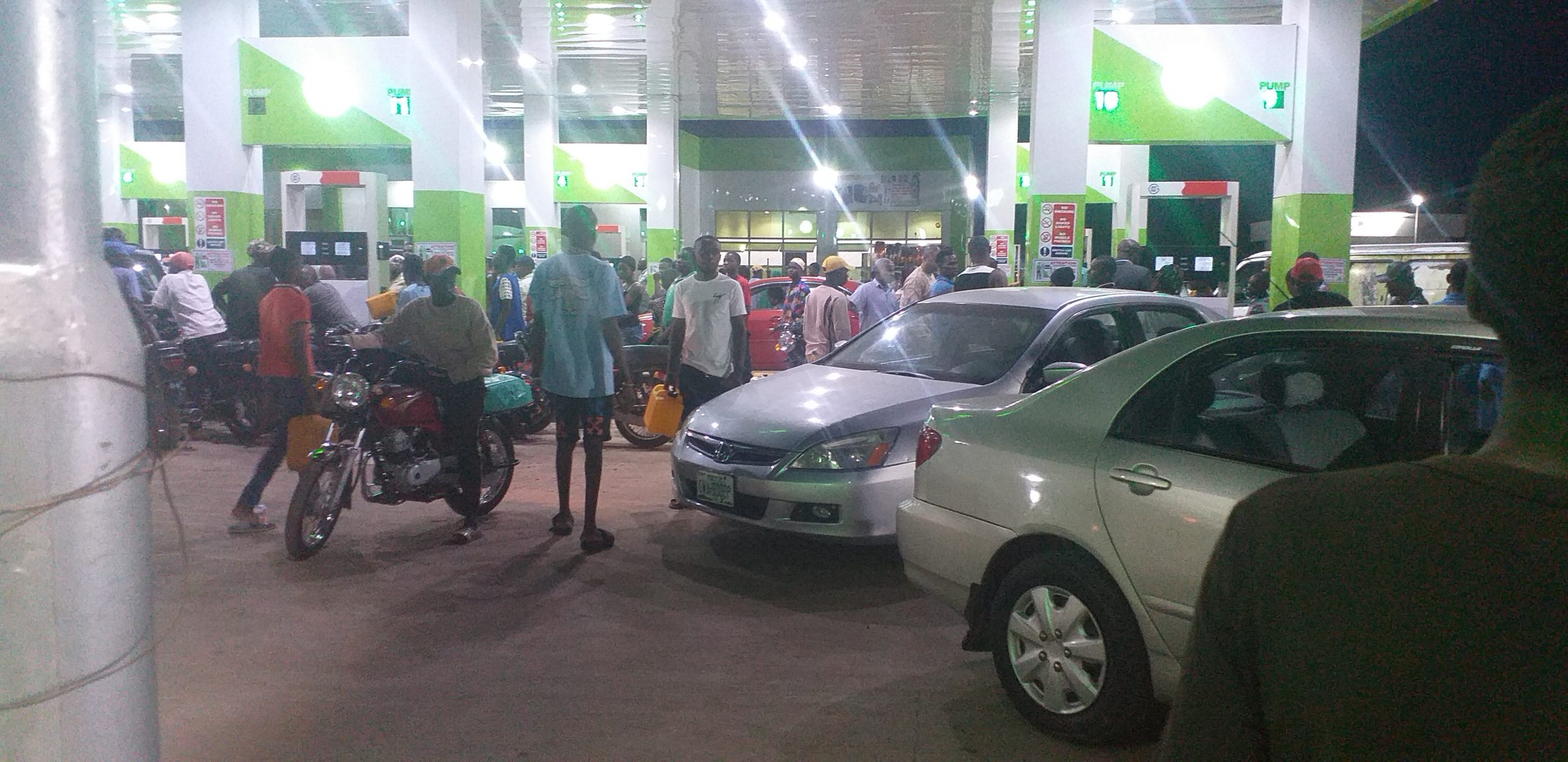
    The rate of fuel scarcity in some parts of the country is alarming. Most filling station predicts of fuel scarcity and as such refused to sell fuel. They bloodily fail to sell in other to make a double profit.

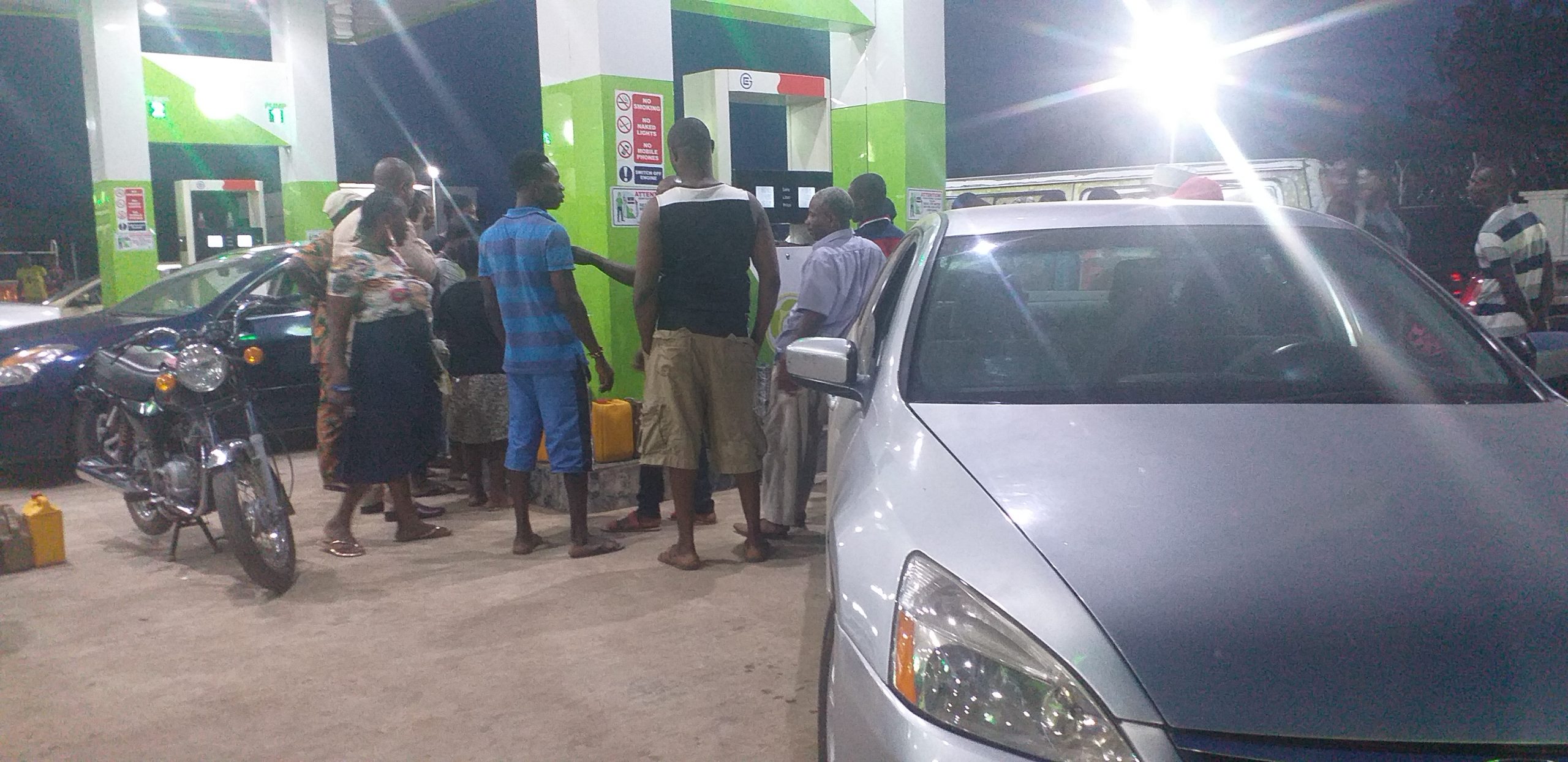
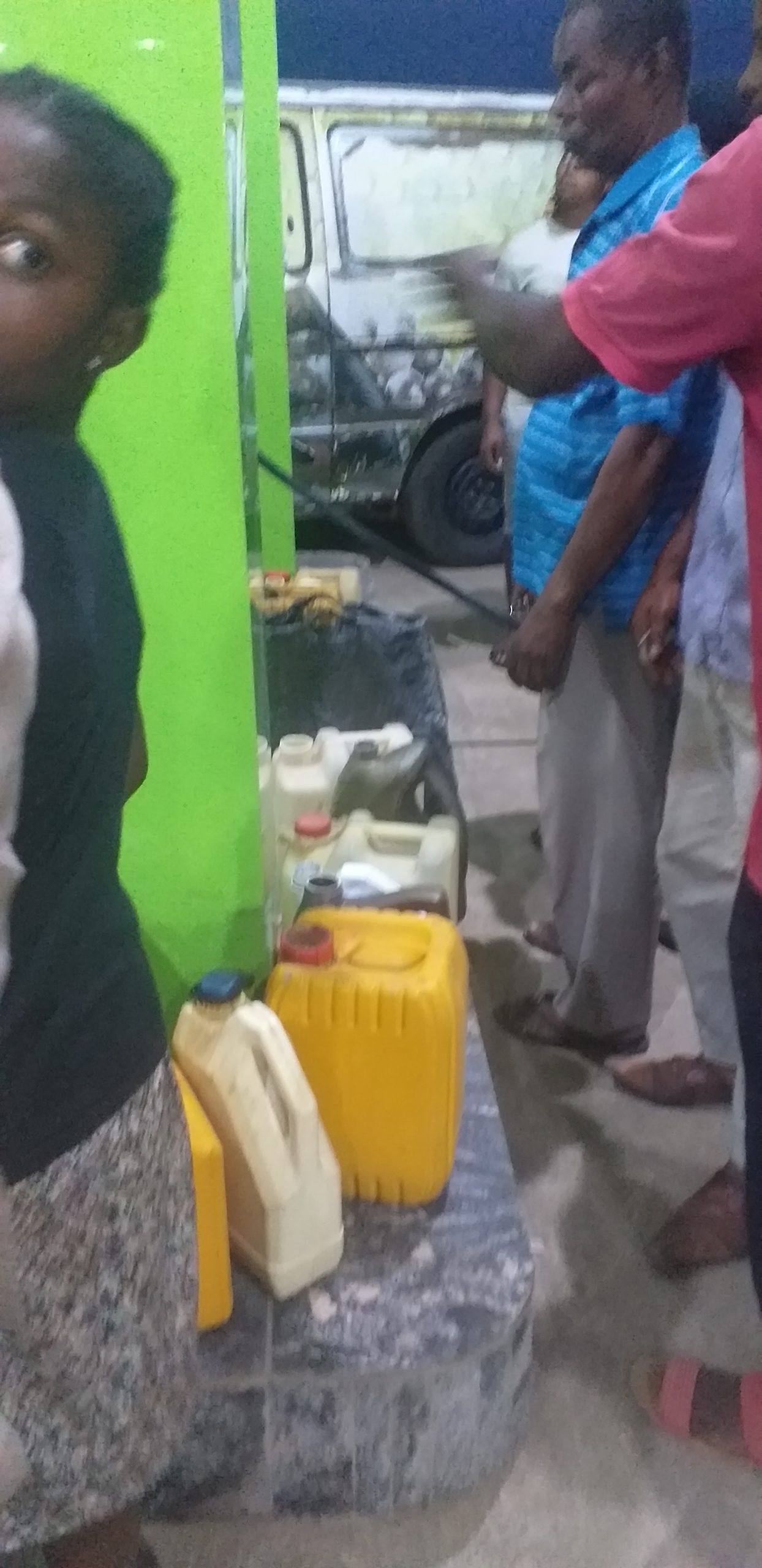
    Some filling station like Silveray Resources LTD located at old Karu road, Abacha road, Mararabar that decided to sell has taken the advantage to be collecting #100 from the individual that is buying fuel with gallons as an extra charge for gallons.

    The customers are angry for paying #100 before they can buy fuel.

    The customers have blamed the act on the power and electricity supplier who has refused to supply electricity at when due.
    70% of the population blamed Buhari as the original of the problem in the country.

    What can Nigerian citizens do? They have to subject themselves to wait patiently and pay the #100 to buy the fuel. Going to buy fuel in the filling station these few days is like going to work in the morning and come back home in the evening.

    There is a heavy queue and most people have been beside the filling station for more than four to five hours waiting for their turn.
    Most people waited for about 3hours and could not wait longer as such go home without the fuel ” what a waste of time – time is money” economy of the country is dwindling because the Nigerian federal government has made the citizens live in a bandage on their father’s land.

    Apart from the killing by bandits, hunger is killing more people in Nigeria. The citizens are dying. There is excess hunger in the country.

    The citizens are calling out the federal government for help.
    The lowest money in the county is N5 but could not buy anything in the market, even the smallest children sweet.

    The Nigerian currency has been devalued and things in the market are extremely high. Most companies that can provide a job for the citizens have been folder and the standing companies find it difficult to pay their staff.
    What a bad Government?.

  • The blackout occurred in Nigeria has been blamed on the collapse of eight energy vegetation and hydro station

    The blackout occurred in Nigeria has been blamed on the collapse of eight energy vegetation and hydro station

    The present energy outrage being skilled throughout the nation has been blamed on the collapse of eight energy vegetation and a hydro station. These energy vegetation embody Sapele, Afam, Olonrunsogo, Omotosho, Ibom, Egbin, Alaoji and Ihovbor.

    Whereas the Jebba Energy Plant was shut down for annual upkeep, seven different built-in energy crops, together with Geregu, Sapele, Omotosho, Gbarain, Omuku, Paras and Alaoji are experiencing fuel constraints, whereas the Shiroro plant is experiencing water administration issues.

    This was contained in a press release signed by the Senior Particular Adviser on Media and Communications to the Minister of Energy, Aaron Airtimas, on Thursday.

    In response to the assertion, the Minister of Energy, Sale Mamman, expressed remorse over the event, whilst he supplied apologies to Nigerians for the inconveniences the facility scarcity has triggered them, assuring that the ministry by means of the suitable companies was working assiduously to rectify the technical and gasoline issues affecting the crops.

    “The issue is attributable to the breakdown of a number of the Nationwide Built-in Energy Vegetation supplying electrical energy to the nationwide grid. The nationwide grid can be restored to its earlier distribution peak of about 5,600MW of electrical energy achieved early this 12 months,” the assertion learn.

  • Survey: OPEC oil output rises for 7th month in January

    Survey: OPEC oil output rises for 7th month in January

    Oil output of the Group of the Petroleum Exporting Nations (OPEC) rose for the seventh straight month in January, with Nigeria recording the most important output decline, in keeping with a Reuters survey.

    Read also: LEKOIL provides Trading and Operational update on the Otakikpo Marginal Field


    The output elevated by one hundred sixty,000 barrels per day (pbd) to achieve 25.seventy five million in January in contrast with the earlier month.


    OPEC’s compliance with the availability of curbs rose to 103% in January, in contrast with ninety nine% in December 2020.

  • Nigeria commissions LPG plant in Oredo

    Nigeria commissions LPG plant in Oredo

    Nigerian President Muhammadu Buhari has formally inaugurated Nigerian Petroleum Development Co.’s (NPDC) incorporated gas handling facility in Oredo.

    Situated in Edo State’s OML 111, the center will get gas in the Oredo area and should halt flaring.

    “Scaling up utilization of all Nigeria’s abundant all-natural gas resources can help spur industrialization”, Buhari said. He noticed that 2020 was the nation’s year of petrol. The Oredo plant is going to be the most significant onshore LPG plant in Nigeria targeting the national sector.

    READ ALSO:Nigerian Crude oil export earnings rebounded by 116 percent

    Launch the plant moves Nigeria a”step closer to self-sufficiency and encourages expansion for small and medium-sized businesses. The Oredo plant will produce countless direct, and indirect, employment opportunities and may even encourage the continuing drive for other automobile fuel,” the president stated.

    READ ALSO:Workers hail return of Adesina as AFDB President, decry fuel price increase in Nigeria

    The Oredo area provides 200 million cubic feet per day of moist gas into the plant. It’ll produce around 84 mmcf every day of lean gasoline. The area generates around 10,000 barrels per day of petroleum.

    The operator will export this gas into the local market through the Escravos Lagos Pipeline System (ELPS), making a possible 367 MW of electricity.

    READ ALSO: Lagos gas explosion: Plant has no operational licence — DPR

    The plant will meet 20 percent of Nigeria’s LPG demand.

    Kyari noted that the significance of gas earnings during 2020 when oil prices plummeted. “It has given us the courage to pursue different endeavors,” he explained. NPDC is a”leading provider of gasoline” for the national market and is expected to be the nation’s top producer of petroleum in a couple of decades, the NNPC official stated.

    READ ALSO: FIN holds exclusive conversation with Secretary General of African Petroleum Producers Organization

    Local firms Network Oil and Gas completed work on the job, while Loneb Resources Nigeria was a subcontractor for structures and piping. NPDC chose to proceed with the program in 2015. The Business expects earnings in the plant to be approximately $200mn


  • Nigerian Crude oil export earnings rebounded by 116 percent

    Nigerian Crude oil export earnings rebounded by 116 percent

    The Organisation of Petroleum Exporting Countries (OPEC) said the Nigerian Crude oil export earnings rebounded by 116 percent in November from 77 percent in April 2020.
    The OPEC Secretary General Mohammad Barkindo revealed this in the Virtual 19th Nigeria Oil and Gas Conference on Tuesday.

    The Theme of the Conference is’fortifying the Nigerian Gas and Oil for Financial Stability and expansion.”

    He said the Nigerian government ought to be commended for its proactive steps which had facilitated the rebounding of the Nigerian crude oil export earnings.

    “The Nigerian Crude oil export earnings dropped by 77 per cent within three months between January and April 2020, but since thenthey have slowly enhanced and rebounded by 116 per cent in November compared to April 2020 amount.

    “The government Ought to Be applauded for Fast and proactive actions,” he explained

    He expressed deep gratitude to president Muhammadu Buhari for being an advocate of OPEC in his philosophical dedication to promote stability.

    “We all in OPEC family know that the massive debt of gratitude we owe President Buhari for the pivotal role he played at the Declaration of Cooperation (DOC) procedure between OPEC and non- OPEC producing nations.

    “Particularly, his intervention in the highest level to secure decisions of this 10th extraordinary OPEC and non-OPEC meeting in April 2020,” he said.

    Read also: FIN holds exclusive conversation with Secretary General of African Petroleum Producers Organization

    According to him, the conclusions were taken in reaction to the unprecedented need slump resulting from Coronavirus pandemic.

    Mr Barkindo noted that the inspirational leadership, visionary courage and diplomatic ruling of president Buhari was conducive in bringing together OPEC and non-OPEC member nations and attaining consensus.

    He said Nigeria would always be considered among the most admired and honored members of their OPEC family, especially in the realm of consensus building.

    Commenting on the international economy, he said the prediction indicated that it would shrink by 4.3 percent in 2020; all of OECD economies are predicted to see a contraction, and all countries in Africa are anticipated to see a fall in GDP too.

    ” China is the only major economy expected to witness growth in 2020.

    “Millions of jobs were also lost as lockdowns took hold, together with the OECD seeing unemployment over twice 10 percent in 2020 and the commodity marketplace — including oil — virtually collapsed instantly, with demand falling up to 30 percent in the lowest moments in April.

    “The headwinds we’ve faced in the petroleum business, and as humankind, have at times appeared almost insurmountable,” he added.

    He explained beginning from January 2021, participating countries will adapt production by 500,000 tb/d from 7.7 mb/d into 7.2 mb/d.

    He noted that additionally, the meeting decided to hold monthly OPEC and non-OPEC Ministerial Meetings beginning in January 2021 to assess market conditions and ascertain further production adjustments on a month-by-month basis.

    “The damages period for over-production by DoC participating countries was extended until the end of March 2021 to ensure full compensation.

    Read also: FIN holds exclusive conversation with Secretary General of African Petroleum Producers Organization

    “The petroleum market reacted immediately in a favorable fashion, with statements made that the activities strengthen the conviction that the DoC is focused on maintaining its stable and steady path through 2021,” he further added.

    (NAN)

  • The country’s oil and gas resources being developed via joint partnerships

    The country’s oil and gas resources being developed via joint partnerships

    The country’s oil and gas resources being developed via joint partnerships involving the Nigerian National Petroleum Corporation and private companies are suffering financing shortfall as money telephone payment from the NNPC has hit a record low.

    Amid the coronavirus-induced sharp fall in its own earnings, the Federal Government, through the NNPC, decreased its spending to the JV funds to $91.52m in August, the lowest in a minimum of one year, by $94.84m in July.

    Read also: PENGASSAN strike: Over 2.9b litres of petrol available, NNPC assures Nigerians

    The NNPC, that signifies the Federal Government from the JVs, has a duty to generate money call payment to the maturation of the resources.

    Beneath the JV agreement, both the NNPC and the private companies contribute to the financing of operations at the percentage of the equity holdings and also generally obtain the generated crude oil at precisely the exact same ratio.

    Read also: $21.686B NLNG Fund: Reps angry over NNPC GMD’s rejection of summons

    Along with this dollar allocation of $59.66m into the JV money call accounts, the naira Part of N12.45bn ($32.86m) was moved into the accounts from national crude oil receipts in August, according to the NNPC

    Back in July, the dollar allocation into the JV money call account was 54.98m whereas the naira percentage was N14.35bn ($39.86m).

    Read also: NNPC blames #ENDSARS protests, as fuel queues return

    Generation from the JV resources has diminished over the last couple of decades, partly because of funding constraints occasioned from the NNPC’s inability to match its own money call duties as and when expected.

    The JVs accounted for 31.26 per cent of their average daily production of 1.69 million barrels listed in July, in contrast to 33.20 per cent in June, based on NNPC data.

    Read also: Ibigwe modular refinery, a landmark achievement – GMD, NNPC

    The federation crude petroleum and gasoline lifting is categorized into equity export and nationally, each of which can be raised and promoted from the NNPC and the profits remitted in the Federation Account.

    The equity export receipts, after adjusting to your JV cash calls, are paid straight into the Federation Account domiciled from the Central Bank of Nigeria.

    Read also: Otedola Bridge explosion: NNPC commiserates with victims, Lagos Govt

    Domestic crude petroleum of 445,000 barrels per day is allocated to optimizing to satisfy domestic product distribution.

    Payments are effected into the Federation Account from the NNPC after eliminating product and crude reductions, pipeline fixes and management costs incurred.

    Read also: Deregulation: NNPC paid itself N1.53trn as subsidy for petrol in 3 years