Category: Business

  • Lawmakers Lament as Nigeria’s Debt Reaches an All-time High of N42.84trn

    Lawmakers Lament as Nigeria’s Debt Reaches an All-time High of N42.84trn

    At the resumption of plenary yesterday, the House of Representatives joined the growing number of Nigerians who have expressed concern that the country may be approaching a debt trap, as the Debt Management Office (DMO) revealed that Nigeria’s total debt as of June this year stood at N42.84 trillion.

    The House also lamented the drop in crude oil production caused by theft and sabotage. The concerns were raised by House Speaker Femi Gbajabiamila in his welcome remarks following the lengthy recess.

    Similarly, while welcoming his colleagues back from their two-month annual vacation, Senate President Ahmad Lawan raised the alarm about massive crude oil theft in the oil-rich Niger Delta. According to Lawan, the problem was gradually putting the economy into a coma.

    The senate president pledged necessary support for the Independent National Electoral Commission (INEC) in its effort to deliver a successful poll next year.

    The legislative proclamations came on the same day President Muhammadu Buhari, in separate letters, requested the Senate and House of Representatives to approve the issuance of promissory notes totalling over N402 billion for the defrayal of some federal debts.

    A breakdown of the debt figures released by the DMO yesterday showed that the bulk of the federal government borrowings were done domestically, with 72.53 per cent being FGN bonds.

    A statement posted on the DMO’s website revealed that Nigeria’s total public debt stock, comprising the debt obligations of the federal, state governments, and the Federal Capital Territory (FCT) rose by N1.24 trillion within three months, from N41.60 trillion ($100.07 billion) as at March 30, 2022 to N42.84 trillion ($103.31billion) by June 30, 2022.
    Latest data released by the DMO also indicated that domestic debt stock for the review period stood at N26.23 trillion ($63.24 billion) due to new borrowings by the federal government to part-finance the deficit in the 2022 Appropriation (Repeal and Enactment) Act, including fresh borrowings by state governments and the FCT.

    From the N26.23 domestic debt stock standing during the reference period, the 36 states and FCT owed N5.281 trillion, while the federal government accounted for the balance of N20.949 trillion.

    The DMO explained that total public Debt to GDP as of June 30, 2022, was 23.06 per cent, compared to 23.27 per cent as of March 30, 2022, noting that the Debt Service-to-Revenue Ratio remained high.

    It said, “The total public debt stock, representing the domestic and external debt stocks of the Federal Government of Nigeria, the 36 state governments, and the Federal Capital Territory, was N42.84tn ($103.31 billion) as of June 30, 2022. The comparative figures for March 30, 2022 was N41.60tn ($100.07 billion).”

    DMO stressed that external debt remained the same at N16.61trillion ($40.06 billion) from the first quarter (Q1) to the second quarter (Q2) 2022, adding that 58 per cent of external debts are concessional and semi-concessional loans from multilateral lenders, such as the World Bank, the International Monetary Fund (IMF), AfreximBank, and African Development Bank (AfDB), and bilateral lenders, such Germany, China, Japan, India, and France.

    Meanwhile, an analysis of the DMO figures showed that domestic debt service between April 30 and June 30, 2022 gulped N664, 728,501,948.46. This was, however, less than the N668, 685, 710,112.98 committed to debt service in the first three months of 2022 (Q1).

    Debt service instruments on which the amount was expended included Nigeria Treasury Bills (NTBs), Federal Government Bonds, and FGN Savings Bonds, among others.

    The new DMO debt data also revealed that Lagos State retained its top spot as the state with the highest debt stock. As at June 30, 2022, the total domestic debt stock of the country’s economic nerve-centre stood at N797, 305,312,602.53.

    Delta State came second with N378, 878,236,830.75, followed by Ogun State with N241, 782,021,304.96; Rivers State, N225, 505,011,356.83; and Imo State, N210, 394,836,519.93.

    Akwa Ibom was next on the debtors’ scale with N203, 951,611,822.07, while Jigawa retained its least-indebted state profile with 45,135,377,621.30, and Ebonyi State trailed with N59, 111,939,636.77.

    Lawmakers Lament Rising Debt, Crude Oil Theft, Seek Solutions

    The House of Representatives, at resumption of plenary yesterday, expressed concerns over the rising debt profile of the country and crude oil theft. House Speaker Femi Gbajabiamila raised the fears while delivering his welcome remarks.
    Gbajabiamila stated that the concerns emerged from interactive sessions of the Senate and House Committees on Finance with the Ministries, Departments and Agencies (MDAs) of the government on the Medium Term Expenditure Framework and Fiscal Strategy Paper (MTEF/FSP). He said the issues emerged while considering the scope of deficit financing to be proposed in the new budget and the decline in crude oil production due to theft and sabotage.

    Read Also: 2023: Ohanaeze regrets supporting Atiku in 2019

    Gbajabiamila said while the House appreciated that the current fiscal conditions necessitated borrowing to finance budgetary expenditures, there should be worry about the long-term effect of the debt burden on the country and the ability to pay in a responsible and sustainable way.

    The concerns, he said, would be central to the consideration of the 2023 Appropriation Bill when presented, adding that appropriations for new projects for MDAs would be influenced by the extent to which existing projects have been funded and their performance in executing these projects as intended.

    On crude oil theft, the speaker said perpetrators of the brazen heist threatened the ability to serve the Nigerian people and meet the demands of governance and nation building. He described their actions as treason against the country, for which they must be held accountable.

    Gbajabiamila stated, “Due to theft and various acts of economic sabotage, we are experiencing a massive decline in the volume of crude oil exports. Our crude oil export of 972,394 bpd for August is the lowest we have recorded in the last two decades.

    “At a time when we are already experiencing severe financial constraints. There are mechanisms in place to prevent these sorts of bad actors, and the government spends significant amounts of money each year to protect oil and gas resources in the country
    “Evidently, these existing arrangements do not suffice. As such, there is an urgent need to review them and make the necessary improvements. It is also of particular importance that the perpetrators of these crimes against the state are identified, prosecuted and subjected to the stiffest penalties the law allows.

    “Those who seek to impoverish our country in this manner have declared war against the Nigerian people.

    “The government’s response must be sufficient to convince them of the error of their ways and deter others who might be tempted to join in their treason.

    “I met with the finance minister and the Director General of Budget and made it clear to them that enough of crude oil theft. Nigerians don’t want to hear that again. What do you intend to do about it? That’s the important question.”

    Speaking on the lingering strike by the Academic Staff Union of Universities (ASUU), Gbajabiamila said the current framework of government-sponsored tertiary education was no longer working. He said the goal of the House was to begin an assessment of the current system and consider all available options for complete reform.

    The speaker claimed that the country recently recorded significant victories against the purveyors of violence and conflict across the country. He said the explosive growth in the trade and consumption of narcotics contributed to the worsening insecurity in the country,

    He warned that the country could not afford to be overrun by the cancer of the drug trade and the devastation it brought.

    Gbajabiamila lamented that various priority bills were still pending at different stages, despite the limited time available for the ninth House.

    Crude Oil Theft Driving Economy into Coma, Lawan Laments

    Senate President Ahmad Lawan, yesterday, raised the alarm about the rate of crude oil theft in the Niger Delta, saying it is pushing the economy into a coma. Lawan stated this at the senate plenary while welcoming his colleagues back from their two-month annual recess.

    The senate president stressed the need for improvement in the country’s revenue earnings. He warned that unless prompt action was taken to stop crude oil theft, the development might stagnate the economy.

    Lawan said, “The economy of our country is still challenged. The Senate, working with the House of Representatives and the executive, needs to continually seek for better responses to the economic situation.

    “Generation and collection of revenues have remained major challenges. Also, the massive loss of revenue through oil theft is debilitating and threatening to throw the economy into a coma.

    “Revelations about the scale of oil theft shows that until government takes decisive actions, Nigeria could soon lose any revenue from that sector.

    “We must, therefore, work to ensure that everything is done to curtail this theft.”

    Lawan recalled that the senate had during the recess showed serious concerns about the security situation in the country. He said the red chamber had two engagements with the National Security Adviser, Chief of Defence Staff, service chiefs, Inspector General of Police, Director General of Department of State Services, Director General of Nigerian Intelligence Agency, and other heads of security agencies.

    “From the assessment of the prevailing situation, our security agencies are recording more successes and the situation seems to be improving,” he stated.

    The senate president noted that the upper chamber would continue to engage defence and security agencies through appropriate committees to ensure that the follow-up engagements were sustained.

    On the 2023 general election, Lawan expressed the willingness of the National Assembly to ensure transparent and credible elections next year. He noted that the innovative amendment to the Electoral Act by the National Assembly provided the Independent National Electoral Commission (INEC) with the wherewithal to deliver on a successful general election in 2023.

    Lawan said, “The year 2023 is a momentous period for Nigeria, as elections will be held across the country. Nigerians are expected to exercise their franchise.

    “Therefore, the senate, indeed the National Assembly, will work with Independent National Electoral Commission (INEC) to ensure very successful, transparent, and credible elections.

    “We are ready to support INEC in all possible ways as a legislature. Already, the timely amendment of the Electoral Act 2022 has provided very important innovations in ensuring better electoral climate.”

    Buhari Seeks National Assembly Approval for N402bn to Settle Debts

    President Muhammadu Buhari, in separate letters yesterday, requested the Senate and House of Representatives to approve the issuance of promissory notes totalling over N402 billion.

    The first request to the Senate, which amounted to N375 billion, was read at plenary by the senate president and it was meant to settle outstanding claims owed various exporters.

    Other debt payment requests to the Senate contained in the letter were to be routed through the DMO. They included N6.706 billion for Kebbi State Government for the construction of federal roads in the state and N2.706 billion for Taraba State Government, also for the construction federal roads there.

    Buhari, in another request, also read at plenary by Lawan, sought the Senate’s approval for the issuance of N18.623 billion promissory note for Kebbi State Government.

    The president, in his letter, said the payment of N18.623 billion to Yobe State Government through the DMO would help the state to offset funds expended on the execution of five different federal road projects in the state.

    Buhari, in the two letters, appealed to the senators to treat his requests with dispatch.

    Meanwhile, Buhari, in another letter of request, asked the Senate to screen for confirmation the appointment of Mohamed Sabo Lamido as Executive Commissioner, Finance and Accounts of the Board of Upstream Regulatory Commission.

    Lamido’s appointment, as explained by the president, was necessitated by the death of Hassan Gambo, who hitherto served in that capacity before his death.

    The president, in a separate letter to the House of Representatives, also sought consideration and approval of the issuance of promissory notes by the DMO for the construction of federal roads in Yobe, Kebbi, and Taraba States.

    In the two letters dated September 16 and read by the speaker at the plenary, the president said while Yobe State, as approved by the Federal Executive Council (FEC) will get N18, 663,843,119.39 for the execution of five road projects, Kebbi will get N6, 706,835,495.12 for the construction of two road projects, and Taraba will get N2, 470,525,729.53 for one road project.
  • 56% of Nigeria’s Agricultural land not in use, says Minister

    56% of Nigeria’s Agricultural land not in use, says Minister

    According to the federal government, 56% of Nigeria’s arable land is underutilised.
    During the ongoing 45th regular meeting of the National Council on Agriculture and Rural Development in Jos, Plateau State yesterday, the Minister of Agriculture and Rural Development, Dr. Mohammad Abubakar, stated, “Nigeria is endowed with a total of 79 million hectares of agricultural land, with only 44 percent being cultivated.” Additionally, the country has 267 billion cubic metres of fresh surface water and 58 billion cubic metres of underground water, with 37 billion cubic metres only stored in dams.

    “The country’s annual rainfall ranges from 300mm to 4,000mm.” Conversely, potential irrigable area is approximately 3.14 million Hectares, with less than 7% currently utilised.”
    He, however, said the government was doing all it could to encourage agriculture having trained 153,124 women and youths on various agricultural crop, fishery and livestock value chain and empowered 142,703, trained 214,787 farmers on Good Agricultural Practices (GAP) and 220,018 farmers on Farmer Business School (FBS).

    The minister said, “recent reports from the National Bureau of Statistics indicates that the agricultural sector topped the chart in a survey of seven sectors identified to have contributed to the Nigeria economy in the second quarter of 2022.
    “It out-performed six other sectors comprising Trade, Telecommunications, Manufacturing, Oil & Gas, Real Estate as well as Finance & Insurance. The chart revealed that Agriculture alone contributed 23.3 per cent to GDP (Half Year 2022).”
    To improve its performance, the minister said the federal government was strengthening the linkage between research, agriculture and industry by intensifying commodity value chain development process.

    “This is being guided by the new framework of the National Agricultural Technology and Innovation Policy (NATIP), 2022-2027, launched in August 2022, which seeks to modernise the agricultural sector in line with changing global food systems and supply chains.
    “Actually, NATIP is the Ministry’s response to the present Administration Agenda of diversifying the nation’s economy from petroleum oil-based to Agriculture and solid minerals.

    Read Also: NATFORCE operations illegal, says security Council

    “The document serves as successor policy of the Agricultural Promotion Policy (APP), 2016-2020, with a view to developing priority value chains on the basis of comparative ecological advantage across crops, livestock and fisheries sub-sectors in collaboration with the States Government.
    “In pursuant of our mandate of ensuring food security, employment generation and wealth creation in the country, the Ministry is committed to supporting the establishment of over 100 processing centres in the rural communities across the nation under the Green Imperative Project of a private-driven mechanization programme.”

    Abubakar said the Ministry hopes to vigorously develop clusters, rural nodal centres and rural cottage industries, as well as establish six Special Agro-industrial Processing Zones (SAPZ) nationwide.
    “As an impetus, Mr. President has approved an intervention fund for the completion of the 10 Nos large-scale rice mills with a combined minimum capacity of 320 MT per day in 10 states. The Mills are located in Jigawa, Kano, Adamawa, Niger, Kaduna, Gombe, Ekiti, Ogun, Bayelsa and Federal Capita Territorry (FCT).”
    Also speaking, Minister of State for Agriculture, Hon. Mustapha Shehuri said he was confident that given the level of cooperation and partnership amongst the Ministry’s state and non-state actors, and with the application of appropriate technologies, the goals of achieving food security, diversifying the economy for agribusiness undertakings and growing the GDP would be achieved.
    In his remark, the Governor of the state, Mr. Simon Lalong, who thanked the minister for giving the state attention and support in the process of implementing the National Livestock Transformation Programme (NLTP), added that the, “NLTP is so dear to us because it contains strategies that will tackle the farmer-herder clashes occasioned by unending crisis that has brought pains and retrogression in the state. As one of the pilot States, we are optimistic that the programme will bring economic prosperity to our people.”

    He said over the last seven years, the state had given enormous attention to agriculture by ensuring the provision of farm inputs such as tractors, fertilizers, chemicals, improved seedlings and many more towards ensuring that our people benefit from the natural endowments of the state.

  • 2023 budget: Senate to slash proposed N6trn import duty waiver by 50%

    2023 budget: Senate to slash proposed N6trn import duty waiver by 50%

    The Senate will reduce the import duty waivers proposed for the N19.76 trillion 2023 budget, which will result in a N12.4 trillion deficit.

    Solomon Adeola, Chairman of the Senate Committee on Finance, stated this in Abuja on Tuesday during an interactive session with revenue-generating agencies on the 2023-2025 Medium Term Expenditure Framework, MTEF, and Fiscal Strategy Paper, FSP.

    According to Mr Adeola, the reduction became necessary due to the projected N12.4 trillion deficit in the 2023 budget estimates and the nation’s current dwindling revenue profile.

    Mr Adeola stated that a concerted effort must be made to reduce the growing budget deficits, and that borrowing trends cannot be allowed to continue unabated.
    He said there was an urgent need to look inward towards increased revenue generation and blocking of leakages.

    Read also: School Resumption: Tonto Dikeh Urges Parents To Be Courageous

    “About six trillion was provided as waiver for companies in the 2023 proposal, but we should reduce it by 50 per cent.

    “I don’t think we can accommodate that, we need to reduce the six trillion waiver by 50 per cent,” Mr Adeola said.
    Mr Adeola also urged the Ministry of Finance to place 63 Government Owned Enterprises, GOEs, on cost of collection to fund their expenditures with immediate effect.

    This, he said, would generate more revenue to fund the deficit envisaged in 2023 budget.
    According to him, placing the agencies on cost of collection would spur the GOEs to collect more, because the more they generate, the more they receive.

    Mr Adeola also called for a review of pioneer legislation status on tax of some companies in the last five years.

    The Minster of Finance, Budget and National Planning, Zainab Ahmed, in her presentation on overview of 2023-2025 MTEF/ FSP disclosed that the Federal Government revenue for 2023 was projected at N6.34 trillion.

    According to her, N373.17 billion would be generated from oil sources, while the balance of N5.97trillion would be earned from non-oil sources.

    She also said the budget deficit for 2023 was projected to be N12.41 trillion, while the federal government’s 2023 aggregate expenditures was projected to be N19.76 trillion.

    Read also: Agosasa: Gov Abiodun vows to arrest sponsors, perpetrators of violence

    Responding to questions from senators, she said that it was the assumption of government that fuel subsidy would be exited by June 2023.

    She, however, expressed hope that the parliament would see a better way of ensuring exist of fuel subsidy.

    She said the deficit envisaged in the budget was a concerned and debt serving was consuming a chunk of the nation’s revenue.

    Mrs Ahmed said there was need to improve the revenue and reduce leakages inherent in the system.
    “One of the ways to increase our revenue, is to strengthen our monetary generating enterprises and to provide real sanctions to defaulters based on the fiscal responsibility act.

    On issuing tax credit to some companies and waivers, she said: ”Tax credit are issued only when companies construct projects and the projects are certified and certificate issued by the Federal Ministry of Works.

    She also said that some of the waivers are backed by laws enacted by the legislature, adding that a review of the waivers would require an amendment to such laws.
    The Controller -General of Nigeria Customs Service, NCS, Hamid Alli, in his presentation, said the NCS was working on implementing the collection of telecommunication tax in 2023 to boost the nation’s revenue.
    He said the NCS projected a target of N2.8 trillion revenue collection for 2023, N3.5trillon for 2024 and N3.75trillion for 2025.

    The Chairman Federal Inland Revenue Services, FIRS, Muhammad Nami, told the committee that tax credit was an important innovation of government that has yielded positive results from Sept 2019 when it was introduced through Executive order 007 by President Muhamnadu Buhari
    He urged the committee not to legislate against it as it was only given to companies with evidence of projects execution.

    Read Also: Buhari Hails CBN, NDIC, NAICOM, Others on Financial System Stability

    He informed the committee that out of the N6.08trillion projected revenue from January to July 2022, FIRS generated N5.59trillion and assured that the N10.4trillion projected for the year, would be achieved.

    The revenue generating agencies expected to appear at the five-day programme to make presentation on their revenue projections for the 2023-2025 MTEF-FSP includes the Central Bank of Nigeria, CBN, Nigeria Port Authority, amongst others.

  • How I make N2 million monthly selling sex-enhancement drugs – Vendor, Yusuf Bashir

    How I make N2 million monthly selling sex-enhancement drugs – Vendor, Yusuf Bashir

    by Kirk Leigh

    Yusuf Bashir gleefully counts his ward of cash from the afternoon sales, the total so far was N35, 000. In response to this reporter, he stated in pidgin English, “By the end of today, I fit make N100,000, walahi.” Many people continue to transfer. It’s a good business, and I have to tell you the truth.”

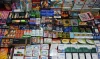
    Yusuf makes up to N2 million per month selling sex enhancement drugs to men and women. His small open kiosk in Abuja’s Utako market is stocked with products such as ‘butt’ and breast enlargement creams,’sweeteners’ for women, herbs that promise to prolong sexual intercourse for men, and a variety of tablets, syrups, herbs, and creams that claim to enlarge the male reproductive organ.

    Yusuf claims that he stocks products that can make a woman attract a target male partner including those that can diabolically make a man spend more on a woman.
    He also sells creams and powders that can help a man ‘catch the love of his life”.

    He called this category of products, ‘Kanya mata’ for women and ‘Kanya maza’ for men.
    These kinds of products have been known to be popular in northern Nigeria and are a common sight at roadside kiosks and markets.
    The footfall in his kiosk on a hot afternoon confirms the lucrative nature of the business.
    His customers include returnees while others are new and found him based on word-of-mouth recommendations.
    He claims the recommendations are testaments that his drugs are effective.
    The supply value chain
    Yusuf gets his supplies from Kano, the ancient city which is about 7 to 8 hours away from Abuja by a fast-moving car but about 18 hours in the case of Yussuf who takes the night bus.

    Read also: Mother cries for help over another Nigerian missing in Northern Cyprus

    He makes that journey every two weeks to keep up with demand.
    While some of the products are locally made, especially in Kano, others are made in the Middle East especially Saudi Arabia and China. The products are imported by a closely knit band of sex enhancement drug businessmen who have built a solid distribution chain that is built to meet surging demand. He states that some of his products are NAFDAC approved some are not, especially some of the locally made ones.
    Customer Demographics
    Yusuf explains that his customer demographics are diverse in age and gender but most are women from their mid-twenties to late forties. Men patronize the business as they seek drugs that can give them longer staying power during sex. But for Yusuf, it is the women he cherishes the most.

    “It is the babes that carry my market up”, he said, referencing women are his largest customer base. “Them they spend the money without looking back as far as dem get wetin dem they look for”, Yussuf explains.

    Pointing to the section where he arranged his women-related inventory, he said that more than half of what he sells is of interest to women while men on the other hand are a hard sell. “Men de too dey price the medicine, but women go pay you sharp sharp. Sometimes dem no want people to see wetin dem de buy”.

    NAFDAC’s position on sex-enhancing drugs
    Regulator, the National Agency for Food and Drug Administration and Control (NAFDAC) is reported to have warned Nigerians to desist from the use of sex enhancement drugs insisting that they could lead to stroke or sudden death.

    NAFDAC Director General, Prof. Mojisola Adeyeye, said this last December in her Christmas message to Nigerians. She noted that most of the drugs are not registered with NAFDAC. “They are smuggled into the country.
    If they were registered, the producers and peddlers, alike, would not be doing what they are doing in the supermarkets, social media platforms and on the streets,” Adeyeye said.
    The NAFDAC boss described as false the claim by producers of the drugs that they have no side effects, stressing that the agency will not relent in going after peddlers and bringing them to book for violating regulations.

    The money in sex medicine
    Despite NAFDAC’s warnings, many are attracted to the business due to its lucrative nature. Another trader, Bose, who spoke to this writer operates at the Car Park at Federal Secretariat in Abuja. She displays her wares at the car park in the booth of her parked car. She doesn’t need to pay for a shop.

    Although she declined to say how much she makes, Bose told this reporter that she is comfortable and not looking to leave the business soon, saying that her inventory turnover period is very short; a matter of days.
    The industry
    There is a dearth of research on how much the industry is worth but Pfizer, makers of viagra netted a whopping $1.6 billion in 2016 selling the product to men who want to prove a point in the bedroom.

    Another major market where sex enhancement drugs are sold is on online channels like social media.
    Instagram and Facebook serve as haven while Jiji.com and Jumia have become a hypermarket for dealers who would deliver at the click of a button. To underscore interest by Nigerians is the number of followers garnered by Jaruma, a self-claimed apostle of Kayan mata, a local variety of sex enhancers for women. She is followed by an eye-popping 1.2 million people.
    There are over twenty long threads on the subject on Nairaland with many prescribing supposed efficacious remedies for men suffering erectile dysfunction.
    Health implications
    There are health implications of using sexual enhancers, according to medical practitioners. Barnabas Health Medical Group, which is based in New Jersey, USA itemised the following effects:

    Read also: Breaking: Queen Elizabeth II’s funeral holds Sept. 19

    Damage to the urethra (tube that lets out urine and semen)
    Permanent difficulty maintaining an erection
    Permanent problems with urination
    Penis “fractures” (a rupture of the tissue in the penis) causing bleeding and requiring surgery
    Dangerous drops in blood pressure
    Healthline, a popular online medical journal itemises, dizziness, headaches, body aches pain, digestive disorders, vision changes and flushes as some of the side effects of using sexual enhancement medicine.

    Interview done, Yussuf hurries to leave the shop to catch his night bus to Kano promising to bring ‘something strong’ for this reporter. But he would be failing his tradition if he leaves without handing a ‘token’ to this reporter, he insists. So, with a mischievous smile, he hands a small stuffed grocery bag to the reporter, saying, “Your madam go de call you Mai Gidda from today”.

  • 29-year-old Nigerian, Chidozie Obasi wanted in the United States for $31million fraud

    29-year-old Nigerian, Chidozie Obasi wanted in the United States for $31million fraud

    By Kirk Leigh

    The US Department of Justice (DOJ) announced over the weekend that a Nigerian man, 29-year-old Chidozie Collins Obasi, had been declared wanted by the US for defrauding hospitals in the New York Area of $31 million.

    Between September 2018 and June 2020, the heist involved offering non-existent COVID-19 ventilators for sale in hospitals primarily in the New York area.

    In a statement by the DOJ, seen in United States Attorney Jacqueline C. Romero announced that Chidozie Collins Obasi, 29, of Nigeria, “was charged by Indictment with one count of conspiracy to commit mail and wire fraud, six counts of mail fraud, and 16 counts of wire fraud, all stemming from a complicated, evolving fraud scheme that initially targeted Americans through a spam email campaign offering illegitimate “work from home” jobs, and then during the COVID-19 pandemic shifted to targeting U.S. hospitals and medical systems by offering non-existent ventilators for sale beginning in March 2020, and finally shifted again in June 2020 to using stolen identity information of American citizens to apply for and obtain Economic Injury Disaster Loans (“EID Loans”).
    The Indictment alleges that Obasi perpetrated this fraud from Nigeria, with the help of co-conspirators in Canada and elsewhere. The defendant and his co-conspirators are alleged to have obtained more than $31,000,000 through this multi-faceted fraud scheme, with the overwhelming majority of that money – more than $30 million – coming from the State of New York for the intended purchase of ventilators.

    What the US DOJ is saying
    The statement went further to explain how Obasi and his gang operated.

    “The scheme alleged in the Indictment began in September 2018, with a spam email campaign that offered phony ‘work from home’ jobs.
    “When a person responded to the phony job offer, Obasi or a co-conspirator posed as a representative of a legitimate company, often a supposed medical equipment supplier based outside the United States, and offered the person a job as the company’s U.S. representative with responsibilities including collecting on outstanding invoices.

    Read Also: Mamu’s Arrest: Gumi breaks silence, accuses DSS of terrorism

    “An accomplice in Canada then sent the new ’employee’ counterfeit checks purportedly from customers of the company, and the new ’employee’ deposited the checks, took a commission, and wired the rest of the money to a foreign bank account ostensibly owned by the fake company. Obasi and his co-conspirators obtained more than $1 million in this manner.
    “In 2020, Obasi went further to pose as a ventilator salesman for an Indonesian medical supply company.
    “In approximately March 2020, soon after the COVID-19 pandemic hit the United States and ventilators were in high demand, Obasi posed as a representative of an Indonesian-based medical supply company offering ventilators for sale, and claimed to have a large stockpile of ventilators manufactured by a German company.
    “Obasi allegedly convinced a medical equipment broker in the U.S. to broker sales of these non-existent ventilators, and ultimately deceived the State of New York into wiring more than $30 million for the purchase of ventilators that did not exist.
    “Later, in approximately June 2020, Obasi and his accomplices took advantage of the EID Loan programme by using stolen identities of U.S. citizens to apply for and obtain more than $135,000 in EID Loan proceeds,” the statement read.
    According to the indictment sheet, Obasi who is presently a fugitive is being charged with “one count of conspiracy to commit mail and wire fraud, six counts of mail fraud and 16 counts of wire fraud.”

    He faces a maximum sentence of 21 years in prison, a five-year period of supervised release, and a $5,750,000 fine and would also be required to make full restitution of the more than $31,000,000 that he allegedly obtained by fraud if found guilty.

  • UBA records double digit growth in H1

    UBA records double digit growth in H1

    United Bank for Africa (UBA) Plc, Africa’s Global Bank, has announced its audited financial results for the half year ended June 30, 2022, with double-digit growth across key income lines and significant progress in the contribution from its subsidiaries.

    The Bank was able to deliver a 12.6% increase in profit before tax to N85.7 billion at the end of the first two quarters of the year, up from N76.2 billion in the same period of 2021.

    Despite numerous business, economic, and geopolitical environmental challenges, such as ongoing supply-chain disruptions caused by Covid, the Russia-Ukraine conflict, and the resulting rise in global commodity prices, that characterised the first six months of the year, the Tier 1 lender delivered impressive numbers, with gross earnings hitting N372.4 billion, a solid 17.8 per cent growth when compared with N316billion that was posted the same period in the prior year.

    Operating income also grew by 20.1 per cent to N256 billion in the period, while the firm’s profit after tax closed the first half stronger at N70.3 billion, up by 16.1 per cent compared to the N60.6 billion same period in 2021.

    Read also: Barcelona prepare lawsuit against Atletico Madrid over Griezmann

    A further breakdown of the bank’s half-year result, which was filed with the Nigerian Exchange Group(NGX), in the early hours of yesterday, September 8, showed total assets continued on an upward trajectory, increasing 5.4 per cent to about N9 trillion.

    UBA delivered on its core mandate of extending loans to credit-worthy customers, with loans and advances increasing by four per cent to N3trillion; whilst deposits rose by 7.9 per cent to N7.6 trillion at the end of the period.

    Shareholders’ funds however declined marginally by two per cent to N788.5 billion, owing mainly to the decline in its foreign operations translation reserve as well as fair value losses suffered from the investment securities valuation occasioned by the increasing interest rate regime across the globe.

    With the strong double-digit growth in PAT vis-à-vis the marginal decline in shareholder’s fund, the Group’s return on equity (RoE) closed the period stronger at 17.7 per cent, whilst return on assets (RowA) came to 1.6 per cent, up by nine basis points.

    Reaffirming its commitment to shareholders and the investing public, the board of directors of UBA Plc declared an interim dividend of 20kobo per share for every ordinary share of 50 kobo each held by its shareholders.

    UBA’s group managing director/chief executive officer, Oliver Alawuba, commenting on the result, said the stellar performance was in line with management’s expectation, adding that the bank’s continued focus on its Customer 1st philosophy to pursue themission of providing superior value to our stakeholders had increased low-cost customer deposits, and boosted the growth of its payment and transaction banking.

    “The financial year 2022 showed initial signs of recovery of economies across the globe, despite continued COVID-induced supply-chain disruptions. However, geopolitical challenges including the Russia and Ukraine conflict, resulted in escalation of global commodity prices, particularly that of grains and crude oil, which have taken a toll on several economies. Notwithstanding these developments, our half-year numbers came out stronger than the previous year, with top and bottom-line reaching new record highs,” Alawuba said.

    According to him, the group’s profitability increased by 12.6 per cent to N85.7 billion, with double-digit growth recorded across key income line. The bank also recorded a decent 20 per cent growth in net interest income as it continues to moderate cost of funds whilst improving yield on assets, thereby contributing to the strong 20 per cent growth in operating income. “Our investments in state-of-the-art technology has continued to yield expected results and this is evident in the huge boost of our digital banking income, which grew 22.7 per cent year-on-year to N36.3 billion. These gains have enabled us optimise net earnings amid the accelerating inflationary pressure, currency devaluation, and increased regulatory-driven costs,” he said.

    Alawuba also noted that he is delighted at the strides made by the Bank in growing its market share across Africa. In his words, “Our retail business has continued to grow as we ride on our agency banking network, trusted brand, competitive product offerings and quality service delivery, to deepen our retail penetration,”

    Read also: Katsina expends N30 Billion to renovate, rehabilitate schools – Masari

    He also commented on his recent appointment as GMD/CEO, alongside five other group executive directowrs and assured the investing public of his relentless commitment to the growth of the business. “Together, with our highly motivated workforce, we are poised to usher the business into a new era of growth that will deliver superior value to all stakeholders,” he said.

    UBA is a leading pan-African financial institution, offering banking services to more than thirty-seven million customers across 1,000 business offices and customer touch points in 20 African countries.

    With presence in New York, London and Paris and now the UAE, UBA is connecting people and businesses across Africa through retail, commercial and corporate banking, innovative cross-border payments and remittances, trade finance and ancillary banking services.

  • GTBank Portal Suspension: 400,000 Containers Trapped At Seaports – Clearing Agents

    GTBank Portal Suspension: 400,000 Containers Trapped At Seaports – Clearing Agents

    by Yusuf Babalola

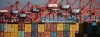
    Clearing agents working at the nation’s seaports lamented yesterday that over 400,000 containers are currently stuck at the Lagos seaports due to the suspension of Guaranty Trust Bank Limited by the Nigeria Customs Service (NCS) portal.

    Remember that the Customs Service, acting on a directive from the National Assembly, suspended GTBank for allegedly failing to remit import duty to the federal government.

    However, Kayode Farinto, national president of the Association of Nigerian Licenced Customs Agents (ANLCA), stated that importers and clearing agents have incurred over N40 billion in demurrage and storage charges.

    Read Also: Building collapse: Family loses three girls in Jigawa

    “The amount that Nigerian importers are losing as a result of storages and demurrages is running high and the problem is not yet over. These consignments are still trapped in the port and agents cannot clear them. Even some who have made assessments cannot pay duty. It is running to over N40 billion now and that is very unfortunate,” Farinto said.

    Speaking further, he said “We have a situation on the ground where nobody is talking to Nigerians. Nobody is talking to freight forwarders or Customs brokers. That is why there is a need for us to make the world know what is happening in the maritime industry.

    “We have a situation whereby GTB must have erred through the issue of reconciliation. We heard that GTB has not remitted some hundreds of billion to the federation account and they have collected this money on behalf of the federal government and that was what led to their suspension.
    “The Committee of Customs at the National House of Assembly directed Customs to suspend GTB from the portal. GTB has been suspended and some consignments have been trapped. As I talk to you over 400,000 containers throughout the federation who open their Form M cannot proceed further because they haven’t gotten their Pre-Arrival Assessment Report (PAAR), because they must pay the duty through the Commercial or dealer bank where you have opened your Form M and they are currently trapped.

    Read Also: Malnutrition: Gov. Ugwuanyi reiterates commitment to govt’s partnership with UNICEF

    He also stated that imported vehicles are also trapped at various terminals in the ports.

    “Also, there are over 40 per cent of vehicles that needs to be cleared from the seaport who have gotten assessment but cannot move ahead. There are people who have actually paid duty and as a result of the suspension the status has not changed on the Customs portal and they cannot move forward in the area of clearance of the goods. Hence, we are calling on freight forwarders to make sure that from today the 6th of September, 2022 they should not open their Form M or make any assessment or transaction through GTBank again.”

    “This becomes imperative in the view of the fact that nobody is even talking to us. We sent a letter to GTB on this particular issue for them to address us and let us know what is happening but everybody is avoiding us.”

  • Nigeria losses $2.7bn as oil production falls below 1mb/d

    Nigeria losses $2.7bn as oil production falls below 1mb/d

    According to the most recent data, Nigeria’s oil production fell below one million barrels per day in August, costing the country $2.658 billion.

    The Nigerian Upstream Petroleum Regulatory Commission, NUPRC, reported yesterday that daily average production for August was 972,394 barrels, compared to 1.083 million barrels produced in July 2022.

    The output fell 857,606 barrels short of Nigeria’s OPEC daily production quota of 1.83 million barrels.
    At the average price of $100 per barrel, the country lost $85.76 million daily, amounting to $2.658 billion during the month.

    NUPRC data showed that condensate, which is not part of Nigeria’s OPEC quota was 207,052 barrels per day.

    Read Also: Wike speaks on Jibrin’s resignation says Atiku assured him Ayu would vacate office

    Nigeria’s oil production has been hampered by rising oil theft, illegal refining and production shut-ins.

    Yesterday, oil and gas workers protested against the rising level of crude oil theft in the Niger Delta and demanded that the Federal Government take action against the criminals.

    Marching under the aegis of the Petroleum and Natural Gas Senior Staff Association of Nigeria, PENGASSAN, in Abuja, the workers said companies in the industry were struggling to stay afloat due to loss of revenue.

  • Why Nigeria should end fuel subsidy – Akabueze

    Why Nigeria should end fuel subsidy – Akabueze

    By Odinaka Anudu

    Ben Akabueze, Director General of the Nigerian Budget Office, believes that the trillions of naira spent on fuel subsidies could be better spent on other creative sectors, particularly education.

    Akabueze said on Arise TV’s Global Business Report that the funds could be used to end the Academic Staff Union of Universities strike and raise the pay of government employees.

    “The truth is that public employees should be paid far more than they are now.” It’s similar to the ongoing issue with ASUU and lecturer pay. I have not met anyone in government who believes that lecturers are adequately compensated or that they should not be compensated significantly more. The ability to pay is the crux of the ASUU issue. It is why this matter has dragged on because the government has refused to commit to a number that it does not have the ability to pay,” he said.

    Read also: Troops neutralize two bandits, wound others in Kaduna

    The Federal Government will likely spend N6.7tn on petrol subsidies in 2023 if it plans to pay for the whole year. The cost may reduce to N3.36tn if the subsidies if it remains up to mid-2023, according to the Finance Minister, Zainab Ahmed.

    Akabueze noted that fuel subsidies often had a huge impact on the economy and the lives of the people, stressing that “when you eliminate fuel subsidies or cut back on it, there will be an immediate impact on people.”

    He blamed the absence of investments in the midstream sector of Nigeria’s oil & gas industry on the existence of petrol subsidies, noting that where price was not market-driven, investors would be reluctant to commit.
    On the matter of the suspension of the telecommunications tax, Akabueze said, “I don’t know about this suspension because this (tax) is now law. Beyond what I have read in the media, we haven’t been advised on the suspension.”

    On the issue of whether Nigeria had a revenue or debt problem, he noted that Nigeria’s debt was not really in a bad shape.

    “When you look at all the other indices of debt sustainability, our debt looks okay. This is till you get to the matter of debt-service-to-revenue. That’s where Nigeria looks really bad and where we are testing the limits of sustainability. What the Minister of Finance said is that we need to address this revenue problem quickly because if we do not, then we will be faced with a real debt crisis.”

    On whether Nigeria could be forced to approach the International Monetary Fund for a bailout, Akabueze said he did not see Nigeria going to the IMF voluntarily.

    Read also: Boat accident kills four women, child in Jigawa

    “This is a hot potato issue here in Nigeria. But the honest truth is, if we don’t address our fiscal challenges, in a sensible and sustainable manner, we may end up unwillingly approaching the IMF,” he cautioned.

    On the Central Bank of Nigeria’s Ways & Means financing of the Federal Government, which rose to N19.9tn in June 2022 and the Asset Management Corporation of Nigeria’s N5 trillion toxic assets, the DG said both were crucial debt issues that the government must make priorities.

  • FEC approves $352m Air Nigeria’s advisory fees

    FEC approves $352m Air Nigeria’s advisory fees

    Obiora Ifoh, Abuja

    Hadi Sirika, the Minister of Aviation, stated that the Federal Executive Council approved a sum of $352 million for Air Nigeria’s transactional advisory fees for its Consultants.

    The federal government has threatened to sanction any airline found selling tickets in foreign currency.

    The Minister made the announcement on Wednesday, following the weekly meeting of the Federal Executive Council (FEC) presided over by President Muhammadu Buhari.

    Sirika also stated that the federal government has a responsibility to protect Nigerians and threatened to sanction any airline found wanting.

    He denied reports that the Nigeria Air project had already devoured N14.6 billion in government funds despite having only a five percent stake in the airline.

    According to him “government has only spent N651 million (N352 million and N299 million) for what he called transactional advisory services approved by the Federal Executive Council (FEC), but yet to be disbursed as the consultants were yet to finish their work.”

    Sirika, while giving update on Nigeria Air, said “So Nigeria Air is of course, we are going to come very soon to council for approval of the full business case. And the activity is a Public Private Partnership, which is guided by the ICRC regulations, Infrastructure Concession Regulatory Commission.

    Read Also: Uzodimma seeks support, prayers of residents for development of Imo

    “We have diligently followed that. And I want to seize the opportunity to say that we have been reading newspaper reports, especially those that I have maximum respect for like the Guardian, which put out a sensational article on the front page. That the federal government of Nigeria has spent N14 billion on national carrier and they did nothing.

    “This is absurd. This is unbecoming of a paper of that caliber, to dish out lies on purpose to mislead the public. The entire amount of money spent on national carrier is around the transaction advisory services. And we came here with a memo with approval, which we dished out to the press as to the quantum of money to be spent. It was N352 million in today’s rate. And another contract of N299 million.

    “We have project delivery team in place by law, Project Steering Committee in place by law, and they’re all members of very many ministries and agencies and parastatals including Labour.

    “The Law didn’t say we should include Labour. But for maximum transparency, for fairness, we included Labour in this activity, and they participated fully.

    “So there’s nothing secret about it. If you want anything come and ask us don’t just be pen lazy and go out there and write what you want. It is not accepted by us and by government. And they will deliver this Nigeria Air for the benefit of people.

    According to him, “We have directed the Nigeria Civil Aviation Authority (NCAA) to monitor all the activities of the Airlines and sanction anyone found selling ticket in foreign currency”, adding that “We need to protect our people”

    He also berated foreign airlines using the social media as mean of expressing their challenges adding that “ They should stop using the social media, if they want us to respond to their issues. They must go through diplomatic channels if they want response from us”

    “They should desist from putting things on the social media.

    Sirika, while also speaking on the various road maps embarked upon by his Ministry, disclosed that the road map were done through Public, Private Partnership( PPP), adding that their results will manifest

    He also revealed that the planned concessioning of some of the airports were nearing completion stages , adding that “ they will soon come to Council within the next three to four weeks.

    Sirika revealed that information at government disposal, shows that some of the airlines are refusing to accept the Naira and have resorted to charging their ticket fares in dollars in violation of the country’s laws, while some others have blocked local travel agencies from accessing their websites for transactions, choosing to release expensive tickets.

    “I want to use this opportunity to say that reports are reaching us that some of the airlines are refusing to sell tickets in naira. That is a violation of our of local laws, they will not be allowed. The high and the mighty amongst them will be sanctioned, if they’re caught doing that.

    “NCAA had been directed to swing into action and once we find any airline violating this, we will definitely deal with them. Also, they blocked the travel agents from access. They also made only the expensive tickets available and so on so forth.

    “Our regulators are not sleeping, we have a very vibrant Nigerian Civil Aviation Authority. Once they found any airline guilty, that airline will be dealt with because we need to protect our people. It is according to our agreements, to what we have signed and this is according to international convention.”

    Sirika, while urging the airlines to desist from doing things outside of the law, added that the foreign airlines made over $1.1 billion from Nigeria in 2016, when the Muhammadu Buhari’s administration cleared the $600 million it inherited from previous government.

    According to Sirika, “ these airlines had remitted over $600 million to their home countries in 2016 while over $265 million has also been released this year out of about $484 million due to them.

    “ We are doing all that we can to keep the airlines happy by ensuring that their money does not pile up again, because the country needs their services, the airlines need the Nigerian market.”

    Read Also: ASCSN condemns appointment of non-career civil servants as perm secs

    In another development, The Minister of information and Culture, Lai Mohammed, has said the administration of President Muhammadu Buhari will do everything possible to ensure a free, fair and credible 2023 General Elections, noting that recent elections has shown clearly that the President is committed to a transparent democratic process.

    Responding to calls for President Buhari, to withdraw the names of some embattled nominees for Resident Electoral Commissioners of the Independent National Electoral Commission, said to be members of the ruling All Progressive Congress (APC), Lai Mohammed explained that the government would rather allow due process to take effect.

    According to him, Buhari will not withdraw the names based on “social media trials”, urging Nigerians to allow the process take its course, including the imminent screening of the REC nominees by the National Assembly.

    Buhari, had in July, sent the names of 19 INEC REC nominees to the Senate to be confirmed.

    Of the 19, five were reappointed for a second five-year term while 14 others were new appointees.

    Nigerians have criticized the nomination of some individuals believed to be card-carrying members of the ruling party.

    A coalition of Civil Society Organisations noted that the nominee from Sokoto State, Northwestern Nigeria was an APC governorship aspirant in 2015 while another nominee for Enugu State is allegedly a younger sister of the APC Deputy National Chairman, Emma Eneukwu.

    Similarly, the CSOs alleged that the nominee for Imo State, Mrs. Pauline Ugochi, who is a former Head of ICT at INEC in Imo is known for conniving with politicians to undermine elections while the nominee for Ebonyi State, Mrs. Queen Agwu, was suspended on allegations of incompetence and corruption in 2016.

    The CSOs called for their immediate removal from the list, premising their argument on Section 14(2a) of the Third Schedule of the 1999 Constitution as amended which states that “a member of the commission shall be non-partisan and a person of unquestionable integrity,’ and Section 14(3b) of the same Schedule which states that “there shall be for each state of the federation and the Federal Capital Territory of Abuja, a Resident Electoral Commissioner who shall be a person of unquestionable integrity and shall not be a member of any political party.”

    But responding, Mohammed said, “As to the nominees that are being challenged by social media warriors and by some critics, I don’t think it is the business of the President to immediately throw out the nominee based on allegations which have not been proven.

    “I think the whole idea is that these people will go for confirmation in the National Assembly, the same questions that are being raised in the public domain will be asked there.

    “I think this media trial is quite worrisome. Because even when these people are cleared of any wrong doings, nobody comes back to apologise to them. So, my advice is, yes, there’ll be allegations against anybody. It does not mean that that fellow is guilty. Let’s wait for the process to be completed.”

    The information and Culture Minister also allayed the fears of Nigerians about the issue of fuel scarcity which has resurfaced in some parts of Abuja, saying government was already responding to the issue.

  • 23 Nigerian startups to benefit from Google’s $4 million fund for 60 African businesses

    23 Nigerian startups to benefit from Google’s $4 million fund for 60 African businesses

    Google on Tuesday announced the selection of 60 eligible startups across Africa with $4 million funding to enable them to scale up their ongoing work.
    The programme, called Google Black Founders Fund (BFF) for African startups, is the second phase of the global tech giant’s funding.

    Folarin Aiyegbusi, Google’s Head of Startup Ecosystem, Sub-Sahara Africa, said in a statement that the startups joining the programme would receive a total of $4 million in funding.

    He listed the top five countries with the most startups selected for the programme: Nigeria with 23 grantees, Kenya with 12, and Rwanda with six grantees.

    Mr Aiyegbusi said South Africa had five grantees and Uganda had four grantees.

    Read Also: Domestic airlines’ N19bn debt may cripple sector agencies — NCAA

    According to him, Botswana and Senegal have one selected startup each, Cameroon and Ghana both have three grantees each, while Ethiopia has two selected grantees.

    ‘’Each of the selected startups would receive support in the form of a six-month training programme that includes access to a network of mentors to assist in tackling challenges,’’ Mr Aiyegbusi said.

    According to him, the startups will also be part of tailored workshops, support networks and community-building sessions.

    Mr Aiyegbusi said the 60 grantees would also get non-dilutive awards of between $50,000 and $100,000 and up to $200,000 in Google Cloud credit.

    He said that grantees, made up of 50 per cent women-led businesses, hailed from Botswana, Cameroon, Ethiopia, Ghana, Kenya, Nigeria, Rwanda, Senegal, South Africa and Uganda.

    According to Mr Aiyegbusi, the startups specialised in sectors such as fintech, healthcare, e-commerce, logistics, agtech, education, hospitality and smart cities.

    Mr Aiyegbusi said the Google for startups programme, launched in April 2012, had created over 4,600 jobs and raised more than $290 million in funding.

    Read Also: Ondo: Kidnappers demand N90m ransom for abducted burial guests

    He added that the programme would introduce the grantees in Africa to Google’s products, connections, and best practices.

    According to him, funding for the programme will be distributed through Google’s implementation partner, CcHUB.

    Mr Aiyegbusi said the equity-free cash assistance would enable the startups to take care of immediate needs such as paying staff, funding inventory, and maintaining software licences.

    He explained that this was to help the grantees buffer the cost of taking on debt in the early stages of their businesses, as many of them had no steady revenue streams yet.

  • Domestic airlines’ N19bn debt may cripple sector agencies — NCAA

    Domestic airlines’ N19bn debt may cripple sector agencies — NCAA

    The Nigerian Civil Aviation Authority (NCAA) has warned that agencies in the industry could collapse if domestic airlines do not take a drastic step to offset the huge debts they owe the agencies.

    The Authority revealed that debts owed the agency by indigenous airlines on the statutory 5 per cent Ticket Sales Charge and Cargo Sales Charge (TSC/CSC) has risen to over N19 billion and $7.8 million in the last few years.

    The Director-General of NCAA, Captain Musa Nuhu, while revealing this in a stakeholder meeting held with indigenous airlines and ground handling companies in Abuja recently, warned that if the debts owed the agencies were not paid back immediately in the next few months, the aviation organisations may collapse very soon.

    It was gathered that the airlines are also indebted to the Federal Airports Authority of Nigeria (FAAN) and the Nigerian Airspace Management Agency (NAMA) to the tune of N18 billion and N5 billion, respectively.

    The airlines owe FAAN landing and parking charges, while they are also hugely indebted to NAMA in terminal and navigational charges.

    Nuhu also gave the operators one month ultimatum to sign a Memorandum of Understanding (MoU) with NCAA, which would stipulate the repayment plans of their debts to the agency.

    Read also: NGO gingers Women and Youths into productivity, Skill acquisition and technical education

    He expressed disappointment over a letter, which emanated from the Airline Operators of Nigeria (AON), signed by the President of AON, Alhaji Abdulmunaf Yunusa, dated August 8, 2022 and addressed to the Minister of Aviation, Senator Hadi Sirika, that accused the agencies, especially the NCAA of muscling out the operators through multiple charges.

    Nuhu who noted that the airlines and the entire aviation industry were going through a very difficult period, especially at this time, insisted that all the charges collected by NCAA were statutorily and in compliance with the Civil Aviation Act 2006.

    According to him, the airlines were not responsible for the payment of TSC/CSC, but only collect such on behalf of the agencies from the passengers and wondered why the operators would accuse it of engaging in multiple levies.

    Nuhu further debunked the claim that the NCAA imposes excess baggage charge on the airlines.

    He further compared and juxtaposed the levies imposed on operators in Nigeria and Ghana, and reeled out the huge differences.

    The NCAA helmsman explained that for any of the charges to be repealed, it would have to go through the National Assembly and must be assented to by the President of the Federal Republic of Nigeria.

    He also decried that out of the 5 per cent TSC/CSC, the agencies still remit 25 per cent of their revenues to the Consolidated Revenue Account created by the Federal Government and advised the operators to always cross check their facts before going to the public.

    He added: “NCAA relies 100 per cent on its Internally Generated Revenue (IGR). The 5 per cent TSC paid by passengers is 85 per cent of NCAA revenue, while the other 15 per cent comes from airlines as payment for services provided and they are all cost recovery. We don’t also impose any excess baggage charge on the airlines. I wonder where the operators saw this.

    “The airlines have intentionally refused to pay the debts owed us despite the fact that they have collected such from the passengers. The airlines collect money and refuse to transmute such to the right authorities. AON wants us to provide services for free for them. What the airlines are trying to do is to defunct the NCAA.

    “You have refused to give us our legitimate money. The fees we are charging the airlines are just cost recovery and we are actually subsidising the airlines.”

    Also, the Acting Managing Director of NAMA, Engineer Mathew Pwajok, reiterated that the charges of the agency were minimal when compared to other countries around the world.

    He, however, disclosed that the airlines owed them over N5 billion for services rendered to them over the years.

    The managing director of FAAN, Captain Rabiu Yadudu, also disclosed that the airlines owe the agency N18 billion and debunked the claim that it charges the airlines indiscriminately as claimed in its letter.

    He declared that FAAN was not imposing any new burden on the airlines, stressing that its landing and parking charges for international operators were last reviewed in 1998, while for the local airlines, it was reviewed last in 2002.

    He said that there was the need for the charges to be reviewed by the agency, stressing that within the period, the airlines had reviewed their air tickets on numerous occasions.

    Responding, Alhaji Kashim Bukar, the Managing Director, Skyjet Airline, wondered why the Director-General of NCAA brought the issue to the public.

    Read also: Bandits kill two, kidnap scores after GOC’s visit to Birnin-Gwari

    He said that rather than make it a public issue, the NCAA should have called the operators into a closed door meeting to discuss the issue.

    The Managing Director, Overland Airways, and a trustee of AON, Capt. Edward Boyo, on his part, apologised to the NCAA for the letter.

    “I’m a trustee member of AON. On behalf of AON, I hope to apologise to you on the letter. The letter wasn’t intended to have this effect. Some parts of the letter were inappropriate. We apologise and I want to crave your indulgence to drop the issue,” he said.

    Besides, the Vice President, AON, Mr. Allen Onyema, said he was seeing the letter for the first time and expressed disappointment with some of the contents in it.

    He regretted that there were factions in AON, which had prevented them from speaking in one voice.

    Onyema agreed that he was at the meeting with the Ministry of Finance and Aviation where the issue of skyrocketing price of Jet A1 was discussed, but insisted that no one maligned the image of NCAA or any aviation agencies at the meeting.

  • Nigerians hail Dauda Biu, say he’ll transform FRSC

    Nigerians hail Dauda Biu, say he’ll transform FRSC

    The appointment of Dauda Ali Biu as the Acting Corps Marshal of the Federal Road Safety Commission (FRSC) has been described as placing a round peg in a round hole, considering his vast experience and passion for the job.

    Biu, a seasoned road safety professional who hails from Hawul Local Government Area of Borno State, joined the Corps in 1988 and rose through hard work, dedication and commitment to the rank of Deputy Corps Marshal before his elevation to the rank of Acting Corps Marshal.

    Following his appointment, Nigerians have expressed optimism that his emergence will help transform the agency considering his vast experience on the job.

    Recounting their experiences, some Nigerians disclosed that the Corps Marshal has assisted in saving the lives of accident victims irrespective of his ranks.

    Read Also: Strike: FG, not ASUU, proposed revitalisation fund – Union

    Mr Maduabuchi Nwadike told our reporters that he met him sometime in 2019 at the highway around Julius Berger bridge at an accident scene when they were trying to rescue the victims.

    Nwadike said they could not get a car to covey the victims because they parked on the other side of the road, but someone came and immediately asked his driver to convey the victims to a nearby hospital while he waited at the scene.

    According to him, “I saw a Road Safety official vehicle coming, when it gets to the scene, it stopped, and the man came out to see the situation and he noticed the victim, a girl was unconscious and he ordered his driver to assist and take the girl to the nearest hospital – Zanklin hospital in Mabushi.”

    He said, though, there is a sector that was in charge of the Berger area but before they could come with their vehicle, he (Ali Biu) used his official car to convey the victim to the hospital.

    “I was trying to find out who he was because on rare occasions he would have called the officers in charge of that place to come and do their work. But he chose to use his official car to convey the victim to the hospital. I was touched to ask him who he is, when I got closer, I saw his name tag, written ‘Biu’. I can joke at times, so I called him.

    “The girl in question was related to me and she was coming to see me when she had the accident. Before the people of that Command came and they met us in the hospital and he handed over the keys to them before we exchanged contacts and left,” he said.

    Also, Mallam Nasir Dambatta, said that Buhari has certainly displayed exemplary wisdom with the appointment of Biu, a man whose leadership, sacrifice, statesmanship, patriotism and unwavering commitment to the interests of the people of Nigeria at large the citizens of Nigeria as a whole have few parallels in our nation.

    Read Also: Bandits kill two, kidnap scores after GOC’s visit to Birnin-Gwari

    According to Dambatta, “we feel proud to say that we drew and shall continue to draw inspiration from his life and works and shall continue to strive, in all we do, to live by the personal and social values and standards he has lived and set for himself as a citizen, subject, and leader.

    “Is there any testimonial that can be better said about a man who started impacting life right from humble beginnings oblivious of what the future held for him decades ago? His must be a case of ‘do good always wherever you are not minding whoever may be looking at you.”

    They strongly believe that the Acting Corps Marshal will improve on the achievement of his predecessor to transform road safety to the admiration of other countries.

  • Discos suffer N543bn revenue loss in 12 months

    Discos suffer N543bn revenue loss in 12 months

    The latest report by the Nigerian Electricity Regulatory Commission shows that total billing to electricity consumers by the 11 distribution companies stands at N816bn.

    The report also shows that out of this amount, only N370bn has been collected by the DIiscos, leaving a total outstanding of N543bn.

    The data was contained in the NERC’s Annual Report. The latest report shows that the loss was recorded in 2020.

    The figures show that 74.33 per cent and 66.50 per cent billing and collection efficiencies were recorded, indicating 8.44 and 1.34 percentage points decline when compared with 2019.

    The level of collection efficiency indicates that as much as N3.35 out of every N10 worth of energy sold during the year 2020 remained uncollected from customers as and when due.

    Due to the low billing collection recorded by the Discos, the utility firms were also not able to fully pay for the quantum electricity supplied to them by the Nigerian Bulk Electricity Trading Plc.

    Read Also: Killer of NSCDC officer demand N30m ransom on captives

    Further findings reveal that during the year under review, a total invoice of N883bn was issued to the 11 Discos for energy received from NBET and for service charge by the Market Operator.
    Out of the N883bn charged the utility firms, a sum of N370bn was settled, leaving a total deficit of N512bn in the market.

    This payment represents 42 per cent remittance performance, indicating six percentage points increase from the final settlement rate recorded in 2019 (36 per cent).

    The individual performance indicates that Benin and Eko Discos met the expected Minimum Remittance Obligations to MO and NBET, Ibadan met its MRT to NBET while Enugu and Ikeja met their MRTs to MO.

    The average remittance performances to MO and NBET increased respectively from 78 per cent and 29 per cent in 2019 to 93 per cent and 31 per cent in 2020.

    Discos’ remittance performance levels ranged from 48 per cent (Yola) to 100 per cent (Benin) for MO, and 10 per cent (Yola) to 45 per cent (Ikeja) for NBET.
    Tariff shortfall is the difference between cost-reflective tariff and allowed end-user tariffs payable by consumers.

    NERC said the shortfall contributed to liquidity challenges being experienced in the Nigerian Electricity Supply Industry.

    Despite the general shortfall recorded by the market, the NERC’s report indicates that the individual remittance for 2020 was an improvement from that of 2019.

    It noted that the improvement in the Discos’ remittance performance was partly linked to the continuous enforcement of the MRO, and the OpEx loan facility offered by the Central Bank of Nigeria-NESI Stabilisation Strategy Limited to DisCos.

    The facility was meant to part-finance the Discos’ payment obligations to NBET and MO as well as their operations in order to support the transition to the Service-Based Tariff regime.

    The Executive Secretary, Association of Nigerian Electricity Distributors, Sunday Oduntan, could not be reached for response on how the low remittances and bill collections was affecting their performances.

    Electricity consumers have over the years complained about estimated billing, which according to them, result in apathy towards bill payments.

    The spokesperson for Ikeja Electric, Felix Ofulue, had recently said electricity consumers under the billing methodology consume more energy than those already metered.

    “Whenever consumers say they are paying excessively, the reason is that someone living in one bedroom sometimes pays more than the person in a three-bedroom flat. For instance, someone in a three-bedroom uses a gas cylinder. Someone in one bedroom uses an electric cooker bought from Lawanson.

    Read Also: EPL: We made mistakes – Referees’ body breaks silence on Chelsea vs West Ham, Newcastle vs Palace

    “Those cookers are probably 10 years old and they consume more energy than the modern ones. But NERC introduced capping and we were asked to remove our billing methodology, and were asked to bill according to certain parameters mostly on availability of electricity. So, some people in certain areas are on capping but their bill is high because of the availability of power supply. Don’t forget that the guy using a prepaid meter is more careful in managing his light than those without prepaid meters.”

    According to a metering expert, Sesan Okunola, the solution to the billing collection challenge is for all electricity consumers to be metered.

  • Petrol will cost ₦462/litre without subsidy, says NNPCL

    Petrol will cost ₦462/litre without subsidy, says NNPCL

    The Nigerian National Petroleum Company Limited (NNPCL) says premium motor spirit (PMS) will cost consumers N462 per litre without the Federal Government’s subsidy.

    This is according to a statement by the NNPCL Group General Manager, Group Public Affairs Division Mr. Garba Deen Muhammad on Sunday.

    “The NNPC Ltd notes the average daily evacuation (Depot truck out) from January to August 2022 stands at 67million litres per day as reported by the Nigerian Midstream and Downstream Petroleum Regulatory Authority, NMDPRA. Daily Evacuation (Depot loadouts) records of the NMDPRA do carry daily oscillation ranging from as low as 4 million litres to as high as 100 million litres per day, ” the statement read.

    It added that the “rising crude oil prices and PMS supply costs above PPPRA (now NMDPRA) cap had forced oil marketing companies’ (OMCs) withdrawal from PMS import since the fourth quarter of 2017.

    Read Also: Fashola to deliver keynote address at democracy lecture

    “In the light of these challenges, NNPC has remained the supplier of last resort and continues to transparently report the monthly PMS cost under-recoveries to the relevant authorities.

    According to the NNPC, the average Q2, 2022 international market determined landing cost was US$1,283/MT and the approved marketing and distribution cost of A46/litre.

    “NNPC Ltd shall continue to ensure compliance with existing governance framework that requires participation of relevant government agencies in all PMS discharge operations, including Nigerian Ports Authority, Nigerian Midstream and Downstream Petroleum Regulatory Authority, Nigerian Navy, Nigeria Customs Service, NIMASA and all others,” the company said.

    Furthermore, NNPC Limited admitted that it “recognizes the impact of maritime and cross border smuggling of PMS on the overall supply framework. NNPC also acknowledges the possibilities of other criminal activities in the PMS supply and distribution value chain.

    “As a responsible business entity, NNPC will continue to engage and work with relevant agencies of the Government to curtail smuggling of PMS and contain any other criminal activities”.

  • I’m proud of my imperfections — Amaka, evicted BBNaija housemate

    I’m proud of my imperfections — Amaka, evicted BBNaija housemate

    Big Brother Naija season seven housemate Chiamaka Crystal Mbah popularly known on the reality TV show as Amaka, is an ambitious health worker with her sights on the Nigerian entertainment scene. Perhaps one of the most controversial housemates this season as the Level Up house gossip/Al-Jazeera, many remember her for her microwave incident that nearly burnt down Big Brother’s House. On Monday, August 29, Amaka was evicted from the Big Brother House in a surprise eviction episode, making her the 7th to enjoy that fate. After most of the housemates put her up for eviction, the lot fell on Amaka who spent the day romancing, apologising, and eulogising “the microwave” which was a punishment for misusing the appliance. In this interview, she talks about her time in the house and why she believes other housemates viewed her as a threat. TOMI FALADE brings excerpts.

    What would you consider your achievements on the show?

    The show was like a springboard for me to sell my brand, meet with different people and reach many of my goals. The show helped me to be more focused.
    What lessons did you learn?

    I learnt that you are you, and each person can only modify themselves a bit. I learned that women are strong and that there is nothing bad about standing up for yourself.

    Read also: Bandits Abduct Two Pregnant Women, 13 Others In Katsina Communities

    Challenges and drama on the show.

    Conflicts are bound to happen when you have that number of people.

    I never said a lot of things to ChiChi, I only said what I needed to say and she agreed to the fact that all Phyna or Chomzy was saying was not so true. That solved the whole puzzle. I don’t think with ChiChi’s personality she was trying to save me. We all now know the truth. On Gidifia and I, it was just a normal issue. I don’t even care about those things, I am all about the bag now.
    All the challenges in the house were lessons for me. I was broken and I became strong and I was broken again. It was all a learning phase for me. I am proud of my imperfections.

    What next for you?

    Building my brand with a lot of respect, dignity, integrity and value. I am open to working with all sectors of the entertainment industry and give value for money.

    Some of your housemates thought you were arrogantwhenyouwereinthehouse. Doyou agree?

    I don’t understand their point of view. I was always defending myself, and it was from a place of self-confidence and love. I always said on the show that my conscience is important to me. I apologise when my conscience tells me I am wrong. Why must I apologise when it doesn’t come from my heart? I was being real. Everyone must not relate with that, which is what makes us different.

    How did you feel after the microwave incident when you were accused of almost burning down the house?

    The Big Brother show changes lives and I did not feel good about that. It was not intentional, and the worst part of it was when I saw the remnants of the microwave. It broke my heart. My performance to the microwave was from the deepest and sincerest part of my heart.
    What would you say is responsible for the multiple nominations you got from housemates?

    I think they saw me as a threat. That wasn’t the best of weeks for me, I got on the nerves of some people trying to pass my point. We also just merged and not everyone would like me. We would have disagreed to agree but we never made it that far. Also, it is a game. I remembersomeweekswhenChiChiwas not in people’s good books, if the special edition happened that week, we would have sent her away too.

    Why did you send Phyna to tell Groovy that youlikedhim, whydidn’tyougotohimyourself?

    I was in between. On the show, I was not the kind of person to walk up to a guy to tell him I liked him. I also was not sure if I really liked him too. It was from the point of me protecting my heart. I have been hurt before. I don’t deny sending her though.

    Read also: Notorious Eiye confraternity ‘serial killers’ arrested in Ogun

    Any regrets?

    Nothing. But when the merger happened, I should have sat back to watch Gidifia, Deji, ChiChi and others, what they were saying to avoid drama. I was too hasty. But no regrets. Whatever happens in Big Brother’s house stays there and this is a new era.

  • Nigeria’s central bank urge FG to jettison fuel subsidy policy

    Nigeria’s central bank urge FG to jettison fuel subsidy policy

    Due to the high cost to the economy, the Central Bank of Nigeria (CBN) has stated that the Federal Government of Nigeria (FGN) should “abandon the current fuel subsidy policy.”

    Professor Adeola Festus Adenikinju, a member of the CBN’s Monetary Policy Committee (MPC), revealed this at the most recent meeting in July.

    Despite current bottlenecks, the Nigerian government has assured citizens that it will continue to subsidise petrol prices, as reported by It.
    “On the fiscal challenges confronting the country, there is an urgent need to abandon the current fuel subsidy policy,” Adenikinju stated. While the government may be hesitant to implement this policy during an election year, the government can compel NNPC Ltd to be more efficient and transparent.”

    “There is also a need for increased education and enlightenment of the costs of the subsidy on the economy, and on most Nigerians,” he added.
    He stated that the government must provide a means for the citizenry to cut its reliance on fuel usage. He said “Government should also ensure that the Compressed Natural Gas (CNG) programme designed to provide gas as alternative fuel for transportation is aggressively implemented. Improvement in electricity supply will also reduce the amount of fuel being consumed in the economy, and thereby lower the overall subsidy payment.”

    On the topic of inflation, he stated that Nigeria is not unique in inflation being experienced. He said, “All countries of the world are basically addressing same supply factors: energy prices, food prices and strong dollar. The measures being taken are same: to tighten monetary expansion. In Africa, Ghana, Egypt, South Africa, along with their counterparts in Emerging and Developing countries have revised upwards monetary policy rates a couple of times since the beginning of the year.”

    The Federal Government of Nigeria (FGN)  has estimated petrol subsidy payment at N6.72 trillion for full-year 2023. This was disclosed by the Ministry of Finance at the Public Consultative Forum on the 2023-2025 Medium-Term Fiscal Framework.
    In April, following the approval of a revised 2022 budget by the Nigerian Senate, there was an upward review of the budget amount for Premium Motor Spirit (PMS) subsidy for 2022 by N442.72billion, from N3.557 trillion to N4 trillion.
    The costs of fuel subsidy in Nigeria increased by 890% over a five-year period (2017-2021) in Nigeria even though fuel prices have only increased by 12.1%.
    Nigeria  reported a record-breaking fiscal deficit of N7.3 trillion in 2021 as actual expenditure of N11.69 trillion vastly exceeded its 2021 generated revenues of N4.39 trillion, for every N4 earned by the Federal government, it spent over N11.

  • Ban on foreign talents in Nigerian adverts will save forex earnings – Segun Arinze

    Ban on foreign talents in Nigerian adverts will save forex earnings – Segun Arinze

    The recent ban on foreign models and voice-over artists in Nigeria’s advertising space will save foreign currency for Nigerian media companies while also boosting homegrown advertising talent in the country.

    Segun Arinze, veteran actor and President of the Association of Voice Over Artists in Nigeria, revealed this in an interview with CNN on Wednesday.

    This comes after the Advertising Regulatory Council of Nigeria announced a ban on foreign talent in order to grow Nigeria’s advertising industry.
    Arinze noted that Nigeria needs to protect its talent, stating that he does not think Nigeria is doing the wrong thing by providing opportunities for the talents coming up.

    He also noted that Nigeria is experiencing a brain drain in the sector, adding that when the talents can’t find work within, they go outside.

    “The ban is to encourage the industry, and I do not see anything wrong in that,” he said.

    On the impact of the ban on the industry, he stated that it is not a first in Africa. He said, “It is in South Africa. It’s not strange. The impact is that we need to start having homegrown talents who need to do this, and also saving forex earnings.”

    “So it is a whole big picture, it’s an ongoing discussion. When Nigerian voice-over artists go outside, they don’t earn even much. You need to keep everything in here.

    “I am sure Hollywood and Bollywood would do same,” he added.
    The Advertising Regulatory Council of Nigeria (ARCON) announced the ban last month saying it is in line with the FG’s policy of developing local talent, inclusive economic growth and the need to take necessary steps and action aimed at growing Nigerian advertising.
    The ban is to take effect from the 1st of October, 2022.
    This announcement is contained in a statement titled, ‘Ban On The Use Of Foreign Models And Voice-over Artists On The Nigerian Advertising Medium/Media’, issued by the Director General of the Council, Dr Olalekan Fadolapo, on Monday.
    ARCON stated that the directive will help boost the federal government’s policy on the development of local content, create more employment for young Nigerians and help conserve scarce foreign exchange

  • ENGIE Energy Access elevates Oresanya to Global Marketing Manager

    ENGIE Energy Access elevates Oresanya to Global Marketing Manager

    ENGIE Energy Access, one of Africa’s Pay-As-You-Go (PAYGo) and mini-grids solution providers, has promoted ‘Demilade Oresanya to Global Marketing Manager.

    Prior to his promotion, Oresanya was Head of Marketing and Communications at ENGIE Energy Access Nigeria, where he oversaw the firm’s marketing, trade marketing, and corporate communications functions. He took over the former position in January 2022.

    According to the company’s media consultant, in this new role, Oresanya would be responsible for developing the overarching marketing strategy for ENGIE Energy Access across Africa, as well as working with the country marketing teams to scale and implement this strategy across all nine countries where ENGIE Energy Access is present.
    The countries according to the statement are; Benin, Cote D’Ivoire, Kenya, Mozambique, Nigeria, Rwanda, Tanzania, Uganda, and Zambia.

    Oresanya joined ENGIE Energy Access from Unilever, where he was Brand Manager for the Savoury Business segment, delivering double-digit growth on both Knorr and Royco.

    He started his marketing career as an intern with Insight Publicis, right after returning from the Cannes Lions International Festival of Creativity, as Nigeria’s student representative.

    Before his participation in the National Youth Service Scheme (NYSC), he also interned with STB McCann Lagos.

    Post NYSC, he joined leading PR agency, Red Media Africa where he was Communication Associate before joining Alcoholic Beverage Giant, Diageo, first as a Retail Sales Executive from where he was promoted to Assistant Brand Manager for the Guinness Trademark.
    He also worked at the Total Energies as a Marketing and Communications Specialist where he was responsible for driving marketing initiatives for their multiple business verticals.

    Exiting Total Energies, he joined multinational confectionery giant, Perfetti Van Melle, where he was initially Brand Manager responsible for the Mentos & Chupa Chups trademarks (gum & candy) before his last role as Brand Manager for the Candy Category, overseeing Mentos, Alpenliebe & Chupa Chups candies for the business.

  • Okun Becomes ACG, Hands Over PTML Customs To Comptroller Bomai

    Okun Becomes ACG, Hands Over PTML Customs To Comptroller Bomai

    Comptroller Suleiman Bomai has been appointed as the new Customs Area Controller of the Nigeria Customs Service’s Ports Terminal Multiservices Limited (PTML) Command (NCS).
    He succeeds Festus Okun, who was promoted from Comptroller to Assistant Comptroller General of Customs (ACG).

    Yakubu Mohammad, the Command’s Customs Public Relations Officer, made the announcement in a statement released over the weekend.

    Mohammad, a Superintendent of Customs (SC), stated that the new Controller has promised to maintain the Area Command’s robust stakeholder engagement.

    Meanwhile, Comptroller Bomai, while taking over from Acting Assistant Comptroller General, Festus Oyedele Okun, in Lagos at the weekend, assured that the four-hour clearance of vehicles for compliant traders would be sustained

    The new CAC also urged licensed customs agents, importers and freight forwarders to be compliant at all times as this will guarantee them the full benefits of trade facilitation.
    The new CAC said he would continually improve on the laudable revenue collection, trade facilitation, customs community relations and non-compromise on their duties.

    At the brief handover ceremony, Acting ACG Okun, the immediate past Controller described the command as one blessed with dedicated officers and stakeholders, and expressed gratitude to the Comptroller General of Customs, Col Hameed Ibrahim Ali (Rtd), for the opportunity given him to serve in PTML Command from February 2020 to August 2022.

    The outgoing Controller said revenue profile which was at N11billion monthly moved up to N27billion.He said: “It gives me great pleasure to sit here this morning to address you and make a farewell comment. First, I want to give all thanks to Almighty God for making this day possible.

    “I want to thank Almighty God for what He has done in the Country, in the Service, in this Command and in my life. So, unto him, all Honor and adoration”.

    Also, I want to seize this opportunity to thank the Comptroller General of Customs Col. Hameed Ibrahim Ali (Rtd) and his entire management team, for considering me worthy of being appointed an acting Assistant Controller General of Customs and giving me the responsibility of being the Zonal Coordinator, Zone C of the Nigeria Customs Service.

    “It is a great privilege to be so considered and I promise that I will do all things within my ability to serve Nigeria diligently, to Serve Nigeria Customs Service diligently, and to make sure that I do not slack in any area of my responsibility, and remain 100 percent committed in carrying out my responsibility in upliftment of the country, and in the pursuit of the core mandate of the Nigeria Customs Service.

    “I have come, I have seen and to the glory of God, I think I have conquered. Because a journey of about 30 Months and God has always being in charge and the CGC and the entire Management gave us the full support to perform in the command. With the marching order given to me now, to continue, I am sure I will not disappoint the management, I will not disappoint my family, and I will not disappoint God.

    “Back to why we are here, I am proceeding, I have rounded up my tour of duty in PTML Command and I am proceeding to my new assignment. The journey started here 3rd of February, 2020. The takeoff was a bit rough, but the sailing was smooth and landing has been smooth.

    “Let me start from our major responsibility, which is revenue generation, within the period I stayed here, I and my team have been able to raise the revenue profile of the command from barely N11billion per Month to about N27 billion per Month which is the highest in this command. That was achieved in the Month of June.

    “So, we have been doing well and getting better, regularly on our revenue generation. I believe that this trend will continue because the man who is here today to take over from me is a man who has the knowledge, has the experience. I believe he will keep the flag flying.

    “During my tour of duty in this command, we have enjoyed relative peace, and this is with the help of Almighty God, the support of the management team of the Nigeria Customs Service ably led by our CGC, the support of our stakeholders and my entire team, we have enjoyed this peace because even our modest achievement couldn’t have been possible in the absence of peace. So to our stakeholders, I say thank you for your support, members PTML command Customs team, I say thank you for your support throughout my stay.

    “ I will please implore you to give all the necessary support to the in-coming Area Controller both from the officers, the stakeholders and terminal operators particularly, please, let him enjoy the peace and let him continue from where we are handing the baton. I am sure that God being on our side every positive thing in this command shall be sustained and even improved on.

    The incoming Area Comptroller, I want to tell you that you have good officers, reliable, teachable, at the same time, I will like you to see them as your children. Forget about their age, some of them may be older than you. Be the mother hen that will shield the chicks from hawks.”

    Comptroller Bomai said at his maiden speech that this was not a handing over ceremony, because he had not seen where an ACG is handing over to a Comptroller. This is a very rare occasion. What I think we are doing here is my superior, the ACG, is conveying the directives of the CGC for me to carry on with the leadership of the command.

    “Acting ACG Sir, Your coming has ushered in peace stability and industrial harmony with strategic communications that would help achieve efficiency in service delivery.

    “Inter agency collaboration and constant engagements can solve trade disputes and promote team work for maximum results. These are necessary ingredients in the management of 21st