Category: Agriculture

  • 56% of Nigeria’s Agricultural land not in use, says Minister

    56% of Nigeria’s Agricultural land not in use, says Minister

    According to the federal government, 56% of Nigeria’s arable land is underutilised.
    During the ongoing 45th regular meeting of the National Council on Agriculture and Rural Development in Jos, Plateau State yesterday, the Minister of Agriculture and Rural Development, Dr. Mohammad Abubakar, stated, “Nigeria is endowed with a total of 79 million hectares of agricultural land, with only 44 percent being cultivated.” Additionally, the country has 267 billion cubic metres of fresh surface water and 58 billion cubic metres of underground water, with 37 billion cubic metres only stored in dams.

    “The country’s annual rainfall ranges from 300mm to 4,000mm.” Conversely, potential irrigable area is approximately 3.14 million Hectares, with less than 7% currently utilised.”
    He, however, said the government was doing all it could to encourage agriculture having trained 153,124 women and youths on various agricultural crop, fishery and livestock value chain and empowered 142,703, trained 214,787 farmers on Good Agricultural Practices (GAP) and 220,018 farmers on Farmer Business School (FBS).

    The minister said, “recent reports from the National Bureau of Statistics indicates that the agricultural sector topped the chart in a survey of seven sectors identified to have contributed to the Nigeria economy in the second quarter of 2022.
    “It out-performed six other sectors comprising Trade, Telecommunications, Manufacturing, Oil & Gas, Real Estate as well as Finance & Insurance. The chart revealed that Agriculture alone contributed 23.3 per cent to GDP (Half Year 2022).”
    To improve its performance, the minister said the federal government was strengthening the linkage between research, agriculture and industry by intensifying commodity value chain development process.

    “This is being guided by the new framework of the National Agricultural Technology and Innovation Policy (NATIP), 2022-2027, launched in August 2022, which seeks to modernise the agricultural sector in line with changing global food systems and supply chains.
    “Actually, NATIP is the Ministry’s response to the present Administration Agenda of diversifying the nation’s economy from petroleum oil-based to Agriculture and solid minerals.

    Read Also: NATFORCE operations illegal, says security Council

    “The document serves as successor policy of the Agricultural Promotion Policy (APP), 2016-2020, with a view to developing priority value chains on the basis of comparative ecological advantage across crops, livestock and fisheries sub-sectors in collaboration with the States Government.
    “In pursuant of our mandate of ensuring food security, employment generation and wealth creation in the country, the Ministry is committed to supporting the establishment of over 100 processing centres in the rural communities across the nation under the Green Imperative Project of a private-driven mechanization programme.”

    Abubakar said the Ministry hopes to vigorously develop clusters, rural nodal centres and rural cottage industries, as well as establish six Special Agro-industrial Processing Zones (SAPZ) nationwide.
    “As an impetus, Mr. President has approved an intervention fund for the completion of the 10 Nos large-scale rice mills with a combined minimum capacity of 320 MT per day in 10 states. The Mills are located in Jigawa, Kano, Adamawa, Niger, Kaduna, Gombe, Ekiti, Ogun, Bayelsa and Federal Capita Territorry (FCT).”
    Also speaking, Minister of State for Agriculture, Hon. Mustapha Shehuri said he was confident that given the level of cooperation and partnership amongst the Ministry’s state and non-state actors, and with the application of appropriate technologies, the goals of achieving food security, diversifying the economy for agribusiness undertakings and growing the GDP would be achieved.
    In his remark, the Governor of the state, Mr. Simon Lalong, who thanked the minister for giving the state attention and support in the process of implementing the National Livestock Transformation Programme (NLTP), added that the, “NLTP is so dear to us because it contains strategies that will tackle the farmer-herder clashes occasioned by unending crisis that has brought pains and retrogression in the state. As one of the pilot States, we are optimistic that the programme will bring economic prosperity to our people.”

    He said over the last seven years, the state had given enormous attention to agriculture by ensuring the provision of farm inputs such as tractors, fertilizers, chemicals, improved seedlings and many more towards ensuring that our people benefit from the natural endowments of the state.


  • FG unveils agric policy, gets $55m US support

    FG unveils agric policy, gets $55m US support

    The Federal Government, on Friday, unveiled the new National Agricultural Technology and Innovation Policy 2022-2027 to guide and enhance agribusiness activities across the country.

    At the unveiling of the policy document in Abuja, the United States Agency for International Development announced that the US Government would provide $55m to support Nigeria in mitigating the effects of global food crisis.

    Speaking at the event, the Minister of Agriculture and Rural Development, Mahmood Abubakar, said the initiative would enhance the adoption of new technologies by small-scale farmers to boost food production for local consumption and export.

    He said, “The focus of the new NATIP 2022-2027 is premised on the 10 thematic areas of stakeholders synergy and alignment, knowledge creation and transfer, rapid mechanisation, agricultural development fund establishment, extension service delivery revitalisation and livestock development.
    “Others are priority crop value chain strengthening, fisheries and aquaculture, marine and inland fisheries development, market development, and agricultural lands and investments partnership.”

    Speaking on the support of the US Government, the Deputy Mission Director, USAID, Sarah Werth, said the NATIP came at a critical time as Nigeria and the world were facing the worst food security crisis ever seen in years, stressing that food, fuel and fertiliser prices had risen sharply over the last years.

    She said, “The Russian invasion of Ukraine has exacerbated the issue and we are now seeing indications of a global food crisis. To that end, President Joe Biden has committed $2.76bn in US Government funding to address the global food crisis.

  • FG to invest in all aspects of agricultural value chain to fight food crisis

    FG to invest in all aspects of agricultural value chain to fight food crisis

    Nigeria’s Finance Minister, Zainab Ahmed, has stated that the federal government will invest heavily in all aspects of the agricultural value chain in order to ensure adequate and high-quality data for effective agricultural policies.

    According to the News Agency of Nigeria, the Minister stated this at a Training of Trainers workshop on the National Agriculture Sample Census (NASC) held in Abuja on Monday.

    Meanwhile, Prince Semiu Adeniran, the Federation’s Statistician-General and Chief Executive Officer of the National Bureau of Statistics, revealed that the agency is beefing up its statistical capacity in agriculture data collection.
    What they are saying
    The Minister stated that the agriculture sector was important to the Federal Government which was why President Muhammadu Buhari-led administration had invested heavily in it since 2015, citing that the investment was aimed at increasing output in the entire value chain to meet the country’s demand for food, export and employment.

    She also commented that Agriculture has consistently recorded positive growth because of the investment and attention to it, in spite of the security challenges encountered in some parts of the country.
    “So, we will continue to invest heavily in all aspects of the agricultural value chain taking advantage of all our God-given resources to grow and develop the sector and derive the maximum benefits possible.
    “All this cannot be done without the use of adequate and reliable data.
    “The success of all our policies, plans and programmes can only be achieved with the right data hence a high premium government has placed on quality data.
    “This can be seen in the transformation that has taken place in NBS over the years. NBS is among the few agencies that have recorded close to 100 per cent of its annual capital investment in recent years.
    “This is further demonstration of commitment to use the instrumentality of sound statistics in designing appropriate policies to grow and develop all aspects of the economy in Nigeria,” she said.
    Prince Semiu Adeniran, the Statistician-General (S-G) of the Federation and Chief Executive Officer, NBS), said the sector alone, through its various activities accounted for approximately 25 per cent of the economy, and employs more than 50% of the workforce of the country, both directly and indirectly.

    Read Also:  Court stops INEC from ending voter registration

    “We need to know what parts of the country they are produced, the kinds of inputs needed, the size of manpower engaged, the sorts of challenges encountered and what other potential exist within the sector.

    “All these kinds of information are what the NASC exercise seeks to collect.”

    He added that when the National Agriculture Census is complete, it would provide a statistically sound base of data for policy makers, both public and private and help policy makers make important decisions on how to increase the total output and develop it to maximise its potential throughout the entire value chain.

    In case you missed it
    Nigeria’s agriculture sector grew by 3.16% (year-on-year) in real terms in the first quarter of 2022, a decrease of 0.42% points from the preceding quarter which recorded a growth rate of 3.58%.
    The sector grew by 11.55% year-on-year in nominal terms in Q1 2022, showing a fall of 3.59% points from the same quarter of 2021 and contributed 22.36% to overall GDP in real terms in Q1 2022, higher than the contribution in the first quarter of 2021 and lower than the fourth quarter of 2021 which stood at 22.35% and 26.84%.

  • How Niger’s Yam Farmers Negotiate With Terrorists To Access Fields

    How Niger’s Yam Farmers Negotiate With Terrorists To Access Fields

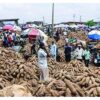
    As the rainy season progresses, displaced farmers from the Shiroro Local Government Area of Niger State are reportedly negotiating with terrorists in order to return home and plant yam and other crops.

    Despite the fact that the terrorists have consented to the appeal, particularly in Chukuba and neighbouring villages, the farmers are still terrified due to their experience in previous years when the terrorists allowed them to plant but not harvest due to attacks.
    A farmer from Chukuba stated, “Farmers in the Chukuba axis have begun returning home after terrorists granted permission to plant crops.” Our dread stems from our past experience. We were permitted to plant our crops during the previous wet season, but we were not permitted to harvest during the dry season. On our farms, we lost yam and other crops. We are simply taking a similar risk to see if it works.”

    Farmers in Kuchi, Injita, Chibani, Zazzaga, and other communities in the Munya LGA, however, reported that they had not yet been granted full access to their farms for planting this season, as their villages continue to experience daily attacks.

    Read Also:  11 Soldiers, 15 Gunmen Dead In Burkina Faso Attacks – Army

    Mohammad Awwal, an IDP from Kuchi, explained that every time he and his family returned home to plant yam and other crops, they were attacked and kidnapped, adding, “We have not planted yam, and the rainy season is advancing. Rainfall is the optimal time to plant yams. We ought to have finished planting by now.” Now, terrorists inhabit our communities. “According to our recently-visited brothers, they have left our yam barns open and stocked them with goats that are consuming yam seedlings.”

    Another farmer, Shehu Abubakar, remarked, “Only a handful of men take the risk of going to plant one crop or another. And they do so under duress. We no longer bring our children and women to the farm due to the possibility of an attack. Previously, women and children accompanied their husbands and fathers to the farm to assist with planting while he constructed ridges. How many hectares can an individual cultivate by himself? Consequently, there is no active farming. Approximately ninety percent of Munya’s villages are vacant. No longer inhabited, Therefore, serious farming cannot be discussed in Munya.”

    A farmer in Gwada, Shiroro LGA, reported that the majority of farmland in the security-affected areas of Shiroro and Munya LGAs could not be cultivated because no one was willing to risk their life for farming.

    Due to the ongoing terrorist assault on Munya and Shiroro, where farmers have been tortured, farmers have predicted a yam shortage and general food insecurity in the coming years, unless the government takes severe action against the terrorists to allow them to return to their farms in full.

    Abubakar Hussaini, secretary of the Yam Dealers Association (YDA) at the Paiko Central Yam Market, stated: “Some farmers are currently planting yam. This year, even those who were unable to plant last year have begun to do so. Despite the fact that the majority of them travel to the farm in fear to plant crops. Farmers currently employ two or three guards whenever they visit their farms. Their duty is to be on the lookout for terrorists so that, if they are spotted, they can alert their teammates to flee.

    This year, farmers have greater access to their farms than in years past, as the security situation has improved.

    In addition, he stated that the security issues had caused the price of yam seedlings to increase as a result of the fact that many farmers were unable to harvest their yam the previous year, while others did not plant at all.

    Read Also:  Lagos Hausa leaders forbid protests against the Okada ban

    “Farmers from Munya and Shiroro are now purchasing seedlings from us,” Hussaini continued. Due to high demand from farmers who were unable to plant or harvest their yams last season, seedlings that were sold for N10,000 last year now cost N40,000.

    This high cost would prevent many farmers from cultivating more than one hectare. To cultivate many hectares requires huge capital. One hectare requires approximately 3,000 seedlings, which cost approximately N20,000. You are informed of the total price. Over the past two years, some farmers cultivated more than 10 hectares of land but were unable to harvest it.

    As a result, he urged the government to take drastic measures to address the security issues so that farmers in the affected communities can return home to face their means of subsistence, noting that life had become difficult because the majority of victims had no other means of survival.

  • Why Poultry Farmers Are Reluctant Over Insurance Policy

    Why Poultry Farmers Are Reluctant Over Insurance Policy

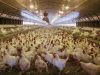
    As bird flu destroys farms, the federal government, through the Federal Ministry of Agriculture, has been urging poultry producers across the country, particularly those with 3,000 birds or more, to take out farm insurance.
    This comes after discontent among impacted farmers over compensation led to secrecy among others.
    However, for many poultry producers, purchasing insurance to protect their farms is another huge difficulty, as previous buyers’ experiences have not been promising.

    As with any area of agricultural production, Kabiru Ibrahim, an architect and former president of the Poultry Farmers Association of Nigeria (PAN), said there was some hesitancy in acquiring insurance cover. “It is definitely vital to insure poultry due of its distinctiveness,” he agreed.

    “Most poultry farmers, on the other hand, have displayed apathy about insurance since they believe they have not been adequately reimbursed at some point in the past, and word has passed among them to make them unwilling to engage in the plan,” he said.

    Despite repeated recommendations from authorities for poultry farmers to insure their farms with firms against any eventuality, studies from across the states show that the number of poultry farms that have registered with insurance companies is tiny.

    Alhaji Umar Usman Kibiya, the state chapter chairman of the PAN in Kano, said the issue of poultry farmers’ reluctance to obtain insurance was a key worry that the association is actively addressing.

    Farmers’ reluctance has been attributed to religious or cultural causes, according to Kibiya.

    Other reasons for farmers’ refusal to cover their poultry farms, according to him, include their inability to pay the premium charge required by insurance providers, as well as a lack of understanding of what they stand to gain by doing so.

    “To fully use the insurance coverage, some insurance firms demand a farmer to pay either a 3% or 4% premium. In that sense, Jaiz Bank recently held a stakeholders’ conference for chicken farmers in the state to educate them on the benefits of the bank’s insurance packages, which are compliant with Islamic tenets,” Kibiya added.

    When the state was afflicted by avian influenza in 2013, it was discovered that most chicken farms were run as individual enterprises rather than corporations, according to Alhaji Kabiru Abubakar, a poultry farmer.

    He went on to say that the majority of chicken farms lacked business accounts, let alone insurance coverage.

    “The problem, in my opinion, is related to the way farmers run and organise their fields. The majority of poultry producers have failed to treat it as a business rather than a pastime.

    “Go around, and I bet you, despite possible losses, you’ll be startled to learn that most poultry farms aren’t properly registered, and many don’t even have a name,” he said.

    Read Also:  Terrorists attack Kaduna, killing one person, kidnap 20 others

    Malam Musa Usman, a poultry farmer in Kumbutso Local Government, agreed that the authorities involved should launch a significant public awareness campaign on the socio-religious implications of engaging with insurance firms about their farms.

    Religious academics, he claims, have already stated that some insurance products are religiously compliant, and farmers can actively participate in them to benefit. He went on to say that only a few chicken producers in the state were aware of the existence of such a thing.

    Nanji Gambo-Oke, the PAN’s public relations officer in Plateau State, blamed the apathy on a lack of knowledge about the benefits of insurance in Jos.

    “As most of the prevalent poultry-related diseases like Newcastle, infectious bronchitis are not insurance bonds,” Mrs Gambo-Oke added, insurance policies were not all-encompassing. Only a few diseases are included, and most farmers rarely encounter the diseases chosen by the corporations. As a result, farmers are hesitant to get any insurance policy.”

    “Layer birds, for example, have a two-year life cycle and a one-year insurance policy. As a result, farmers find it difficult to seek insurance. And those with broilers, whose life cycle is brief, even if they consider insurance, the birds will have passed their danger phase, which is the first three weeks of their lives, before the procedure and bureaucracy of acquiring the required policy is done. As a result, the farmer may choose to ignore or abandon the insurance application procedure. Most farmers, for example, rarely use power, making it difficult to experience such a calamity, so they don’t feel the need to insurance,” she explained.

    She also stated that farmers are hesitant since people in this region of the world do not trust insurance firms with claim payment.

    Finally, she stated that because farmers spend the majority of their time on their farms, “engaging in this back and forth activities common with Nigerian institutions who are still on manual documentation system can be tiring, so farmers would not give in to activities that would keep them away from their farms for long periods of time.” And, in times of danger or significant loss due to mortality, insurance companies are sluggish to investigate, so we usually bury the infected birds, and when they finally arrive, they will claim that we tampered with evidence.”

    Many chicken producers in Niger State do not consider insurance to be necessary to them.

    “In Niger State, we cooperate with the National Agricultural Insurance Corporation,” Mohammed Audi Adamu, state secretary of the Chicken Farmers Association, told our correspondent. “But many poultry farmers in the state don’t take it seriously.” Only a few poultry farms are covered by insurance.”

    Read Also:  2023: SWAGA ’23 Set For Launch In Kwara To Boost Tinubu’s Presidential Bid

    “For now, there is no appropriate sensitization on the matter of insurance policy,” Adamu said, adding that getting poultry farmers in the state to join in the system would take a lot of work. You are aware that in the North, we do not place a high value on insurance. However, if we can take sensitization seriously, a lot of farmers will join in.”

    He did say, however, that a few farmers who signed with the National Agricultural Insurance Corporation had trouble getting compensated when they needed financial help.

    “With the current threat of avian flu, now is the best time to seek insurance coverage.” “However, insurance policies do not cover avian flu,” he explained.