Category: Education

  • The value of a good education

    The value of a good education

    Have you ever attended any schools? The vast majority of people are able to answer yes, but not everyone is. The fact that untold millions of children do not attend school on a regular basis and that this situation has persisted for a significant amount of time has resulted in a sizeable population of adults who are illiterate. Having said that, a solid education is an essential requirement. The Holy Scriptures place a strong emphasis on the importance of cultivating wisdom.

    Winners Schools provide the quality education that your children need to be great and responsible citizens, which will make them go beyond limits; hence, there are no limitations for Winners Schools kids.


    For instance, in Proverbs chapter three verse twenty-one it says, “Guard your practical wisdom and your ability to think,” and in Proverbs chapter four verse seven it says, “Wisdom is the most important thing, so acquire wisdom, and with all that you acquire, acquire understanding.” A wide range of information and an in-depth comprehension are necessary components of wisdom. Wisdom is strengthened by understanding, which also makes a significant contribution to the discretion and foresight of a person, both of which are notable characteristics of wise people. The biblical understanding of wisdom places an emphasis on sound judgment, which is based on knowledge and understanding; the ability to use knowledge and understanding successfully in order to solve problems, avoid or avert dangers, achieve certain goals, or counsel others in doing so.

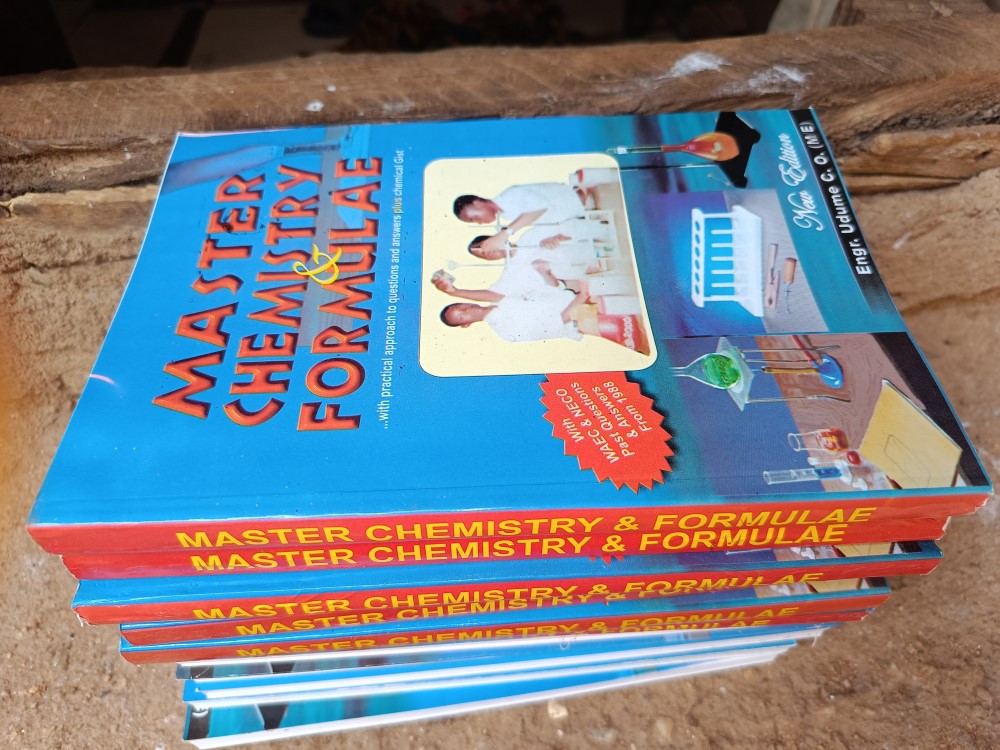
    GET THIS TEXT BOOK FOR: It covers all the syllabus in WAEC, NECO, GCE, MOCK, NAPTECH, JAMB, and other similar exams and interviews.

  • ASUU Strike: Sowore Shows Support, Joins Students’ Protest At Lagos Airport

    ASUU Strike: Sowore Shows Support, Joins Students’ Protest At Lagos Airport

    Omoyele Sowore, the presidential candidate of the African Action Congress (ADC), has joined Nigerian students in protesting the Academic Staff Union of Universities (ASUUongoing )’s strike. The National Association of Nigerian Students (NANS) had previously announced its intention to shut down all international airports due to the Federal Government’s failure to meet ASUU’s demand.

    In continuation of their protest, students on Monday disrupted normal activities by blocking the road leading to Lagos International Airport before proceeding to the airport itself.

    Students defied the heavy rain to block the Lagos-Abeokuta expressway in order to protest the indefinite ASUU strike that has lasted seven months.
    In a show of solidarity, the ADC Presidential candidate also joined the students.

    Read also: Breaking: Evans sentenced to 21 years in Prison for Kidnapping

    While at the protest, Sowore said it was important for the students to intensify their action saying, “this is your struggle.”

    The students who were happy at his show of support cheered him on.

    He said, “I am a comrade and I remain a comrade forever, anything you need from us, let us know, but this is your struggle.

    “Nigerian students delivered independence to Nigeria in 1960, after this, they hijacked it and started using it against us. Nigerian students delivered the democracy we have today in in 1999, but when they flog people, it is the same us that they flog.”

    He urged drivers, traders and well-meaning Nigerians to support the students’ struggle.

  • Nigerian government set to establish Aviation University

    Nigerian government set to establish Aviation University

    The Nigerian government has completed all preparations for the establishment of the African Aviation and Aerospace University in Abuja, Nigeria’s capital.

    This month, the University is expected to begin academic activities.

    Senator Hadi Sirika, Minister of Aviation, stated this while briefing journalists in Abuja.

    “The institution will be one of its kind in Africa,” Senator Sirika said, “by looking at how African nations were left behind in the civil aviation business.”

    He said; “We have already secured approval from the National University Commission and all the Civil Aviation bodies both domestic and international also agreed to give us a maximum corporation for smooth operation, and we also have land along the airport road for the building of permanent site of the university.”

    “But for now, we have already signed a memorandum of understanding with NILE University for the use of laboratory and other practical materials for our students and our lectures room will be at our temporary headquarter in the Accident Investigative Bureau building before the completion of our permanent site.”

    Read also: Group seeks prosecution of those indicted in N400bn budget padding

    Senator Sirika said; “For this year’s academic session, we are going to start Bsc Aviation Business and BSc in Meteorology then each of the courses will start with 20 students for now and by 2023 the University will start MSc in Air Transport Management.”
    “The official website of the university is www.aaau.edu.ng and registration will commence by the 26th of September to 18 of November 2022.”

    According to him, the University is going to be privatised for more efficiency and focus.

    Senator Sirika said; “the present administration is committed to overhauling the Civil Aviation Industry in Nigeria to compete with other Countries in the World.”

    The African Aviation and Aerospace University is expected to boost the economy, promote diplomatic relationships between African nations and promote the Civil Aviation Industry in Nigeria and Africa at large.

  • Nasarawa State Government reopens schools on September 19

    Nasarawa State Government reopens schools on September 19

    The reopening of secondary and primary schools has been approved by the Nasarawa State Government.

    This comes 49 days after the schools were closed due to security concerns.

    This is stated in a statement signed for the Commissioner of Education, Mrs. Fati Jimeta, by the Permanent Secretary, PS, Ministry of Education, Mohammed Sani-Bala.

    According to the statement, “the school resumption for First-term, 2022/2023 Academic Session for all public and private schools is Sunday, September 18 for boarding Schools and Monday, September 19 for day Schools.”

    The statement instructs parents and guardians to return their children and wards to school on time.

    It also directed that all outstanding promotion examinations that could not be concluded due to the shutting down of schools in July were to commence from Monday, the 19th of September.

    Read Also: Borno: ISWAP fighters bury 26 terrorists killed in military bombardments

    The state Commissioner for Education, Mrs. Fati Jimeta directed all Chief Evaluation Officers CEOs, across the state to monitor and ensure compliance with the directive by the government.

    The Commissioner assured the public, especially parents that security has been beefed up in schools to ensure the safety of students and teachers.
    It was recalled that the Commissioner had on July 27, 2022, announced the closedown of schools in the state as preventive measures due to security threats in schools at the Federal Capital Territory, FCT Abuja.

  • ASUU strike: Monarch, others stranded as protesting students block Lagos-Ibadan expressway

    ASUU strike: Monarch, others stranded as protesting students block Lagos-Ibadan expressway

    Motorists on the Lagos-Ibadan Expressway were stranded for hours yesterday as university students protested the continued strike by members of the Academic Staff Union of Universities, ASUU.

    The students, who were acting on behalf of the National Association of Nigerian Students, NANS, obstructed traffic at the Sagamu Interchange.
    Oba Adekunle Oyelude, Tegbosun 111, the Olowu of Kuta in Osun State, was stuck in traffic on his way to Lagos.

    Oba Oyelude, who addressed the students, commended them on their orderly behaviour.
    He urged the Federal Government and ASUU to find a solution to the crisis because students had remained at home for too long doing nothing.

    But the protesting students, in a statement by the Coordinator, South-West Zone and National Public Relations Officer of NANS, Messrs Adegboye Emmanuel and Giwa Temitope respectively, said the President Muhammadu Buhari-led Federal Government has failed in its promise to revamp education.

    The students vowed to mobilise towards shutting down the Presidential Villa if their demands are not met.

    The statement reads: “There is no point arguing about who is at fault or what is to be done. It is very clear that the ruler underfunds education and the Buhari government is failing in its promise to revamp education.

    Read also: NCC, NSCDC align to tackle telecom crimes

    “As it is today, no higher institution in Nigeria is world-class. Yet, our so-called public servants travel all over the world spending billions of dollars to send their kids abroad for studies.

    “As major stakeholders in the education sector, we are the ones who can save ourselves. We have monitored the yearnings of students from campus to campus through their social media platforms and also in their public writings. Students all over Nigeria stand with ASUU. Our lecturers suffer the same hardships and mal-developments we suffer. The staff houses are as bad as the students’ hostels. In South Africa, a professor’s laboratory is far more equipped than that of any university in Nigeria.

    “History has been killed and undermined, so we the youths, do not know where we are coming from not to talk of knowing where we are headed. But we will not lament anymore. The new leadership of NANS is here to work with students to achieve our set aims and objectives. We believe that the student movement has its place in history. It is a task that we vow to fulfil. We will never let Nigerian students down.”

  • I’ll be Fair to All, Unilorin VC-designate Pledges

    I’ll be Fair to All, Unilorin VC-designate Pledges

    By Hammed Shittu in Ilorin

    Prof Wahab Egbewole, the Vice Chancellor-designate of the University of Ilorin, has pledged that his administration will be fair to all members of the university community in its dealings and just in all circumstances.

    Professor Egbewole was elected as the institution’s new vice chancellor following a rigorous selection process overseen by the university’s Governing Council.
    Thirteen candidates competed in the process, and at the end of the day, Professor Egbewole, a legal luminary, emerged victorious.

    Various university interest groups have praised the university’s governing council for conducting a free and transparent election, and they have pledged their support and loyalty to the incoming vice chancellor, Prof. Egbewole.

    The tenure of the outgoing vice chancellor, Prof. Sulyman Abdulkareem, would come to an end on October 15, 2022.
    A statement issued in Ilorin yesterday by Prof. Egbewole signed by the University’s Director of Corporate Affairs, Mr. Kunle Akogun, quoted the newly appointed vice chancellor as saying that “the University of Ilorin is greater than all of us, and we want to extend our hands of fellowship to all our colleagues who also applied for this post, and appealed that they should join hands with us to do this work collectively and in an all-inclusive manner.”
    The Professor of Jurisprudence and International Law commended the

    Read Also: How I make N2 million monthly selling sex-enhancement drugs – Vendor, Yusuf Bashir

    University Governing Council “for conducting a very thorough and painstaking exercise,” that culminated in his appointment.

    He assured the council and the university community “that this appointment is for all of us as we will continue to put the university first in all our undertakings.”

    He therefore appealed for the unflinching support of all Unilorites “in the discharge of the onerous tasks ahead”.

    Prof. Egbewole said: “Our students are our pride, and we will continue to run a student-friendly regime with emphasis on improved work ethics and zero tolerance for corruption in all its ramifications.
    “We give kudos to the workers of this great University for their untiring efforts in ensuring that our system continues to run in spite of the challenges.

    “We will continue to give premium to the training and re-training of the workforce while the welfare of the workers will be given priority.

    “Our efforts at improving the quality of research will lead to a few innovations in that regard, and we implore the concerned staff to see us as partners in progress with a view to ensuring enhanced capacity and improved delivery.

    “We want to appreciate the Vice Chancellor, Prof. Sulyman Age Abdulkareem, and pray for a peaceful transition to move our university to the next level.”

  • FG asks court to order lecturers back to work

    FG asks court to order lecturers back to work

    By Onyebuchi Ezigbo in Abuja and Dike Onwuamaeze in Lagos

    The federal government has referred the Academic Staff Union of Universities (ASUUlong-running )’s strike to the National Industrial Court of Nigeria (NICN) for adjudication. This was the result of a failed dialogue between the union and the Federal Ministry of Education.
    According to Section 18 (I) (b) of the TDA Cap T8, the government requested a court order allowing ASUU members to resume work at their various universities while the issues in dispute were being addressed by the NICN. LFN 2004.

    A statement by the Head, Press and Public Relations, Federal Ministry of Labour and Employment, Olajide Oshundun, said the demand was contained in a referral instrument addressed to the Registrar of NICN, dated September 8,2022, and signed by the Minister of Labour and Employment, Senator Chris Ngige.
    In the matter billed for mention at 9am today, the federal government asked the NICN to inquire into the legality or otherwise of the on-going prolonged strike by the ASUU leadership and members that had continued even after apprehension by the Minister of Labour and Employment.
    It asked the court to interpret in its entirety the provisions of Section 18 LFN 2004, especially as it applied to the cessation of strike once a trade dispute was apprehended by the Minister of Labour and Employment and conciliation was ongoing.

    Other requests included that the court should “Interpret the provisions of Section 43 of the Trade Dispute Act, Cap T8. LFN 2004, titled, ‘Special Provision with Respect to payment of wages during Strikes and Lock-outs,’ specifically dealing with the rights of employees/workers during the period of any strike or lock-out.
    “Can ASUU or any other union that embarked on strike be asking to be paid salaries even with clear provisions of the law.
    “Determine whether ASUU members are entitled to emoluments or ‘strike pay’ during their period of strike, which commenced on February 14, 2022, more so in view of our national law as provided in Section 43 of the TDA and the International Labour Principles on the right to strike as well as the decisions of the ILO Committee on Freedom of Association on the Subject.

    Read Also: How I make N2 million monthly selling sex-enhancement drugs – Vendor, Yusuf Bashir

    “Determine whether ASUU has the right to embark on strike over disputes, as is the case in this instance, by compelling the federal government to employ its own University Transparency Accountability Solution (UTAS) in the payment of the wages of its members as against the Integrated Payroll and Personnel Information System (IPPIS) universally used by the federal government in the nation for payment of wages of all her employees in the federal government Public Service of which university workers including ASUU members are part of or even where the government via NITDA subjected ASUU abd their counterpart UPPPS university payment platform system software to integrity test (vulnerability and stress test) and they failed.”
    The federal government further asked the court to determine the extent of ASUU’s demand since the 2020 Memorandum of Action (MOA) that the union signed with government.
    The demands included the funding for revitalisation of public universities as per 2009 agreement, Earned Academic Allowances (EAA) payments, state universities proliferation and constitution of visitation panels, and release of white paper on the report of the visitation panels.

    The others were the reconstitution of the government renegotiation team for renegotiation of 2009 agreement, which was renegotiated 2013/2014, due for renegotiation 2018/2019, and the migration of ASUU members from IPPIS to its own UTAS, which is currently on test at NITDA.

    Meanwhile, as parents and students of Nigeria’s public universities worry that there might be no end in sight to the disagreement between the federal government and ASUU, a report by the Committee on Needs Assessment of Nigerian Public Universities (CNANPU) that was set up by the government to carry out a detailed appraisal of the existing situation in the universities and the requirements for their transformation, revealed that Nigeria’s university system had a manpower crisis.

    CNANPU also reported that the physical facilities for teaching and learning in Nigerian universities were inadequate, dilapidated, over-stretched, over-crowded and used beyond their original carrying capacity.
    The committee noted, “Academic culture is dying very fast” in the public universities, as “library facilities and services are archaic and comatose (while) many laboratory equipment are only known to students in theory (who) never seen many of them not to talk of using them.”

    It also observed that there was numerically more non-academic staff in the services of the universities than the teaching staff they were meant to support. It said that had created “a scenario in which the tail is wagging the dog, as more expenditure is incurred in administration and routine functions than in core academic matters.

    “More than 70% of non-teaching staff lack a first degree, indicating a lack of professionalism or unqualified personnel in specific roles within universities.”
    The committee’s report, which was submitted to the federal government on November 1, 2012, and a copy of which was obtained over the weekend, provided insights that may aid in resolving the crisis that has kept the university gates closed for nearly seven months.

    It stated that many lecturers, including professors, shared small offices while open-air sports pavilions, old cafeteria, convocation arenas, and even uncompleted buildings were used for lectures; and in some cases, workshops were conducted under corrugated sheds or trees.

    The eleven-man committee’s membership included Executive Secretary of Tertiary Education Trust Fund (TETFund); representatives of the Senate and House of Representatives; Office of the Secretary to the Government of the Federation; Ministries of Education, Finance, and Trade and Investment; National Planning Commission; National Universities Commission (NUC); and then President of ASUU, Professor Ukachukwu Aloysius Awuzie.

    It noted, “So much pressure is put on existing facilities mainly due to unplanned expansion of programmes” in the public universities.
    The committee lamented that the current enrolment into public universities in Nigeria “is a reversal of the national policy, as the current science to non-science ratio is 32:68 instead of 60:40.”

    In addition, “There is no relationship between enrolment and the tangible manpower needs of the nation,” the report said.
    It captured the state of Nigerian universities, thus, “students sitting on bare floor or peeping through windows to attend lectures; over 1000 students being packed in lecture halls meant for less than 150 students; over 400 students being packed in laboratory meant for 75 students; students cannot get accommodation, where they get they are packed like sardines in tiny rooms; no light and no water in hostels, classrooms and laboratories and that students use the bushy areas of their campus for toilet because lavatory facilities are too hazardous to use.”
    Other problems, according to the committee, include “broken furniture everywhere, unkempt buildings and dilapidating facilities” as well as “over-worked, untrained, and inadequate teachers, etc.”

    It stated that these were actually symptoms of the real problems, which “are the quality of leadership and governance in the universities.”
    The committee stated that some university administrators “spend millions to erect super-gates when their libraries are still at foundation level; expend millions to purchase exotic vehicles for university officers even though they lack basic classroom furnishings; spend hundreds of millions in wall-fencing and in-fencing when students’ accommodation is inadequate and in tatters.”

    The committee also stated that in the course of its assignment, it found that majority of the universities in the country were, “Grossly under-staffed, rely heavily on part-time and visiting lecturers, and have under-qualified academics, and only a few of them attract expatriate lecturers but have no effective staff development programme.”

    Read Also: Kebbi: Bagudu commends communities for neutralising bandits

    It added, “Based on the available data, there are 37,504 academics in Nigerian Public Universities (in 2012) that were saddled with teaching 1,252,913 students. The teaching staff-students’ ratio is as much as 1:363 in some universities.
    “Instead of having 100 per cent of the academics having PhDs, only about 43 per cent do so. The remaining 57 per cent have no PhDs.
    “Instead of having 75 per cent of the academics between senior lecturers and professors, only about 44 per cent are within the bracket while the remaining 56 per cent are not.”

    The report added, “Only seven universities have up to 60 per cent of their teaching staff with PhD qualifications…there are universities in which the total number of professors is not more than five. And total number of PhDs in the whole university is not up to 30.”
    The committee lamented the increasing culture of visiting lectureship’ in the university system. It stated that out of a total of 37,504 lecturers, only 28,128, representing 75 per cent, were engaged on full-time basis, implying that 9,376 are recycled as visiting, adjunct, sabbatical and contract lecturers.

    It said, “Some academics are always on the road travelling from one university town to another and unable to meet their primary obligations with their tenure-employer.
    “It is making some proprietors of state universities to believe that they can run universities without any programme for academic staff development and for recruiting full-time lecturers.

    “No Nigerian academic is in the league of Nobel Laureates or a nominee of Nobel Prize.
    “There are only two registered patents owned by Nigerian academics in the last three years,” as at 2012.

  • Katsina expends N30 Billion to renovate, rehabilitate schools – Masari

    Katsina expends N30 Billion to renovate, rehabilitate schools – Masari

    The Katsina State Government has spent N30 billion in collaboration with the Universal Basic Education Commission (UBEC) to renovate and rehabilitate primary school structures in the state.

    Governor Aminu Bello Masari made the announcement during a meeting with former members of the State House of Assembly at Katsina’s Government House council chambers.

    He stated that the state government has renovated over 7,000 primary and secondary schools and hired 5,000 teachers across the state’s 34 local government areas.
    “My administration, in collaboration with UBEB, has spent over N30 billion on the renovation, rehabilitation, and furnishing of primary schools across the State.”

    Read also: IPMAN urges Federal Govt to check petroleum tanker drivers’ excesses

    “Over 7,000 primary and secondary schools have been renovated or rehabilitated by us.” “We hired over 5,000 teachers and promoted every teacher who had gone nine years without being promoted,” he said.

    Masari also claimed that his administration’s revolving strategy in the education sector has increased primary school enrollment from one million to over 2.2 million from 2015 to date.

    According to him, the government has spent N15 billion to build drainages in the Katsina metropolitan area to combat flooding, despite the fact that the government had previously spent N4 billion on the same project.
    The Governor also stated that the government, in collaboration with the World Bank, had spent N50 billion overnight to combat flooding and gully erosion in the state’s Katsina, Jibia, Malumfashi, and Funtua local government areas.

  • Breaking: Despite ongoing ASUU strike UNILORIN appoints new vice-chancellor

    Breaking: Despite ongoing ASUU strike UNILORIN appoints new vice-chancellor

    Despite the Academic Staff Union of Universities (ASUUongoing )’s seven-month-long strike, the Governing Council of the University of Ilorin (UNILORIN), Kwara State, announced the appointment of a new vice-chancellor on Thursday night.

    Wahab Egbewole, the new vice-chancellor, is a Professor of Law and a Senior Advocate of Nigeria, and he is set to take office on October 16.

    Abidu Yazidi, Chairman of the Institution’s Governing Council, made the announcement.

    Kunle Akogun, the university’s spokesman, confirmed the new development over the phone.

    Selection process

    In a short speech delivered by Mr Yazidi on Thursday while making the announcement, he said the selection of the vice-chancellorship processes had kicked off in March with an advertisement in line with the law establishing the university.

    He said; “In accordance with the laws of this University, the University of Ilorin Act, CAP U7 Laws of the Federation of Nigeria, the tenure of the current Vice-Chancellor is due to lapse on the 15th of October 2022, the Council of the University began the process of appointing a new Vice-Chancellor as far back as March 2022.
    We advertised nationwide for applicants and also through our website. We eventually received some twenty-nine (29) applications from this effort. Even before the returns were in, however, we mounted a special search process by which we reached out to no less than fifty-six (56) people in Universities and other institutions, both at home and abroad.”

    Mr Yazidi said following the constitution of a selection committee, 13 of the applicants “who fulfilled our advertisement and other conditions” were shortlisted for interview by the committee on behalf of the governing council.

    The chairman added: “We interacted with them and processed their application over a period of four days. We checked and double-checked their credentials, we closely questioned and probed each of them to make sure that they would support and fulfill the vision and mission of the University.

    Read Also: Regional govt system can’t help Nigeria anymore – Yakasai

    “We specifically looked for candidates who would support and be sympathetic to the needs of our students, who would interface and work smoothly with other faculty members, who would be mindful of the needs and aspirations of our host community, as well as the candidate who, in our opinion would be truly concerned about the progress of the university and our responsibility to our Nation.

    “I am glad to inform you that the Council has, after rigorous selection procedure, approved the appointment of Professor Wahab Olasupo Egbewole, SAN, as the eleventh Vice-Chancellor of the University of Ilorin.”

    About Egbewole
    Mr Egbewole, who is 61 years old, holds a PhD in Law and Jurisprudence and is said to have served the university within the last 25 years.

    The new vice-chancellor, who hails from Ifetedo, Ife South Local Government Area of Osun State, was once the Director of the General Studies Division of the university.

    He was appointed a Professor of Jurisprudence and International Law in 2012 and has served both in the Senate and Governing Council of the university.

  • Strike: FG, not ASUU, proposed revitalisation fund – Union

    Strike: FG, not ASUU, proposed revitalisation fund – Union

    The Academic Staff Union of Universities has clarified that the N1.1 trillion fund for the revitalisation of public universities was a commitment made by the Federal Government and not the union’s idea.

    The chairman of ASUU, Niger Delta University chapter, Kingdom Tonbara, made the clarification during a phone-in programme on Rhythm 94.7FM, Yenagoa, on which he appeared alongside his secretary, Ebi Baraka, on Saturday.

    This is as they insisted that ASUU-NDU would not pull out of the ongoing national strike, adding that the chapter’s involvement in the union’s previous struggles had resulted in the transformation of the Bayelsa State-owned university, which was hitherto described in some quarters as “a glorified secondary school”.

    The Minister of State for Labour and Employment, Festus Keyamo, had in August declared that the Federal Government would not borrow N1.1trn to end the ongoing nationwide industrial action embarked on by the national body of ASUU since February 2022 over the government’s failures to implement the 2009 agreement, among other issues.

    Read Also: Flood kills 372 Nigerians in eight months, 508,000 persons affected – NEMA DG says

    Keyamo, who spoke on a national television, claimed that the union was trying to blackmail the government into borrowing the money while other sectors also need attention.

    Tonbara said the N1.1trn revitalisation fund for public universities was proposed by the Federal Government in 2013 when the university teachers downed tools for six months to drive home the need for the government to save the institutions from infrastructure decay.

    He noted that the government came up with the figure following a report submitted to the Federal Executive Council by a committee inaugurated by the President Goodluck Jonathan administration to visit all public universities to ascertain the level of decay in response to an earlier complaint by the union in 2012.
    Tonbara said, “That report was presented to the Federal Executive Council where they looked at it and they shouted, from what we are told; that, that means Nigerian universities have completely decayed and that they needed to pump in massive funds into public universities to revitalise our universities.

    “And they (Federal Government), not ASUU, came up with N1.1trn to be pumped into public universities; not ASUU. And they said they don’t have the money even though they have realised that from the assessment, they needed N1.1trn.

    “It was ASUU that recommended to them that you can spread this (money) into six years and the payment is not going to be made to ASUU but it will be given to the administrators of the universities to develop the universities, both state and federal universities.”

    The ASUU-NDU leader continued: “So, the then President, after agreeing, was unable to release this money. That’s why we went on strike in 2013 for six months. At the end of that six months’ strike, the President graciously released N200bn instead of the normal N220bn that we had agreed. He released N200bn.

    Read Also: Gunmen kill driver, abduct 8 passengers in Rivers

    “And you won’t believe it, for the first time, Niger Delta University got N3bn (from the money). Before 2013, Niger Delta University had not seen N1bn, and that was the era people were describing the NDU as a glorified secondary school.”

    Tonbara explained that the N3bn was very useful to the management of the NDU as it was able to build brand new faculties of agriculture and arts, auditorium and two hostels while a library abandoned since 2004 was also completed and equipped.

    He added: “From that N3bn, we were able to equip most of our laboratories. From that N3bn, we were able to send some of our colleagues abroad to do Masters and Ph.Ds. We agreed in that 2009 agreement (with Federal Government) that in three years’ time we will renegotiate the agreement. From 2009 till date, various governments have been deceiving us.”

  • Focus on the reen hamber: ASSU strike, Nigeria’s ‘crack‘ universities and the question of patriotic leadership

    Focus on the reen hamber: ASSU strike, Nigeria’s ‘crack‘ universities and the question of patriotic leadership

    So, I’ve been thinking about the government-ASUU standoff that resulted in the closure of Nigerian universities for more than six months. This is not a new phenomenon; anyone who has graduated from a Nigerian university has experienced the ‘ritualistic festivity’ known as the ASUU strike.

    What exactly is the problem with Nigeria’s education sector, and why does ASUU enjoy keeping university students at home to engage in a protracted battle with the government? The reason is simple: our government’s double standards and lip service to the education sector are concerning.

    Successive governments will rather score a cheap political goal by not allowing the universities to increase tuition fees and promise heaven and earth to the academic body only to push the responsibility to the next administration. Nigeria indeed lacks sincere people in government. People who will holistically identify the problem and hit straight at practicable solutions.

    Interestingly, a few leaders who are passionate about the country’s education sector and are patriotic enough to lay the facts bare have suggested that children and wards of public office holders, from the president to National Assembly members, governors to even councillors at the local government level should all study in Nigeria.

    Read also: Buhari hails SGF, Boss Mustapha, At 66

    In supporting this idea, I wish to add that children of civil servants should also be included in that category since their parents run the public sector, they should stay back to enjoy it. This is the example Ondo State governor, Rotimi Akeredolu is laying in the Sunshine State.

    Unfortunately, our leaders who only pretend to care about the public sector and the children of the masses who attend these public institutions will not all such arrangements to stand.
    The House of Representatives had recently rejected a bill seeking to regulate how children of public officers enrol in schools outside the shores of Nigeria.

    The legislation is titled ‘A Bill for an Act to Regulate International Studies for Wards and Children of Nigerian Public Officers, to Strengthen Indigenous Institutions, Provide Efficient Educational Services for National Development; and for Related Matters.’

    That was the second time within four years that the lawmakers would reject the bill sponsored by a member of the House, Hon Sergius Ogun from Edo State.

    While leading the debate on the bill at the second reading, Ogun noted that the proposal would strengthen indigenous educational institutions to meet global standards; boost the economy by reducing cash flight and foreign exchange; reduce brain drain and institute good welfare conditions for indigenous academics, experts and professionals based abroad to come back home and develop their country with their skills and expertise.

    The lawmaker added that it would build a better society by developing formidable educational institutions; and facilitate the realisation of the fundamental objectives and policies of the state as enshrined in Chapter Two of the Constitution of the Federal Republic of Nigeria, 1999 (as amended) Cap C23, LFN, 2004.

    “This bill is proposed against the background of fallen standards in our educational system and the need to bring the sector up to speed with global best standards. Unfortunately, as a result of the inability of the government to provide quality education in its public educational institutions, Nigerians have resorted to private schools and foreign schools for their education.

    “The United Kingdom, United States of America, Ukraine, Ghana, Malaysia, Egypt, and South Africa, just to mention a few, have become choice destinations for Nigerians in search of quality education.”

    Ogun is not alone in this call, a member of the 8th House of Representatives from Niger State, Hon Abubarkar Chika Adamu had described the incessant ASUU strike and the general decline in the public education sector as a moral burden on the Nigerian leaders. Chika who boasted about rejecting a 40 per cent scholarship for his daughter in a private university in Nigeria, insisted that those entrusted with making policies for the public good should not have their children abroad while children of the masses bear the brunt of bad policies.

    The question is how many people in government have their wards in public universities? Does it mean they all don’t believe in the system they are managing? Why then do we blame ASUU?

    Read also: Buhari’s former aide, Sharada declares interest in Kano governorship election

    On this matter, I stand with ASUU, all evidence pointing to rot in our universities abound, no Nigerian university is among the 1st 50 in the world; our universities are not research-driven and have not solved any problems in the last decades. It is so bad that employers of labour now complain about unemployable graduates. A graduate that can’t create jobs and is unemployable has succeeded in wasting time and resources including government subsidy on his university education. We all know this, we should not pretend just to give ASUU a bad name.

    My greatest amusement in all this is that a national student leader who couldn’t differentiate between quack and crack is condemning ASUU, what a low! The government should rather concentrate on sanitising the national students body and return the leadership of NANs to the campuses for genuine students’ to lead rather than tinker with the idea of breaking the ranks of ASUU. ASUU is not the problem, government is.

  • Lagos govt orders schools to resume September 5

    Lagos govt orders schools to resume September 5

    The Lagos State Government has mandated all schools to begin the 2022/2023 academic year on September 5, 2022.

    This was confirmed in a statement on Saturday issued by the Director-General, Office of Education Quality Assurance of the state, Abiola Seriki-Ayeni.

    According to Seriki-Ayeni, the date was approved by the Commissioner for Education in the state, Mrs. Folasade Adefisayo.
    “All schools below tertiary level in Lagos State are mandated to resume for First Term on Monday, September 5, 2022, as stated in the 2022/2023 Harmonised Academic Calendar as approved by the Honourable Commissioner for Education Mrs. Folasade Adefisayo.”

    “The academic calendar prioritises standardised learning days and schools are to ensure strict compliance for the delivery of quality and sustainable education in Lagos State,” it read in part.

    Read Also: Fuel tanker fire razes 10 buildings in Ogun

    The statement added that students and staff “are expected to adhere to health and safety protocols” when they resume.

    The academic calendar is available for download on the Lagos Education Quality Assurance website.

  • ASUU strike: FG restates ‘no work, no pay’ policy

    ASUU strike: FG restates ‘no work, no pay’ policy

    The Minister of State for Education, Rt Hon Goodluck Nanah Opiah, has restated the reasons behind the position of the Federal Government on no work, no pay policy stance on the resolution of the industrial strike.

    He disclosed that having done what the Academic Staff Union of Universities, ASUU, demanded, the government expected the university teachers to return to school unconditionally.

    The minister, who stated this in a release on Saturday by his SA Media/Public Affairs, Kelechi Mejuobi, said that the Federal Government had done its best to resolve the crisis averred that the “no work, no pay policy” is a universal policy not peculiar to the country alone.
    Opiah, who was on a working visit to the Federal University, Lokoja, Kogi State, while regretting that the strike has caused a setback in the education sector where the government, students, parents, and lecturers are the losers, he requested the pro-chancellors’ and chairmen of governing councils of universities to come into the matter and convince ASUU to reconsider its position.

    Read Also: Bandits Abduct Two Pregnant Women, 13 Others In Katsina Communities

    He was full of praise for the management of the institution for the pace of development recorded so far. The minister called for continued harmony between the Governing Council led by the Pro-Chancellor, Senator Chris Adighije, and the management, adding that it will facilitate the needed development for academic excellence

    The minister, who was in the university to access the level of development in the institution established 11 years ago, used the opportunity to look at the contribution of the intervention agency, TETfund in the infrastructural development of the school as well as security arrangements given the current situation in the country.

    Earlier, the minister paid a courtesy visit to the state governor, Alhaji Yahaya Bello where he disclosed the purpose of his visit to the state.

    The minister debunked reports from some quarters that he had called ASUU members thieves, urging the public to ignore such reports.

  • Nasarawa State University Set To Resume

    Nasarawa State University Set To Resume

    The Nasarawa State University Keffi, NSUK, is set to reopen after the state government agreed to pay the university’s employees’ salaries.

    This was stated by Governor Abdullahi Sule while briefing members of the state executive council at the Government House in Lafia, the state capital.

    While briefing the council on recent developments in the educational, health, and security sectors, Governor Sule announced his administration’s decision to agree to take over the payment of salaries at NSUK, meeting one of the taking over demands made by the local chapter of the Academic Staff Union of Universities, ASUU, and paving the way for the possible resumption of academic activities.

    According to the Governor, based on the available finances to the state and especially because of the importance attached to education, his administration has agreed to take over the responsibility of paying salaries of staff at the NSUK, beginning from August 2022.

    Read Also: 2023: Peter Obi should stop dragging church into politics – Atiku’s running mate, Okowa

    He pointed out that, so far, the management of the university, as well as the none teaching unions namely the Senior Staff Association of Nigeria Universities, SSANU and the Non-Academic Staff Union of Universities, NASU have all agreed to open the university.
    “One of the conditions they gave to us, the most important condition, is to ensure that we take over the full payment of salaries of all the staff so that they don’t have to use their Internalky Generated Revenue, IGR.

    “As far as we are concerned, we looked at our finances and we strongly believe that, based on the cash flow we have available to us and also because of the importance we attach to education, we should be able to start that from this month.

    “That is what we are looking forward to. We are also hoping they will compliment by the moment we start the payment hopefully by Thursday or Friday, then we are hoping to see them also returning to their classes,” he stated.

  • FG’s bursary for education undergraduates to begin in 2023 —Minister

    FG’s bursary for education undergraduates to begin in 2023 —Minister

    The Federal Government has reiterated its commitment to improving teachers’ value propositions in order to improve the quality of teaching and learning in Nigeria.

    Rt Hon Goodluck Opiah, Minister of State for Education, stated that plans were underway to introduce bursary payments to students studying in higher education institutions beginning in 2023.

    He spoke at the State House Banquet Hall, President Villa, Abuja, during the official launch of the SDG-3 and SDG-4 Independent Evaluation Reports.
    Opiah, who represented the Minister of Education, Adamu Adamu, said among other strategies is “focus-

    ing on improving the value proposition of teachers so that we can retain experienced teachers, and attract and retain the best brains into the profession.

    “This is manifested in the recent elongation of years of service with some incentives including payment of bursary to all students reading education in our tertiary institutions begin ning from the next academic session”

    The minister said that basic education provides the template upon which other higher levels of education build on.

    He said: “This is more of what we are already doing, being anchored on the Ministerial Strategic Plan, (MSP 2028-2022).

  • Our strikes are to save public universities – ASUU

    Our strikes are to save public universities – ASUU

    The Academic Staff Union of Universities, ASUU, has declared that the industrial actions often employed by the lecturers union are aimed at saving public universities from total collapse.

    Prof. Emmanuel Osodeke, ASUU President made this known in a statement issued at the end of the Union National Executive Council, NEC, emergency meeting on Tuesday in Abuja.

    The union president said: “ASUU struggles are to save Nigerian public universities irrespective of ownership federal or state.”
    Mr Osodeke also expressed dissatisfaction with the Federal Government over response its demands, hence its decision to declare a “comprehensive, total and indefinite” strike.

    He said ASUU shall use all legitimate means at its disposal to protect and defend the interests of its members in public universities who might be victimised on the account of the ongoing struggles.

    Mr Osodeke said the NEC noted with pains, its concerns for Nigerian students “who are also our wards and foster children” and condemned government’s seeming indifference to their plights.

    He said the union empathised with the students, parents, and other stakeholders in the universities.

    He said NEC reaffirmed its belief in the sanctity of a stable academic system.

    “Were it within our control, our universities would never have been shut for one day.

    “However, ASUU was forced into taking this painful decision to prevent members of the Nigerian children from the ruling class and their foreign collaborators from further destroying whatever is left of our public universities. We are all victims.

    “We need the understanding, solidarity and sacrifices of all to ensure that every qualified Nigerian youth who cannot afford the cost of private university education or foreign studies has unhindered access to quality university education,’’ he said.

    He said ASUU strikes were aimed at saving public education, and ensuring that governments (Federal and State) use “our common patrimony to support quality public university education. This is our collective obligation.”

    He said NEC acknowledged with appreciation past and current efforts by eminent Nigerians and groups to mediate in the lingering crisis.

    He said that ASUU would remain focused on the full implementation of the Dec. 23, 2020 Memorandum of Action for quick restoration of industrial harmony in Nigeria’s public universities.

    It would be recalled that the lecturers have been on strike since Feb. 14, over alleged failure of government to keep to agreements entered with the unions.

    The demands of the striking lecturers include issues bordering on funding of universities, salaries and earned allowances of lecturers, among others.

  • Breaking: ASUU extends strike again

    Breaking: ASUU extends strike again

    The Academic Staff Union of Universities, ASUU, has extended the ongoing strike.

    It was reliably informed that ASUU extended the strike during its National Executive Council, NEC, meeting in Abuja.

    A lecturer with the University of Calabar, UNICAL, who disclosed this to our correspondent, said: “ASUU has extended the strike again. This government has refused to pay us, so we can’t go back to classes.

    “I currently have over one thousand scripts in my house, both marked and unmarked, I can’t attend to them because this government is owing me six months.”

    ASUU has been on strike since February 2022 over a disagreement in past agreements reached with the government.

  • TASUED suspends religious studies’ HoD over sex-for-marks

    TASUED suspends religious studies’ HoD over sex-for-marks

    The Management of the Tai Solarin University of Education (TASUED), Ijagun, Ijebu-Ode, Ogun State, has suspended a lecturer, Dr Olaniran Balogun, who was declared wanted by the Independent Corrupt Practices and other Related Offences Commission (ICPC).

    The ICPC had, a few days ago, declared Balogun, who was the Head of the Department of Religious Studies at TASUED, wanted for allegedly abusing his office and demanding gratification.

    TASUED management said it had relieved Balogun of his position and had placed him on interdiction until he cleared himself of all allegations of misdemeanours brought against him by the federal anti-graft agency.
    The Deputy Registrar, Media and Corporate Relations, Gbenga Omilola, disclosed this on Sunday.

    Omilola said the Vice-Chancellor, Prof. Oluwole Banjo, has approved the appointment of Dr Kayode Olusanya, as the new Head, of the Department of Religious Studies, to replace Balogun.

    The statement read, “Dr Balogun is currently under investigation for the alleged misdemeanour and has since been relieved of his position as the Head of Department, Religious Studies.

    “He has also been placed on interdiction until he clears himself of the various allegations levelled against him by the ICPC.

    According to Platformfrica, the university management would continue to do all within its powers to protect the good name and image the university has built for itself over the years.
    “The university would, therefore, not condone any act of indiscipline and corrupt practice by any of its staff members. Dr Balogun is further advised to immediately honour the invitation of the ICPC to clear himself of the allegations against him.

    Earlier, the ICPC had issued a warrant of arrest on the wanted lecturer.

    According to a statement posted on its portal, the ICPC said Balogun has been declared wanted in connection with a suspected case of demand for gratification and abuse of office.

    The statement read partly, “He has refused to honour several invitations extended to him through the authorities of Tai Solarin University of Education, Ijebu Ode, Ogun State.

    “Accordingly, a warrant of arrest has been issued for his immediate arrest. He is advised to report himself to any of the ICPC state offices in either Lagos, Ibadan or the nearest police station.”

  • WAEC boss dissociates council from state performance report

    WAEC boss dissociates council from state performance report

    The West African Examinations Council (WAEC) has dismissed claims that it ranked states based on their performance in its recently released examination for school candidates as false.
    Mr Patrick Areghan, WAEC’s Head of National Office, dismissed the claims, calling them misleading, false, and the work of a liar.
    Areghan told the News Agency of Nigeria (NAN) on Saturday in Lagos that the report did not come from the council.

    “We learned on social media that WAEC has graded states’ performance in our recent West African Senior School Certificate Examination (WASSCE), presumably the 2022 examination for school candidates.”

    “It ranked Kebbi as being 20th out of the 37 ranked states, including the Federal Capital Territory (FCT), in the public school-based performance data, supposedly made available by council.
    “The malicious report rated Enugu as being first, followed by Edo and Benue, with 93.9, 93.5 and 91.7 per cent respectively among others.
    “I want to say here that the ranking is completely false as it did not emanate from council, because there are many other things to be considered to arrive at such percentage and this is not part of our job.
    “We, as WAEC, do not do state ranking. We only indicate number of credits in subjects and other categories.
    “We do not dabble into areas that are not part of our duty as council,” the WAEC boss said.
    He urged the public to disregard the ranking, noting that it was false.

  • WAEC, NECO Fees: Campaign Of Calumny Can’t Stand — Oyo Education Commissioner

    WAEC, NECO Fees: Campaign Of Calumny Can’t Stand — Oyo Education Commissioner

    Rahman Abiodun Abdu-Raheem, Oyo State Commissioner for Education, Science, and Technology, has warned those he calls purveyors of a calumny campaign to stop their evil plots against the education family, declaring that the campaign will fail.

    The commissioner was responding to an anonymous post that was widely circulated on social media and raised allegations that ministry officials were taxing some secondary school principals and vice principals during the process of registering students for the West African Examination Council (WAEC) and the National Examination Council (NECO), declaring that the allegations had no iota of truth.

    The unsigned post being circulated on different platforms had alleged, among other things, that officials of the state have been charging N600 extra per student who registers for WAEC or NECO exams, adding that the same was being shared among officials of the Ministry, the Post-Primary Education Service Commission (TESCOM), executive members of ANCOPPS and Tutors General.
    The publication, which was addressed to Governor Seyi Makinde, equally alleged that some persons have been paying for appointments at the TESCOM and that school heads were often made to cough out different amounts to service officials who come on unscheduled inspections.

    While addressing the matter, the commissioner declared that the allegations were false, unfounded, and aimed at tarnishing the good deeds of the incumbent administration in the education sector.

    He declared that the Ministry, TESCOM or ACCOPSS are not involved in the collection of any illegal levy in the schools.