Category: Opinion

  • FBN Crisis And financial sector

    FBN Crisis And financial sector

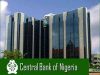
    The current boardroom crisis from the 127-year-old First Bank of Nigeria Ltd (FBN) that culminated from the intervention of the Central Bank of Nigeria (CBN) has again raised corporate governance concerns in the financial sector. The country is replete with relics of unsuccessful institutions both in the public and private businesses, occasioned by sundry ills, including poor corporate governance, mind-boggling corruption, gross negligence, incompetence and insider abuses, amongst others. It is not a road we ought to travel again.

    Trouble started when the CBN dissolved and reconstituted the boards of FBN and those of its parent firm, FBN Holdings Plc. The FBN Managing Director earlier removed by the prior board was reinstated from the apex bank. With what’s performed in the past couple of weeks, the issues at stake are definitely in the public domain and shouldn’t be over-flogged. Instead of the FBN in the financial sector cannot be overstressed. CBN Governor, Godwin Emefiele put it rather succinctly: “By our final evaluation, First Bank has over 31 million customers, with a deposit base of N4.2 trillion, shareholders’ capital of N618 billion and NIBSS instant payment (NIP) processing ability of 22 per cent of the business.”

    Available documents indicate that the FBN maintained healthy operations until the 2016 financial year when the CBN’s target evaluation revealed that the bank was in grave financial condition with its capital adequacy ratio (CAR) and non-performing loans ratio (NPLs) substantially exceeding acceptable prudential standards. The problems at the bank have been attributed to bad credit conclusions, important and non-performing insider loans and bad corporate governance practices. The lender would probably have been in serious problem were it not for CBN regulatory forbearance, a financial term for softening some of those stringent rules that banks must comply with if they are to avoid being taken over by the issuer.

    Read Also:  Lawmaker accuses Governors of frustrating financial independence of legislature, judiciary

    Incidentally, the financial industry has had more than its fair share of the malaise. Between 1989 and December 2019, the Nigeria Deposit Insurance Corporation NDIC) had liquidated 425 financial institutions, such as 51 Deposit Money Banks (DMBs), 325 Micro Finance Banks (MFBs), along with 51 main Mortgage Banks (PMBs) mainly on account of the aforementioned ills. Bank failures come with a lot of ripple effects on the economy, such as job losses and loss of depositors’ funds, amongst others. This is why attempts by the CBN to ensure that FBN doesn’t just recover from the somewhat unsavoury company governance misdemeanours and insider abuses that characterised its operations in the last couple of decades, are commendable.

    With the level of CAR at the FBN, recapitalisation has become the only option to return the banking giant on a solid footing. Everything should be done to secure investor confidence because the bank needs to raise fresh capital and also pick, quite urgently, where to raise it. Fortunately, the current boardroom disaster and the ensuing disclosures haven’t triggered a run on the bank. But beyond the fate of one bank, pertinent questions which arise include: At what point did the CBN find FBN investments in Honeywell and Bharti Airtel? What measures are being considered to ensure that the level of alleged insider abuses in FBN is stamped out in the financial sector? Has the CBN always adhered to its circular which requires that insider-related facilities must not exceed 10 per cent of paid-up share capital?

    The Fund had advocated vigilance and corrective actions to avoid again financial stability dangers arising from increasing NPLs. In this connection, it noted that debt relief measures should stay time-bound and limited to clients with great pre-crisis principles, in accordance with present regulations.

     

  • COVID-19: NCDC records  One death as new cases hit 165,559

    COVID-19: NCDC records One death as new cases hit 165,559

    The Nigeria Centre for Disease Control (NCDC) has announced it listed yet another death in the past 24 hours.

    The health agency said the entire amount of deaths from the disease in Nigeria now stands at 2,066.

    It also reported 44 new cases of this virus, bringing the total number of diseases in the country to 165,559.

    The new cases were reported in four states.

    Read Also:  NCDC predicts a spike in COVID-19 cases due to gross violations of guidelines

    Akwa-Ibom and Ekiti States reported one case each.

    According to the public health agency, the country’s active instances stand at 7,092.

    NCDC also stated that it has analyzed 1,977,479 people because the virus hit Nigeria on Feb. 27, 2020.

  • Nigeria’s power grid suffered another system collapse Again

    Nigeria’s power grid suffered another system collapse Again

    The nation’s power grid suffered another system collapse, throwing Nigerians into darkness and departing companies to hook on to alternative electricity sources.

    Nigeria’s erratic power grid, along with the resulting precarious energy supply is a key issue hindering growth in the continent’s biggest economy.

    On the other hand, the nation has continued to implement tariff increases in state-controlled costs because 2015, which the government insists is required to allow distribution companies to recoup costs and cover to create companies.

    Operators have said a”spinning reserve,” that the amount of unused capacity in online energy assets which can compensate for power shortages or frequency drops within a specified period of time holds the answer to the occasional collapses.

    In a statement confirming the episode, the government-run Transmission Company of Nigeria (TCN), said it was investigating the latest disturbance, noting that it was working to resolve the problem.

    The General Manager, Public Affairs of the company, Mrs. Ndidi Mbah, blamed what she’s described as ion issues for its meltdown, including the TCN was probing the origin of the incident.

    Read Also: TCN records partial power system collapse

    She said: “The Transmission Business of Nigeria hereby says that at about 11.01 am now, 12th of May, 2021, there was a total system collapse of this grid, as a result of voltage collapse at some parts of the grid.

    “TCN started grid recovery right after the collapse, from Shiroro Generating Station to Katampe transmission substation, Abuja throughout the Shiroro — Katampe line at 11:29 am, and through Delta Generating Station to Benin Transmission Substation and has reached Osogbo and parts of Lagos.

    “While the grid recovery and power restoration gradually progress to other parts of the country, the reason for voltage collapse which precipitated this failure is investigated.”

    The TCN appealed for patience, saying it is working assiduously to ensure full recovery of the grid and consequently power supply to the rest parts of the nation.

  • Aki And PawPaw Considering At Working On A New Joint film Project

    Aki And PawPaw Considering At Working On A New Joint film Project

    Nollywood celebrities, Chinedu Ikedieze aka Aki, and Osita Iheme aka PawPaw may have decided to heed the call of supporters to get a comeback after many years.

    The movie stars engaged in a back and forth over the possibility of a joint film or series project after several calls from fans to collaborate again.

    Recently PawPaw took to Instagram to respond to the call to reunite for a collaborative effort stating, “Just how far Edu? Only over here soliloquising. I just dey see DM and older clips anyplace. Guess is time to answer the call of nature and fall something. The way you see am?”

    Read Also:  2023: Osita Chidoka disowns presidency poster

    Responding to his collaborator’s deal, Aki said, “this will be fascinating o…Should we give them a picture or series? Guys, what do you think? Should we provide you with a movie or TV series? What if we call it?”

    The movement had seen lovers trooping to the celebrities’ social media pages to express their delight with the information.

    Presently, Aki is mostly seen in a popular TV show on Africa Magic,’ The Johnsons,’ where he plays the use of Efetobore Johnson, the eldest son of the Johnson family.

    Recently humorous clips and memes of Aki and PawPaw’s previous collaborative efforts are shared across different social networking platforms forming among the most well-known memes around.

  • NSIA revenue hits N160b

    NSIA revenue hits N160b

    The Nigeria Sovereign Investment Authority (NSIA) recorded an income of N160.06 billion last year, signalling 343 per cent more compared to the N36.15 billion income it recorded the preceding year.

    Announcing its 2020 audited financial reports in a digital platform, Managing Director of NSIA Mr. Uche Orji said despite the challenges of Covid-19, NSIA had a solid year.

    He attributed the strong performance to NSIA’s investments in global capital markets, the enhanced contribution from subsidiaries and affiliates and exchange gain from foreign currency positions.

    The NSIA earnings came from a devaluation gain of N51billion, and centre income of N109billion when compared with N33.07 billion in 2019.

    However, Orji lamented: “Covid-19 adversely affected logistics about infrastructure projects, notably the toll road projects along with the presidential fertiliser initiative”

    Despite the pandemic, the Authority achieved 33 per cent growth in Net Assets to N772.75 billion compared to the previous year’s performance of N579.54 billion.

    Orji said the NSIA”received an additional contribution of $250 million, and provided first stabilisation support to the Federal Government of $150 million withdrawn from Stabilisation Fund this past year.

    Read Also: Senate moves to place NSIA on 20% first line charge from all revenues accruable to the Federation Account

    In the Identical year, the NSIA received $311 million from capital recovered from the late General Abacha in the United States Department of Justice and Island of Jersey for deployment towards the Presidential Infrastructure Development Fund (PIDF) jobs of Abuja-Kaduna-Kano Highway, Lagos Ibadan Expressway and Second Niger Bridge.

    In response to COVID-19, Orji stated: “NSIA partnered the international Citizen, a not-for-profit group, to make the Nigeria Solidarity Support Fund. Separately NSIA acquired and distributed oxygen concentrators to the 21-teaching hospital as part of corporate social responsibility; along with staffing assistance to the Presidential taskforce on COVID-19.”

    In 2020, the NSIA”spent additional capital into NG Clearing, the first derivative clearing home in Nigeria to keep NSIA’s shareholding in 16.5 per cent following the company’s rights issue of 2020″ Orji said.

    The NSIA admitted InfraCo Africa, a Private Infrastructure Development Group (PIDG) firm based in the UK as 33 per cent shareholder in InfraCredit, reducing NSIA’s stake from 50 per cent in 2019 to 33 per cent in 2021. NSIA, Orji said, is in discussions with additional investors to InfraCredit.

    The following asset classes were standout performers in 2020. “In $ returns, Venture Capital investments were up 29 per cent in dollar terms, Hedge Funds grew up 11 per cent, Emerging Long Only Equity Managers climbed by 22 per cent, Developed Long Just Equity Managers also climbed by 19 per cent and Personal Equity was up 13 per cent for the year.

    Orji stated that”some managers in the long-only strength classes were up more than 50 per cent at the year as most took advantage of the supportive environment provided by central banks”.

    The only real asset classes Orji said: “was additional diversifiers which among other investments like health exemptions, commodities, and real estate, includes commitments to Aircraft leasing funds that had an understandably poor year because of the effect of COVID-19”.

    He said: “NSIA expects these funds will recover eventually, having had a good performance in the previous years. Stabilisation Fund Liquidated portion of the Stabilization Fund assets in 2020 to meet the $150million redemption that augmented the July 2020 FAAC to all three tiers of government”.

    Another indicator of a glowing future is the”Stabilisation Fund (SF) performed well given the economic climate and ultra-low interest rates set by central bankers”.

  • Nigerian women in film welcome standard, union degree fee structure in Nigerian Film Industry

    Nigerian women in film welcome standard, union degree fee structure in Nigerian Film Industry

    Initiated by the Co-founder of Inkblot Productions Zulumoke Oyibo, the IWIF was created to advocate for women’s inclusiveness and unbiased entry into the Nigerian Film Industry.

    With the purpose of handling societal, professional and ethical issues surrounding women in Nollywood, IWIF aims at creating a working environment that’s safe and free.

    One of the problems discussed in the lunch was intellectual property rights and the way Nigerian creatives are not well protected and do not receive the essential credit for their own work. It had been noted that writing is one of those undervalued divisions in Nollywood, as authors don’t get credited in the publicity of films and are usually not mentioned.

    “We need to get to a level of professionalism by which individuals are valued and can be easily credited for the job that they do.

    A major challenge that has been brought to the fore was the insufficient data and lack of construction in the business.

    In accordance with award-winning celebrity Kehinde Bankole, “The very first solution to the significant challenges being first in the sector is access to information. There should be a ready place where people are able to get advice and be educated concerning the goings-on of the business and the various resources available to filmmakers and celebrities.

    Nevertheless, in the vein of accessibility to information, IWIF convener Zulumoke Oyibo added it is hard for investors to put money into the industry because there is not any structure. “Oftentimes, investors don’t have data and cannot see the numbers to tell if a film project will be a viable investment or not. This makes it hard for filmmakers to get financing”.

    Read Also:  FG declares Wednesday, Thursday public holidays to mark the 2021 Eid-el-Fitr celebration

    Actor, producer and series host Eku Edewor considers that a lack of transparency is a major offender,” unlike Hollywood for example where the movie’s budget is printed and how much the film makes is also published for all to see. So people are able to tell whether the movie is successful or a flop. Talents’ fees will also be known for the most part and also this way, creatives are compensated well for their job.” She shared.

    It was revealed that a good way for Nollywood to mitigate this would be to welcome a standard/union degree fee structure as can be practised in some other movie industries in different areas of the world. The belief is that when there’s not any secrecy about the fees which people are compensated in the industry, people will not be rapidly changed as everyone has an idea just how much ought to be paid and how much manufacturing makes or doesn’t make. A construction that caters to what everybody ought to be eligible for based on experience and experience, regardless of sex, considering that women have often been paid less than their male counterparts.

  • Adamawa Police Command deploys 1,207 personnel for Sallah celebration

    Adamawa Police Command deploys 1,207 personnel for Sallah celebration

    The Adamawa State Police Command has deployed 1,207 personnel to secure citizens over the span of the Sallah celebration.

    The personnel are to boost visibility policing throughout the 21 local government regions of the State and protect against crime while individuals go about feasting at the soul of the year.

    Read Also:  Matawalle denies paying ransom to secure release of 26 kidnapped girls

    “The CP enjoins citizens to do the parties without any fear or apprehension,” the police statement said.

    It added that the Divisional Police officers (DPOs), Operational Commanders and their supervisory Area commanders were directed to ensure the safety and security of the general public.

    “The Strategic Officers will strengthen the visibility policing construction and carry out confidence-building patrols especially about residential areas, major highways and Government/Private infrastructures to stop and detain any ugly scenario,” he added.

  • IPOB deny planned attack on Lagos, allegations baseless

    IPOB deny planned attack on Lagos, allegations baseless

    The Indigenous People of Biafra (IPOB) has described an allegation from Lagos State Commissioner of Police, Hakeem Odumosu, it, along with Oodua Republic agitators, intends to execute attacks on soft targets in Lagos, as baseless, false and tribal, including that it had been hatched to cause division between both caring and friendly states

    Nnamdi Kanu, leader of IPOB who said this on Monday, highlighted that it’s no more 1967, a reference to the start of the Biafra war.

    “The public is hereby notified that the allegations that IPOB is plotting to assault Lagos is a lie,” Kanu said.

    This is not 1967.”

    Odumosu had earlier on Monday, alleged the Oodua agitators and IPOB planned to attack the nation.

    Odumosu spoke at a security summit convened by the Lagos State Government, said the threat was being researched, adding that security agencies could foil the plan.

    Read Also:  Minister Pantami says, currently facing different issues over insecurity, economic, and societal problems

    Twenty-four of these groups are identified and are being carefully monitored,” he said.

    “Likewise, the danger of IPOB to strike soft targets in Lagos is equally being put on the radar of their control intelligence collecting and other security services from the nation.

    “Plans are being put in place to neutralise their activities. The control is using this medium to solicit assistance from all and sundry to be cautious at all times and report any suspicious person or motion to safety agencies. Let’s adopt the slogan if you see something, say something. ”’

    Additionally, Odumosu said intelligence reports demonstrated that most miscreants now use abandoned buildings as hideouts and in most cases, initiation camps, adding that the majority of the deserted buildings were traced to family disputes.

  • Nigerians mock presidency over robbery attack on Ibrahim Gambari’s residence

    Nigerians mock presidency over robbery attack on Ibrahim Gambari’s residence

    The Presidency on Monday night confirmed that there was a ridiculous effort to burgle Gambari’s residence.

    That is coming at a time where there are worries in the country about the increasing insecurity in the country.

    The current attack at Aso Rock has stirred reactions from Nigerians who advised the government over its failure to secure the Presidential villa.

    According to them, this is proof that there is not any security in the country which nowhere is safe in Nigeria.

    Some Nigerians expected that the government would act quickly on insecurity in the nation after this recent assault.

    Here are some comments accumulated from Twitter:

    @Leodasilva,”Insecurity is getting closer to you all.

    @FakhussHashim,”The COS to the President was assaulted in the most protected part of Abuja, that’s the ultimate indictment of the state of insecurity in this country. Is inconsequential. No one is safe.”

    @Ukemeukut,”The fact that they attempted it should be scary for all of us.”

    @SirChuks,”That is evidence that we do not have safety in the country. Failed government.”

    Read Also:  Boat capsized, 28 dead bodies recovered, 65 people rescued, others yet to be found

    @Tutsy22,”Foolish effort?

    @TrueNaijaboy,”If you can’t keep yourself safe in ASO Rock there is trouble on the mountain. Buhari should do the honourable thing and just go.”

    @Angela201,”I expect we won’t wake up one day to be informed Aso Rock was stolen?

    @Blessonate,”The simple fact that there was an”effort” makes it a huge thing.”

    @Oluwaseun_top,”That attempt indicates a failed system. An area that ought to be one of the most secure in the nation. Apparently we need inspired and willing capability to get things right. What’s the government doing about strikes on security architecture. My key concern! Security operatives aren’t encouraged.”

    @Sir Mubi, “Arrant nonsense. When an attempt can be made within such area then name 1 place that could be stated to be safe from Nigeria.”

    @Kingsley, “Aso Rock? No CCTV and alarm systems? So you guys took your chronic incompetence to your villa? Jesus!”

    CarloGambino,”Do you cokeheads with any opportunity even know the gravity of the allegedly”effort to burgle” the house of General Buhari’s Chief of Staff? Oh I 100% think it was powerful.”

  • Rice Farmers Oppose Yield of Impounded Commodity to Traders

    Rice Farmers Oppose Yield of Impounded Commodity to Traders

    Rice farmers under the umbrella of this Rice Processors Association of Nigeria (RIPAN), yesterday kicked against the directive by the Senate Committee on Ethics, Privileges and Public Petitions, to the Nigeria Customs Service (NCS) to reunite the smuggled goods it transports from rice traders’ shops in Ibadan, Oyo State.

    The team stated that the settlement of the committee was in variance with the resolve of the federal government and Nigerians to grow local capacity in the rice industry to be able to achieve food safety.

    The Director-General of RIPAN, Mr. Andy Ekwelem, at a media briefing in Abuja, said, the senate directive was capable of sending shock waves that may collapse the rice industry, discourage further investments and place over 15 million jobs at risk in addition to eroding the gains thus far achieved in the nation’s rice revolution.

    The institution, therefore, argued that if smuggling wasn’t handled with proper dispatch, the magnitude of loss to Nigerian stakeholders particularly the national government, incorporated rice millers, funding banks, Central Bank of Nigeria (CBN), and farmers, among others, could be catastrophic for the country’s fledgeling economy.

    Ekwelem pointed out there was the requirement for urgent action to avert a looming national food crisis, adding that all hands must be on deck to combat smuggling.

    “What we need is to increase our regional capacity rather than foreign rice,” he explained.

    The body further expressed support for the Nigeria Customs Service, adding the bomb on markets that were dealing on smuggled rice was valid and welcoming.

    RIPAN further guided the Senate Committee to”take a second look at the matter from a federal economics prism because from where we’re now with the Nigerian market, private biases have to be eschewed when we must make progress”.

    Read Also: Prices of major foodstuffs in South-West markets increase by 100 percent

    They further argued that the growth had serious implications for developing the local industry partly because”when investors realise their investments are not protected by adequate legislation, they will have no choice but draw their funds from the market”.

    The farmers claimed that “Within the last five years the current administration has invested almost everything it could, to promote production and processing of rice in the bid to preserve foreign exchange, fortify our food safety, provide jobs for Nigerians and grow our economy generally.

    “Lots of people are encouraged by the forceful thrust of government. People are investing big-scale farming, rice processing, paddy aggregation and agro-input dealerships.”

    He explained: “Jobs are being made, private sector involvement is alive and busy and new entrepreneurs are emerging in the industry. The whole rice processing and grinding sub-sector employ between 13 million to 15 million Nigerians and if we promote smuggled rice to prosper within our marketplace, these occupations and all the noble efforts of authorities is going to be lost within the shortest possible time.”

    Ekwelem, especially, pointed out that Nigeria is currently a top rice producer in Africa and rated among the top 14 states on the planet.

    He attributed the effort to the doggedness of this present administration to be sure that we”produce what we consume and eat what we produce”.

    He stated, however, that it will be”foolhardy of us to fold our hands and watch economic saboteurs ruin our collective resolve to make sure that Nigeria migrated from some food importing country to a food-producing country”.

    “Today we are crying insecurity and the consensus is that the menace continues because most youths are not gainfully employed. Nigerians should imagine the scenarios when more than seven million more youths are left jobless by our tacit support to smuggling,”he added.

    The institution insisted that the prices of locally produced rice are”not out of reach for the Nigerian people”.


  • EFCC to Approve Movement of Funds By NGOs in North-east

    EFCC to Approve Movement of Funds By NGOs in North-east

    The Economic and Financial Crimes Commission (EFCC) yesterday declared that the movement of capital by Non-Governmental Organisations (NGOs) operating in the North-east must be approved by it.

    The commission also sought the collaboration of the Nigerian Army to terminate terrorism in the North-east by halting terror financing and money laundering in the North-east.

    Some NGOs in the area have been suspected of participation in terror-financing.

    Some were said to have paid for a 10-year hotel accommodation making it difficult for travellers to locate lodging in Maiduguri, the Borno State capital.

    Former Acting Chairman of EFCC, Mr. Ibrahim Magu, had raised the alert that a number of NGOs had 50 bank account and sought the cooperation of banks to detain the situation by offering the essential info.

    An announcement by the commission said the Maiduguri Zonal Head of the commission, Mr. Onwukwe Obiora, stated motion of cash by NGOs at Borno, Adamawa and Yobe states have to be approved by the commission.

    He spoke during a courtesy call on Theatre Command of Operation Hadi ka in Maiduguri.

    “We want to equally inform you that in carrying out our mandate that the commission helps to ensure that movement of money by Non-Governmental Organisations across the regional authorities in Borno, Yobe and a few components of Adamawa State has to be accepted by the zonal office”.

    He further stated that if patrons of insurgency and kidnapping were cut away, the fight against insurgency could be won by the theatre command.


    Read Also:  EFCC wants special anti-corruption courts for speedy trials

    Obiora appealed to the command to report suspected illicit funds connected to NGOs or people to the commission.

    Based on him, `’the theatre command is a very crucial stakeholder in the battle against corruption and the role it plays is enormous. Because of this, it is necessary and essential for the Nigerian Army to join hands together to end insurgency in Nigeria by identifying and cutting off the source of financing for the insurgents.

    In his response, the Theatre Commander, Maj. Gen. Farouk Yahaya pledged the control’s support for the EFCC.

    He said the Army would assist the commission in identifying and reporting the eggs among NGOs, Bureau de Change operators and other local contractors with the intent of stopping money laundering and terrorists financing in the North-east.

    In a related development, the Army has pledged to improve the existing relationship with the EFCC.

    The Commander, 3 Brigade Nigerian Army, Kano, Brigadier General S. Nicodemus, made the toast when he saw the Kano Zonal Office of the EFCC.

    The commander, who assumed control of the brigade on April 23, 2021, explained the trip was supposed to cement the existing connection between the military and the bureau.

    He revealed that he was briefed by his predecessor of the cordial relationship that existed between the Brigade and the EFCC and encouraged that the zonal head maintains the connection.

    The Kano Zonal Head, Mualledi Farouq Dogondaji, in his reply, guaranteed the commander of enhanced relationship and support.

    Dogondaji further stated that the doors of the commission were offered to the Nigerian Army.


  • SWAN wants members in Lagos Sports Associations

    SWAN wants members in Lagos Sports Associations

    The Chairman, Sports Writers Association of Nigeria, Lagos Chapter, Debo Oshundun, has called on the leadership of the Lagos State Sports Commission to deliver onboard members of the association about the reconstituted sports association boards in the nation.

    “As one of the essential stakeholders in sports development in the state, I wish to call on the direction of the commission to deliver onboard our associates since media attaches to the various sports institutions in the nation.

    “This will assist in the area of information management and cordial relationship between the media and the commission.

    “The very last boards had SWAN members on board however, the arrangement wasn’t formal,” he explained.

    In his comments, the Director-General, Lagos State Sports Commission, Oluwatoyin Gafar Bolowotan thanked the new Lagos SWAN executive associates for deeming it fit to pay the commission per visit after the institution’s election held in March.

    His words: “For us in the commission, sportswriters have an essential place within our hearts. Though we might disagree with each other in one area or another, we are partners in advance.

    “We welcome criticism by the media but our fascination is that such criticism should be objective.

    Read Also:  Sports, tourism veritable growth catalyst for South-East development — Ihedioha

    “We don’t claim to understand all of it. Our doors are always open to the institution, so we hope for a better relationship in the coming years.”

    The Director-General said that the petition for appointing SWAN members since the media attaches to the newly reconstituted sports institution boards is a welcome proposal.

    “The request is a welcome idea, we’ll look into it and very soon the commission will get back to you on it.

    “Though we don’t have any record that SWAN members are part of the past sports association boards however we will consider your petition because it is in line with our brand new policy in sports development and guidelines for the sports institution,” he said.

  • NCC says 5G technology will Offer Great Potential for Nigeria’s digital economy Development

    NCC says 5G technology will Offer Great Potential for Nigeria’s digital economy Development

    The Chairman, Board of Commissioners of Nigerian Communications Commission (NCC), Prof. Adeolu Akande, has said that the full deployment of 5G technology in the country would have a positive impact on Nigeria’s digital economy.

    He said: “Spectrum plays a crucial part in realising the complete extent of these new capabilities. Therefore, 5G’s complete socio-economic impact depends on access to a variety of spectrum sources.

    “This Spectrum will play an integral role in fulfilling the requirement for many enhanced mobile data services in addition to new wireless broadband cases like distant object manipulation, industrial automation, virtual and augmented reality and next-generation connectivity for the automobile.

    “The 5G will build on this momentum, bringing substantial network enhancements, such as high connection rates, mobility and capacity, in addition to low-latency capabilities. In doing this, it enables new cases and applications that will positively impact unique businesses and improve efforts towards achieving electronic economies.”

    Read Also:  Microsoft Partners Fed Govt unveils new initiative to provide digital skills to five thousand Nigerians

    He praised the 2 agencies because of their foresight in the first installation of 5G from the country, including that the managements of NigComSat and NCC had taken a bold step in the right direction to release contagious quantum of Spectrum in the 3.5GHz band for the premature deployment of 5G.

    This type of collaboration, he observed, sought to guarantee synergy among bureaus under the Federal Ministry of Communication and Digital Economy.”

    According to him, the C-band is the most suitable and appropriate for immediate deployment of 5G solutions, taking into account availability of apparatus ecosystem with 60-70 per cent of global business 5G network setup currently in the band.

    He, therefore, mentioned that the importance of this spectrum for the early installation of 5G providers in Nigeria can’t be overemphasised.

    Danbatta stated that the two agencies have been in talks on how to relocate the operations of NG-1R to the standard C-band 300MHz (3.9GHz — 4.2GHz) potion of the group, which can be more appropriate in terms of satellite service offering since end-user terminals tend to be cheaper there while leaving the non-standard C-band 400MHz (3.5GHz — 3.9GHz) part of the group for 5G usage.

  • FG Approves N6.2bn for Six electricity prepaid meters Projects

    FG Approves N6.2bn for Six electricity prepaid meters Projects

    Additionally, it said it was prepared to commence the distribution of four million free electricity prepaid meters at the next phase of the free metre program.

    Minister of Power,” Mr. Mamman Saleh, told journalists at the end of the FEC meeting, presided over by President Muhammadu Buhari at the State House, Abuja, the jobs were to the Acquisition of equipment as well as designs and manufactures.

    The fund also covers the updating of the country’s electricity facility and the advancement of electricity supply nationwide.

    According to him, the Ministry of Power introduced six memoranda into the council, all of which were accepted.

    The aggregate of all the figures, in both naira and dollar denominations, is a total of N6,156,168,822, once the dollar part is converted via the official exchange rate of N380 to $1.

    The first one is the award of a contract for design, production and distribution of critical spare parts for Crompton Greaves 330 kV, 132 kV and 33 kV circuit breakers to Messrs. Legen Engineering Nigeria Limited in the sum of N298,339,887.04.

    “The next one is that the award of the contract for the procurement of 50 sets of 400 AH battery banks, 30 to 50 volts and 30 variety of 110-volt battery prices for its substation utilized from the TCN in favour of Messrs. DTS Transformers Electric Industry Limited at the sum of N644,805,953.10.

    “The third award of this contract will be for the procurement of 50 cents and of 132 kV isolators for the TCN in favour of Messrs. Leading Diagonal Engineering Nigeria Limited in the sum of $840,650 plus N53,900,000 inside the shipping period of six weeks.

    “The fourth one is the award of the contract for the design, manufacturing and the distribution of three 60/66 MVA 132kV power transformers with attachments and 15 variety of 500 kV transformers, 33/0.415kV earthing transformers for your TCN in favour of Messrs. Zhenjiang Transformers Company Limited, in the amount of N1,296,953,044.55 with a delivery period of 12 months.

    “The fifth one is that the award of the contract for the design, installation and supply of Optical Wire (OPGW) and Universal Optical Transportation Network System (OTN) for a few critical transmission lines in favour of Messrs. Xinjiang Power and Transportation Company Limited in the amount of 6,800,743.51, also N668,843,634.74, using a delivery period of 12 months.

    “The last one is the upward review of the regeneration for its design, manufacture, distribution, installation and commissioning of 1X 100MVA, 132/33kV power transformers at Ogba Transmission Substation, Lagos, in favour of Messrs. Power Control and Appliances Limited, in the amount of $648,038.31, also N48,342,524.18, with the delivery interval of six months.

    Read Also:  Mambilla Power Project could transform Taraba’s economy, says Ishaku

    “All these procurements are geared towards updates of the transmission system, to the national grid, so we can have enough power supply to the country”.

    The Union added that the federal government will begin the next stage of the free supply of four million prepaid electricity meters into Nigerians.

    According to him, the federal government is nearly through with the distribution of one million complimentary pre-free paid meters to Nigerians.

    “We’ve almost completed with stage zero, we’re now going into phase one of the distribution of the yards, that is the remaining million that the central bank promised to augment with.

    “The initial set is just one thousand, we’re about to complete with that, but you know, it is not the goal, one thousand is quite negligible compared to the demand of Nigerians,” he said.

    Asked if there wasn’t any improvement in power generation, Saleh said:”We’re advancing, it (power generation) has enhanced, you can see, I don’t need to tell you.

    “We are moving from 3,000 megawatts, today we are generating up to 5,000 megawatts or over that, so it is an excellent improvement.”

    The minister said that the government was making sure the power supply was stable and also working towards updating the distribution”from say 4000 megawatts into 5,000 to 6,000 to 7,000 megawatts and so on.

    “So, the more people replace some obsolete and obsolete equipment, the more we improve the supply of electricity.”

    Asked if he agreed with the report that over 70 per cent of Nigerians who have electricity supply have less than 12 hours per day, he explained:”It all depends. You know we have graded the distribution dependent on the metering.

    “Unless the yards are sufficient, we will not know which and where to push 24 hours provides because there are some people who are ready for 24 hours and you will find those who aren’t prepared for 24 hours supply of light.”


  • BREAKING: We will soon set up 5G technology, says FG

    BREAKING: We will soon set up 5G technology, says FG

    The Federal Government of Nigeria has declared its intent to set up the Fifth Generation (5G) Tech in the telecommunications sector shortly.

    Even though allaying anxieties of any threat to security and health within the installation of 5G, the authorities said the assets and earnings to be gained from its installation are so enormous that they can’t be ignored.

    The MoU between the two bureaus will put the foundations for the purchase of Frequency Spectrum acceptable for the installation of the technology from the nation.

    Danbatta stated the NigComSat needed the proper technologies to ease the deployment.

    “The C-band is the most suitable and suitable for the prompt installation of 5G services taking into account availability of apparatus ecosystem with 60-70percent of international business 5G network set up now in the group, thus the significance of this Spectrum for premature installation of 5G providers in Nigeria cannot be overemphasized.

    “For optimum 5G support functionality, a mean of neighbouring 100 MHz of spectrum at the C-band is necessary by an Operator.

    “The Commission initiated a discussion with NIGCOMSAT who at our quote could make some modification to its satellite performance and release component of its Spectrum holding at the group to ease the installation of 5G at Nigeria.

    Read Also: People living with disabilities – We have been abandoned by government

    “The two agencies are in talks about the best way best to relocate the operations of NG-1R into the typical C-band 300MHz (3.9GHz — 4.2GHz) potion of this group, which can be more appropriate in relation to Satellite service offering since the end-user terminal is significantly cheaper there while departing the non-invasive C-band 400MHz (3.5GHz — 3.9GHz) part of this ring for 5G usage,” Danbatta explained.

    The Managing Director of NigComSat, Dr Abimbola Alale, lauded the committees set up by both agencies for performing a comprehensive job, including that the MoU will alter the narratives of their electronic and telecommunications sector in the nation.

    Chairman of the NCC board,” Prof Adeolu Akande, stated recently, many administrations had started to permit Spectrum for industrial deployment of 5G.

    Prof Akande, who stated 5G services had been set up in the United States of America, South Korea and a lot more nations, stated telecommunication evolution from beginning to date had contributed to progress in user experience observed from 2G, 3G and afterwards 4G.

    “The worldwide effect of 4G caused increases in cellular usage and network functionality.

    “5G will build on this momentum, attracting significant network enhancements, such as high connection rates, freedom and capability, in addition to low-latency capabilities.

    “5G doesn’t just offer improved broadband and ultra-reliable latency communications but also provides enormous machine-type communications, where a great deal of apparatus will seamlessly join and independently interact with the net without human intervention,” he added.

  • Mobile phone services to support farmers

    Mobile phone services to support farmers

    A couple of the critical aspects essential for the acceleration of agricultural growth are information and knowledge which can guarantee increased production coupled with efficient distribution and marketing practices. To this end, mobile technologies have proven their capability to assist farmers in total farming activities ranging from production to sales and beyond. Studies in countries such as Sri Lanka have discovered that farmers were able to substantially improve their incomes using simple mobile phone applications where 40 per cent of the crop loss was avoided with timely interventions made possible by using the applications.

    For quite a while, Kenya represented among the world’s most dynamic agricultural portable software development environments with tremendous possibilities for innovative and new applications with a strong software development system that has led technology giants to invest their resources into enhancing and further diluting the potential of this dynamic mobile app landscape. However, with over 180 million cellular phone users, Nigeria represents an even greater route for mobile gaming.

    These and several other variables of Africa’s mobile revolution illustrated by inventions such as mobile innovations like M-Pesa and the obvious success of this very simple e-wallet method of Nigeria from the last decade showed the promise of mobile services. Nowadays, mobile phones are owned by even more people and thus applications will be accessed more on mobile devices than any other stage. At the exact same time, there are many inventions and services provided through the mobile avenue.

    Read Also:Project financing mechanism: Option to Nigeria’s infrastructural deficit

    Whereas cellular programs are typically viewed from the perspective of smartphones as opposed to feature phones, it is of fantastic interest to note that for the previous two decades, cellular applications have been developed in developing nations for the conventional second generation (2G) cellphone for a wide range of services such as agriculture among many others. However, we should observe the rapid change of mobile networks evolution is easing so much change in cellular applications. That is referring to the shift from 2G to EDGE, to 3G and then to 4G/LTE. Mobile programs are being enlarged and scaled to do much more.

    It’s also notable that an impeding factor to the penetration of smartphones in Africa is broadband, the availability of which decides a good deal. Many of the developing countries have no or low 3G (and currently 4 and 5G) penetration with significant obstacles in costs of both purchases and data downloads. All in all, nearly all cellular programs are lifestyle and entertainment concentrated provided for the mass customer base at a minimal cost. This is a sign it will be challenging to develop a cell app targeting a specific sector, for instance, agriculture. Mobile apps that are targeted for developmental purposes are slow in revenue generation and slower to attain financial sustainability.

    Meanwhile, the overall market for mobile programs has seen such remarkable and exponential growth over the past decade and is growing at an equally rapid rate evidenced by the increasing amount of consumers ranging from individuals to businesses that continue to guzzle innovative applications by the millions making it really hard to measure the marketplace. Irrespective of the limitations and opportunities, using mobile telephones to enhance agriculture will visit the accomplishment of a very critical factor in virtually any industry that involves speed and convenience. Indeed, cellular phones offer this at a remarkably low price that overlooking it will be detrimental to the total agriculture ecosystem.

    Another huge benefit of using cell phones to reach farmers is the unbelievable opportunity to provide and catch personalised information to individual owners of mobile phones. This is not only a great opportunity for effective solutions to a diverse selection of individual difficulties but an opportunity to comprehend problems down to the most minute of their details and the way they influence the farmer as well as the produce.

    Mobile phones are cheaper to get compared to other programs such as the aforementioned touchscreen, a setup to which will be more expensive than it might to deploy into a larger amount of cellular phones. The range of functionalities reachable using cellular telephones is a large one, especially on the smartphone which has many features like cameras and sensors. Also, even basic features like voice communication put the mobile phone at more advantage to use than other platforms.

    Conclusively, this incredible rise of mobile technologies is fastest in developing nations like ours where people have just as much, or even bigger, information needs as their counterparts in developed countries. Agriculture represents one of the most crucial sectors for cellular intervention, and for each of the reasons emphasized, Nigerian agriculture stands to reap fantastic rewards if cellular technology is utilised. Thus, we shouldn’t relent in our adoption, usage and development of mobile technologies for agriculture.


  • 1,056 police constables commences training in Kwara

    1,056 police constables commences training in Kwara

    Newly recruited 1,056 police constables have commenced training on community policing in Kwara State at the weekend.

    Governor AbdulRahman AbdulRazaq hailed President Muhammadu Buhari for the key to the concept, which he said would strengthen the internal security structure.

    AbdulRazaq said the kickoff of the initiative was long due and encouraged citizens to always volunteer timely info and encourage the police to burst criminal networks before they execute their actions.

    The Governor, however, said the success of community policing is based on the society fully financing it, claiming that police is often a manifestation of the society it serves and commending the safety agencies, including the police, for their hard work which has been keeping Kwara largely safe.

    “The people are integral to the achievement of the police. The folks will give the information which the police will act on. These constables are products of this society and they will operate within the society that they know.

    Read Also:  New police law sets OND as minimum entry qualification

    AbdulRazaq said the recent US travel advisory exempting Kwara from countries believed to have high safety threat testifies to the outstanding efforts of the police and other safety agencies in the state to protect lives and possessions, urging them to continue to associate with the state government in that respect.

    He tasked the new constables with discipline and dedication to duties, which he explained as the bedrock of policing job.

    “Those of you stepping into the neighbourhood police now have your job cut out for you. You require a lot of discipline to excel. As soon as you are disciplined, other items will fall in place for you,” AbdulRazaq added.

    Police Commissioner Mohammed Bagega said the initiative was meant to enhance success in the struggle against crime.

    In addition, he emphasised the substantial role intelligence collecting plays in assessing offences.

    “The IGP, through the Police Service Commission, wants to enhance the fight against crimes through intelligence-led policing. Therefore we need advice and also these people after graduation will be posted back to their individual communities,” he explained.

    The CP added that the constables will, after undergoing one month

    Training on safety jobs, be deployed to their respective communities in the nation.

  • Project financing mechanism: Option to Nigeria’s infrastructural deficit

    Project financing mechanism: Option to Nigeria’s infrastructural deficit

    Over the years, there was a rapid increase in the pace at which capital intensive and high risks projects of corporations and governments have been funded through the concept called Project funding.

    These projects require humongous amounts of funding to embark upon, coupled with the reality that they are filled with high risks. These risks might be in the kind of construction risks, operational risks, economic risks, environmental dangers, and maintenance risks amongst other people which the government or the corporation might not be able to bear alone. The remedy to this in the majority of instances is project finance.

    Stefano Gatti defines the notion as”the structured financing of a specific financial entity–the SPV, or special-purpose vehicle, also referred to as the project company–made by patrons with equity or mezzanine debt and for which the creditor considers money flows as being the key source of loan reimbursement, whereas assets represent only collateral.”

    Hence project finance deal includes the government or corporation borrowing funds for a capital project through the formation of a specific financial entity known as the Special Purpose Vehicle business or job company. The project company is officially independent of their project sponsor and the repayment of the capital injected into the job is solely based on the financial returns and assets of the job itself and not the balance sheet of this project sponsor.

    These will be the: Project Sponsor(s) which could be a single firm or consortium who will be the equity financiers in the company; Job company that’s the entity that will own, operate, and also ensure the maintenance of the job; Bank (s) which might be a commercial lender, a multilateral financial bureau or even an investment bank and lastly, the host government. Asides from such critical players, additional participants in a project finance deal are the construction companies, providers of resources needed for construction, off-takers, insurance companies, law firms and accounting firms.

    Read Also:  Recession: We need painful Action, Modification to 2021 proposed budget — Atiku


    Infrastructural wants: Nigeria’s experience
    The infrastructural needs in Nigeria are rather uncountable. The Nigerian Government over the years has failed to meet those needs. Even if efforts are made to set out on a capital project that could impact lives and ease the burden its citizens undergo, these attempts are often sabotaged by cases of misappropriation of funds, lack of political will, use of substandard construction materials, nepotism over meritocracy while awarding contracts among other issues. Therefore, external loans and internally generated earnings of this government have been wasted in time past. This has made it more difficult for the country to bridge the gap in infrastructural improvement.

    In 2019, the Chairman of the Nigerian Economic Summit Group, Mr Asue Ighodalo said that the country needs about $100billion to address its infrastructural deficit. According to a report published by Moody’s Investors Services in November 2020, Nigeria needs to invest about $3 trillion in the next 30 years to close the infrastructural gap and accelerate economic growth. Since the government does not have this large amount of money, the job finance mechanism should be among the ways through which the government may uplift the burden of bearing those hefty costs independently.

    Azurra Independent Power Project, Egina Oil Project and Lekki Toll Gate Project are great examples of Job financing agreements in Nigeria and how they played out. Therefore, project finance is a way out for the authorities to find the private sector and multilateral institutions onboard. Investments from these parties can help ensure the funding, conclusion, and efficient management of these infrastructural facilities. This offers the nation a much better chance of getting an enabling environment for businesses to thrive.

    What’s more, project fund offers a transparent and better-managed arrangement for capital intensive jobs, and through careful attention to potential risks, it may help increase new investments and enhance economic growth. There are various examples of projects that were left abandoned by the authorities and contractors. This kind of scenario is almost nonexistent where a job financing mechanism is set up because there is a contractual structure with strict adherence to corporate governance; consequently, creating a transparent process in the job implementation.

    On a final note, that project fund is a mechanism that may be used to solve the infrastructural needs of a growing country like Nigeria has been acknowledged by growth finance specialists and development banks across the world. Despite the complexities attached to these project finance transactions, it has been demonstrated to be a way through which governments can attain economic transformation within their nations.

    Dr. Ngozi Okonjo Iweala once said that “without infrastructure, it is very hard to attract private investment. Private investors need supportive infrastructures like industrial parks, electricity and access streets.” It is therefore expedient for the government to implement economic friendly policies; grant waivers and incentives to companies; solve the security challenges in the country; adopt a sustainable financing mechanism and regulatory framework to attract increased funding in capital projects.

  • Challenges of implementing e-learning in Nigeria educational system in the COVID-19 pandemic era with the support of digital tools

    Challenges of implementing e-learning in Nigeria educational system in the COVID-19 pandemic era with the support of digital tools

    The question about how to deal with the real impacts of the COVID-19 pandemic on Nigeria’s education system is a million-dollar and quite a difficult one to reply due to the severe damages that have been done to the education system in any way levels.

    The current curriculum may not be enough to repair the vast damages which have already been completed into the system.

    There’s a need for the authorities to design a strategy and framework to support our curriculum when the world eventually ends the COVID-19 pandemic phase.

    Education festivals might be a valuable instrument for supporting Nigeria’s education curriculum. A classic example of such a festival is that the Oyo State Model Education System initiatives popularly referred to as the Oyomesi festival of studying conceptualized and implemented during the government of former Governor Abiola Ajimobi.

    Former Special Adviser to Ajimobi on Education issues, Dr. Bisi Akin-Alabi, a renowned and world-class instructor, technocrat, administrator and education consultant had birthed the concept which was her brainchild.

    The consequences of this festival on the schooling system of Oyo State positioned Ibadan, the state capital because of learning town status by the United Nations Educational, Scientific and Cultural Organization (UNESCO).

    Dr. Bisi Akin-Alabi, a graduate of the University of Lagos and a Master of Business Administration degree holder from the South Bank University Business School London, throughout her tenure as the Special Adviser to the erstwhile Governor of Oyo State on Education, Science and Technology recognized the schooling system of Oyo State was sterile, the program Wasn’t enough to support the student’s educational prerequisites and there was urgent need to decode the system.

    She developed the Oyomesi festival of learning to encourage learning and teaching. The festival was tremendously productive and repositioned the schooling system of the South Western state.

    This kind of intervention may be useful in repositioning the educational system in the post-COVID-19 age if employed across several nations in Nigeria.

    No wonder, the concept implementor, Dr. Bisi Akin-Alabi who’s taught mathematics and science at a mainstream college in the United Kingdom for over 20 decades, is the creator of SchoolRun, an education and training consultancy company that primarily focused on achieving excellence via instruction and development of quality opportunities for the country’s tool.

    Nigeria sure needs these unique thoughts like the schooling festivals to reposition the education sector and reunite the lost glory.

    As an increasing number of children of school age are dropping out of schools around Nigeria, there is the need to detain the trend since the country might find it hard to cope with a large number of illiterate people in the future coupled with the fact that an idle hand would be the devil’s workshop.

    Hence, the idea of schooling festival if well executed may just be the magic wand required to return many to school and keep them there for proper education.

  • All Central Banks Print Money, Why The uproar now about printing money

    All Central Banks Print Money, Why The uproar now about printing money

    Two opposing forces acting on the Nigerian government’s public finance have led to the present unfortunate, but the unavoidable situation. Revenues have fallen and continue to fall; on the opposite side of the finance equation, the authorities needs have increased or widened and continue to do so.

    This is a basic matter. The decrease in revenue and the increasing demand for government derive from the character or principles of our economy and polity at the moment. And because they are basic issues, they must be addressed by tackling the causes and never by fixing the symptoms or effects.

    The deficit created by this has led to the ugly situation where it’s been stated that the government needed to”print money”. Sure, deficits must be funded, one way or the other, and also”printing cash is among the probable ways to do so.

    However, all central banks print money, and our Naira has occasionally been published, so why the uproar now about printing cash?

    The significance of the concern can be found in the frame and the imagery it evokes. As a framework, “printing money” is a rather unsavoury representation of a fiscal action (borrowing) from the country that the public all over the world considers escapist or rascally. When governments are reported to have resorted to printing money, the public usually has the belief that the authorities are unmindful of the potential effects of such an activity.

    Additionally, it gives the impression of a preference by the authorities for”cheap” or costless cash, but one which is actually laden with harmful possibilities.

    It is a frame that offers the government’s borrowing a suspicious or sinister coloration. It gives the impression of a government or its officers directing personnel of the central bank to a certain room filled with printing materials. In a couple of hours, the team emerges from another doorway beaming with smiles; the deed is completed and, below are some bundles of currency notes from which the authorities can start to spend.

    In this manner, printing cash provides the impression of coverage rascality that could effectively undermine the fundamental principles of public finance.

    How does the government fund its enormous bills that pay motley of things? These vary from office hooks to health care, environmental issues, education, highways, and other public goods, such as safety. And in our current case, the government is prosecuting various wars throughout the nation, all of which involve paying.

    It’s not a secret that the government’s funds are in shortage. It is also clear that the shortage has been exacerbated by the impact of COVID-19, which has succeeded in beaming attention to the vulnerable nature of the Nigerian economy.

    Read Also:  NES didn’t describe Nigerian economy under Buhari as unstable, directionless- Prof Anyanwu

    In January 2021, the federal government recorded a deficit of N485.51 billion, because of a mix of variables. One, the purchase price of oil dropped, which means that earnings generated from oil has fallen. Additionally, although the catch-all term non-oil revenue” now accounts for approximately 54.6per cent of total revenue in the January period, its ascendancy as a revenue source is yet to lift the country out of its financial doldrums.

    The key alternatives available to your government for financing its deficits are to raise taxes, borrow from the economies (locally and externally), and needless to say borrow from the central bank, which can be known by its framework, printing cash.

    Raising taxes could mean both things.

    The first option has its drawbacks and therefore can’t be pursued for long without any dire consequences. The government can’t arbitrarily increase tax otherwise, the economy runs the risk of having a fiscal drag.

    This is a phenomenon described by public finance experts as”if the market wishes to move forward, something could be drawing it ” In theory and in fact, it portrays a scenario in which the government takes so much from business in the shape of taxes which not enough is left for reinvestment or return to help raise the market and set it on the course of growth.

    Another alternative available to the government to fund a shortage is to borrow. Of course, we are aware that our government was doing a great deal of borrowing both locally and out of overseas markets. Both have their downsides, being debts. In the event of domestic borrowing, the concern is that government crowds out the private sector by competing with businesses for funds that are available.

    The next choice, often the last resort, is what’s often referred to as”printing money.” In plain speech, “printing money” only means government borrowing from the central bank. The premise of this is the fact that the central bank is your banker to the government.

    It touches on the issue of the independence of the central bank in a given country. How independent is the central bank? How much impact can the government have on the choices of the bank? These concerns aren’t peculiar to Nigeria but use universally. They reflect the fact that the relationship between the bank and the government of the day is of interest to each member of the nation.

    The key issue with printing money is its own unsustainable nature. It is unsustainable because frequent resort to it by the authorities has harmful effects on the market. Its biggest drawback is the inflationary effect, which ultimately undermines the strength of their currency and the welfare of citizens.

    Government borrowing from the central bank back is generally through what’s called”Ways and means”. It’s an overdraft, a short-term accommodation for an economic agent whose current income has fallen short of its expenditure.

    Thus, it becomes an abnormality if a person who came in for a temporary accommodation now settles for a permanent abode.

    Already the stress on the financial system is becoming visible. The sum represents deficit financing by the central bank to the government through ways and means.